
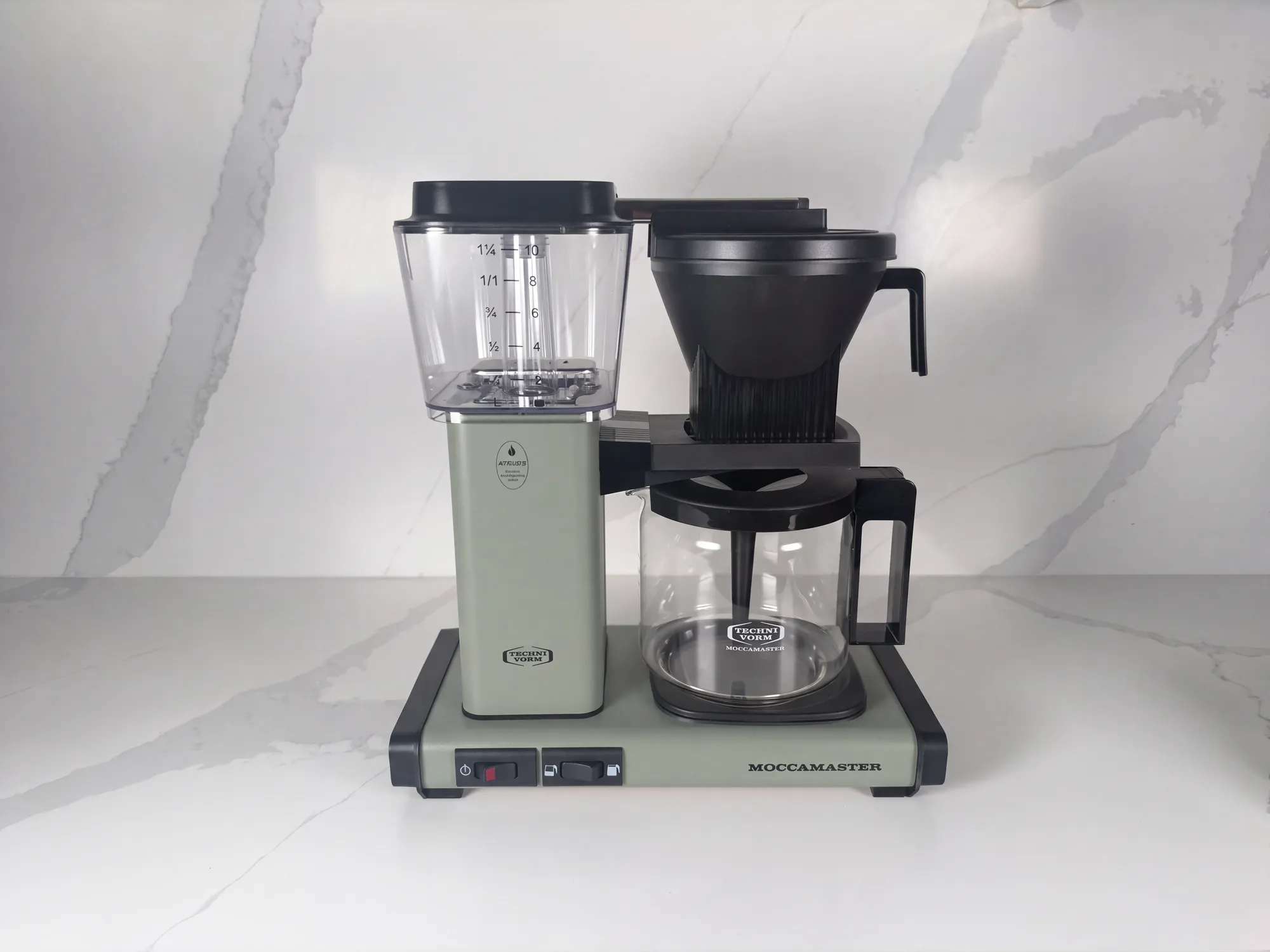
Good coffee and an easy routine have been the strongest parts of using the Moccamaster KBGV Select in my kitchen. I have been using the Eucalyptus model since the beginning of October, and the process has been straightforward: fill the reservoir, add ground coffee, choose the batch setting and turn it on. The body feels solid, the green finish looks great on the counter, and the glass carafe is light and easy to pour from.
For this review, I recorded a smaller batch of Ruta Maya medium roast at the 4-cup reservoir line and a larger Lifeboost Grata batch at the 8-cup line. Both tasted balanced, and I preferred the smoother Lifeboost. Alongside tasting the coffee, I checked carafe temperatures, recorded power readings and paid attention to the parts I handle when filling, pouring and cleaning.
The warming plate adds flexibility when coffee is poured at different times. A pot can stay ready for another serving instead of everyone needing to pour a cup as soon as brewing finishes. In my 30-minute checks, both batches were still hot enough for me, and the smaller batch had no noticeable flavor change. Cleanup was also quick, taking less than 90 seconds for the removable brewing parts.
My main reservations concern the material choices, particularly the plastic components and thin-feeling glass carafe. I cover those alongside the brewing results, everyday handling and ownership details below.
Review disclosure: Moccamaster provided this brewer as a free sample in October 2026. Some links in this review are affiliate links. If you purchase through them, The Hearthful Home may earn a commission at no additional cost to you. As an Amazon Associate, we earn from qualifying purchases.
Moccamaster KBGV Select Review at a Glance
Balanced Coffee, Simple Controls and Useful Warming
The KBGV Select earns an 8.6/10 for balanced coffee, straightforward operation and useful warming, supported by a solid-feeling body and established parts and repair options. Both recorded recipes worked well, and I preferred the smoother Lifeboost. I would buy it for daily use. The main deduction is the materials, including the lack of listed Moccamaster-made alternatives to the plastic basket and carafe lid.
Someone who wants to prepare a pot using a clear half/full selector and serve from a glass carafe. It makes particular sense when people in the household drink their coffee at different times. The smaller and larger amounts I tested both tasted balanced, so the machine suited more than one batch size in my kitchen.
The warming plate keeps a pot available when people pour their coffee at different times. Both batches were still hot enough for me at the 30-minute checks, and I noticed no flavor change in the smaller batch.
The plastic brew basket, reservoir and carafe lid with its mixing tube are my biggest reservations. I would also prefer thicker carafe glass. Moccamaster’s current US parts range lists plastic replacements for the basket and lid rather than an alternative-material upgrade for this model. I would like an option made by Moccamaster itself.

Moccamaster KBGV Select
Eucalyptus glass-carafe brewer with a 1.25-liter reservoir, half/full selector and separate warming plate.
The Brewer, Basket and Glass Carafe
I tested the Eucalyptus KBGV Select with its glass carafe and 1.25-liter reservoir. The half/full selector is the useful detail to look for when identifying the model: Moccamaster’s identification guidance says some Select brewers have Select printed on the body and others do not. My unit’s label reads KBGV; its exact label details are in the specification table below.
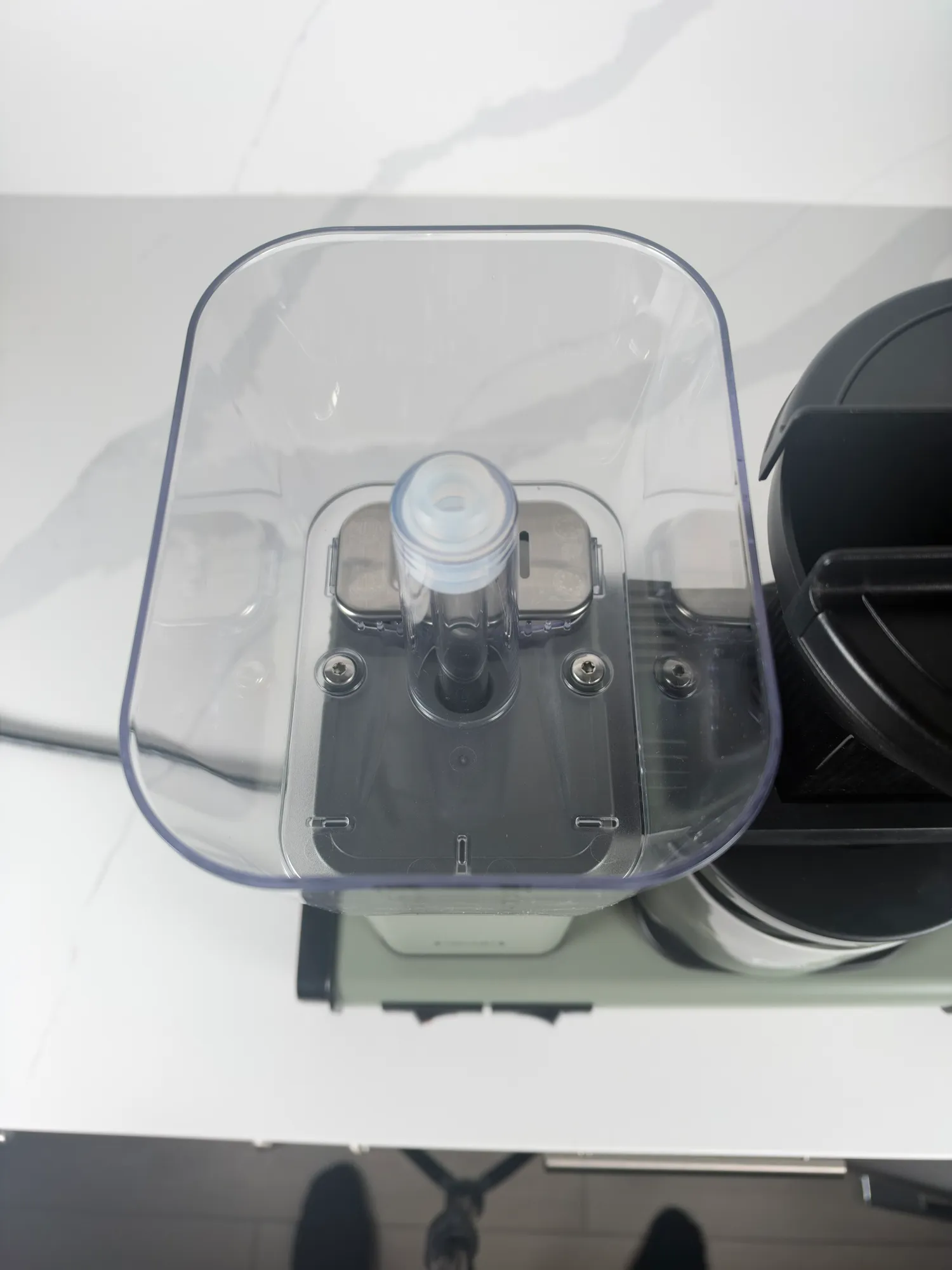
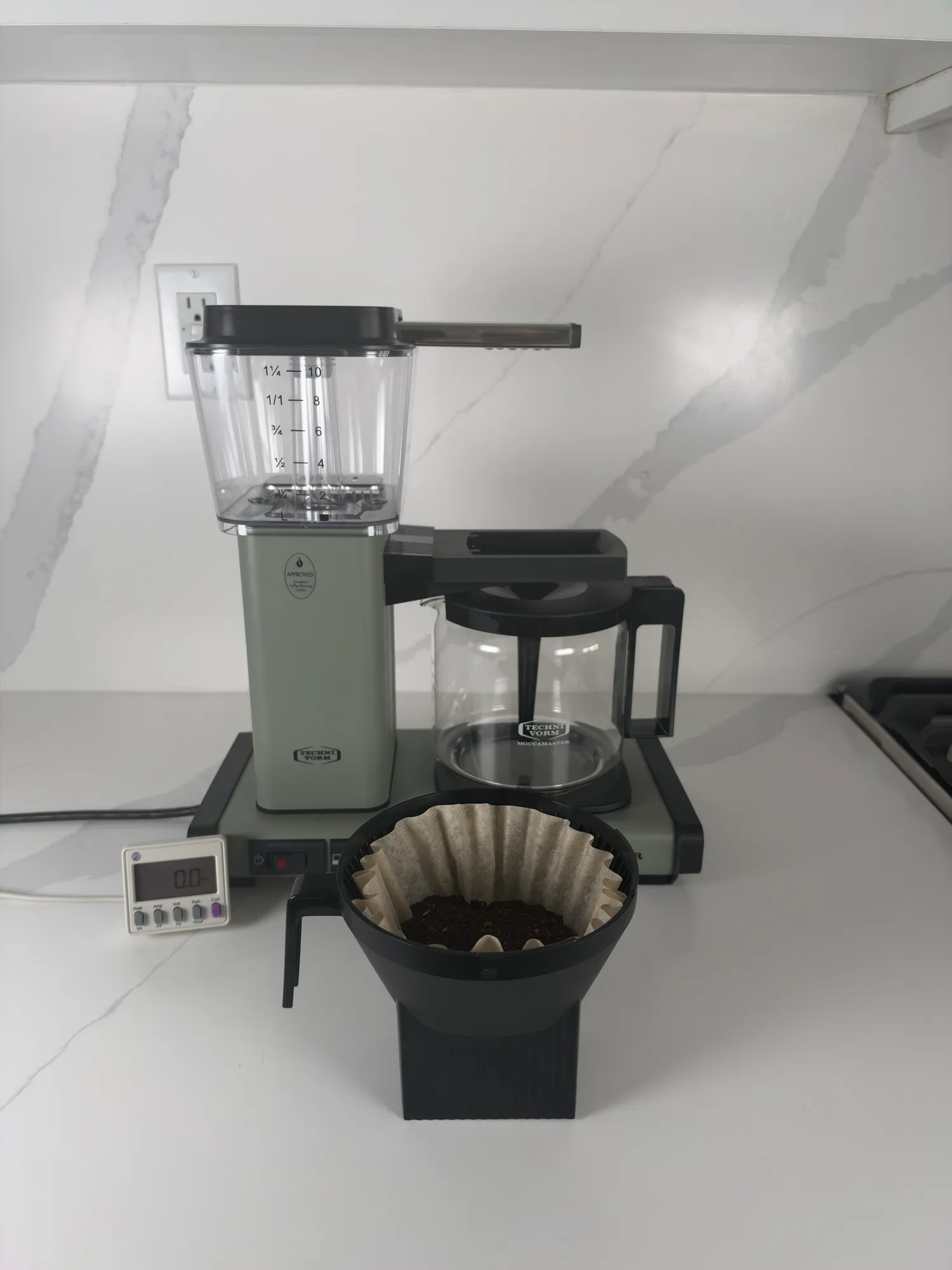
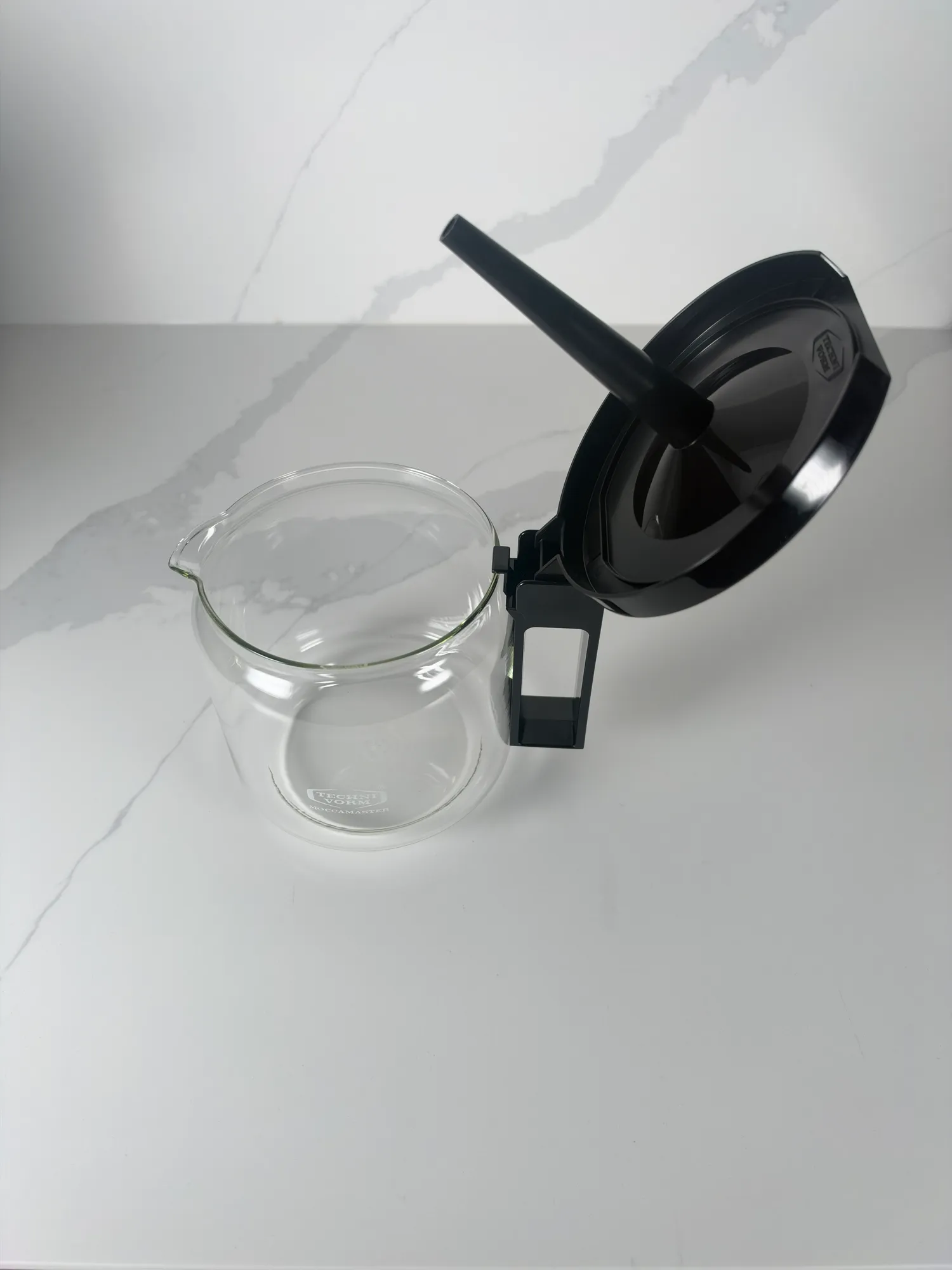
The arrangement is easy to understand when preparing a pot. Water goes into the transparent reservoir on the left, ground coffee goes into a paper filter in the basket, and the glass carafe sits underneath. The front switches handle power and batch selection. The removable basket and carafe are also the parts I handle most during preparation, serving and cleanup.
Moccamaster documents an independent heating element for the warming plate. The glass carafe can therefore remain on the powered plate after the water-heating stage has finished.
How I Used and Tested It
I have used this Moccamaster since the beginning of October 2026. Alongside that use, I recorded two brews with different medium-roast coffees to document the recipes, taste, temperatures, power readings and handling. I used a Baratza Virtuoso+ at setting 18 and If You Care paper filters for these tests.
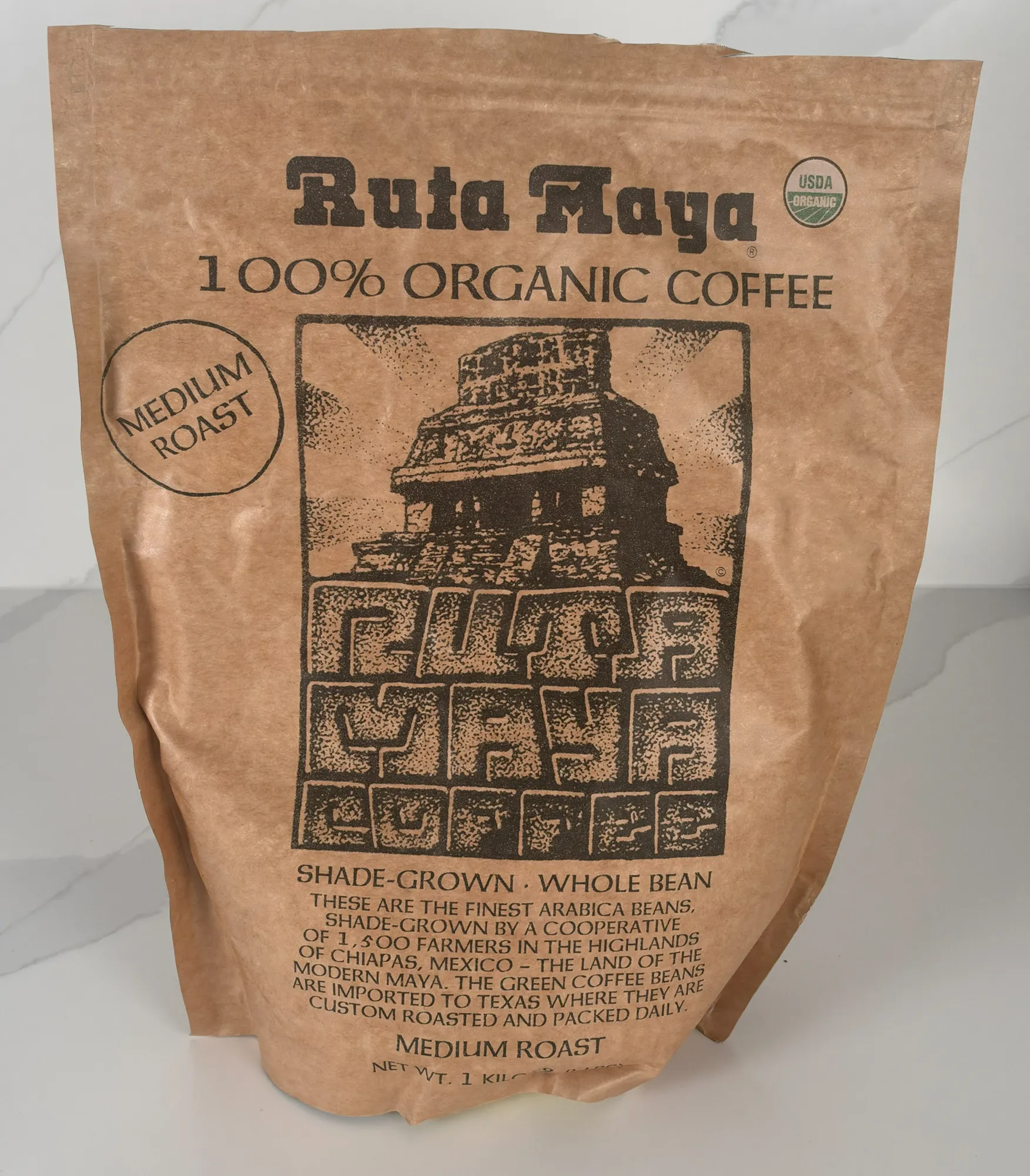
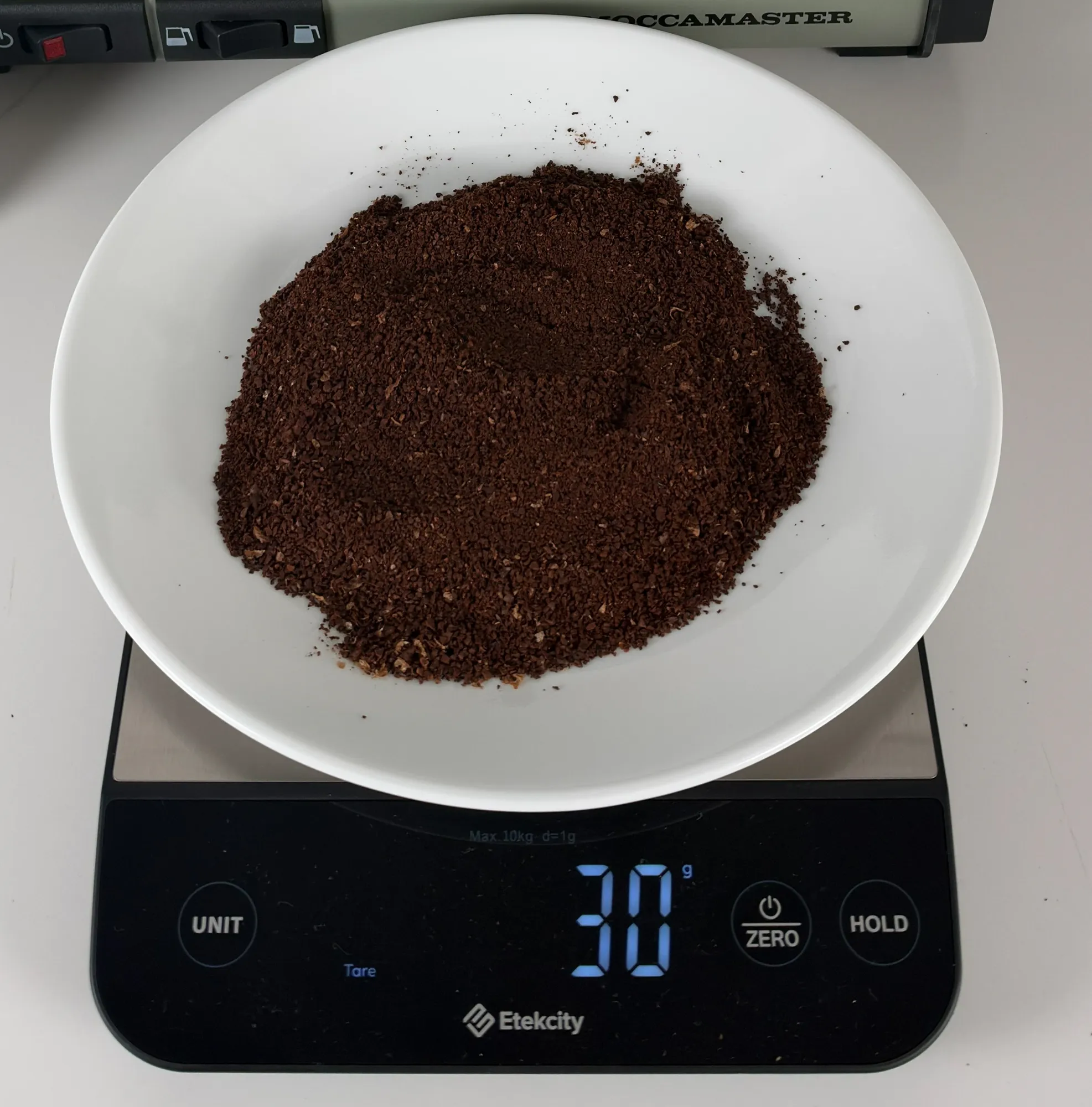
The smaller recipe used 30 grams of Ruta Maya coffee and water at the reservoir’s 4-cup line, with the half setting selected. The larger used 60 grams of Lifeboost Grata and the 8-cup line, with the full setting selected. I weighed the coffee doses and used the reservoir markings for water. My water came from a Culligan reverse-osmosis system without remineralization; the smaller batch’s starting water reading was 74°F.
Changing both the coffee and the batch size gave me two useful examples of everyday brewing. It also means that my preference for the Lifeboost belongs to that recipe and coffee combination. The results do not isolate the effect of batch size. I assessed pouring, controls, cleanup and the feel of the parts alongside the coffee itself.
How the Review Was Built
Coffee doses, carafe temperatures, dimensions and scale readings. The original recordings also show selected wall-power readings in watts.
Two medium-roast recipes, with immediate carafe readings and checks after 30 minutes on the powered warming plate.
Flavor, ease of pouring, control use, cleanup, under-cabinet filling and the feel of the body and carafe.
Batch-selector guidance, capacity, component materials, water recommendations, care, replacement parts and warranty terms.
Two Recipes and Their Results
| Coffee | Coffee dose | Reservoir fill and selector | My result |
|---|---|---|---|
| Ruta Maya medium roast | 30 g | 4-cup line; half setting | Medium strength, slight sweetness, a little bitterness and low perceived acidity |
| Lifeboost Grata medium roast | 60 g | 8-cup line; full setting | Medium strength, very smooth, less sweet and low perceived acidity |
Both tasted balanced to me. I preferred the smoother Lifeboost recipe. The grind setting was 18 on my Baratza Virtuoso+.
Carafe Temperature Checks
| Batch | Immediately after brewing | After 30 minutes on the powered plate |
|---|---|---|
| 4-cup Ruta Maya batch | 169°F | 159°F |
| 8-cup Lifeboost batch | 183°F | 162°F |
These are coffee readings in the carafe. They describe a different measurement point from water delivered to the grounds during brewing.
The manufacturer’s water chart associates the 4-cup line with 0.5 liter and the 8-cup line with 1 liter. Based on those nominal marks, both recipes used 60 grams of coffee per liter of input water. Our coffee brew-ratio guide explains how to scale a dose and distinguish input water from the amount of coffee collected.
The Hearthful Assessment
The six factors carry equal weight under The Hearthful Standard. My assessment combines the recorded brews and routine handling with the manufacturer’s documented construction and support. Durability reflects my use since early October and the available parts and repair options.
Moccamaster KBGV Select
A Simple Routine With Coffee I Enjoyed
The six category scores total 51.5. Dividing by six gives 8.6 out of 10 after rounding to one decimal place.
The Smaller Ruta Maya Brew
Balanced, slightly sweet and easy to pour
30 g coffee · 4-cup reservoir line · Half setting
The smaller batch gave me a medium-strength cup with slight sweetness, a little bitterness and low perceived acidity. It tasted balanced to me. I recorded low noise and no overflow, leakage or errors during this brew.
The half setting matched this smaller amount. The controls were easy to use, and I could see the water against the reservoir markings while preparing the brew.
The finished coffee measured 169°F in the carafe immediately after brewing. Pouring was easy thanks to the carafe’s shaped spout, and the light vessel was manageable in my hand. At the 30-minute check on the powered plate, I recorded 159°F and no noticeable change in flavor.
The Larger Lifeboost Grata Brew
The smoother coffee I preferred
60 g coffee · 8-cup reservoir line · Full setting
For this brew, I changed to Lifeboost Grata medium roast, doubled the dose and selected full. It was just as straightforward to prepare, and I had no problems with this brew.
The Lifeboost was less sweet than the Ruta Maya but very smooth, with medium strength and low perceived acidity. I preferred it. Both recipes felt equally balanced to my taste, so the smoother character of the Lifeboost was what separated the two for me.
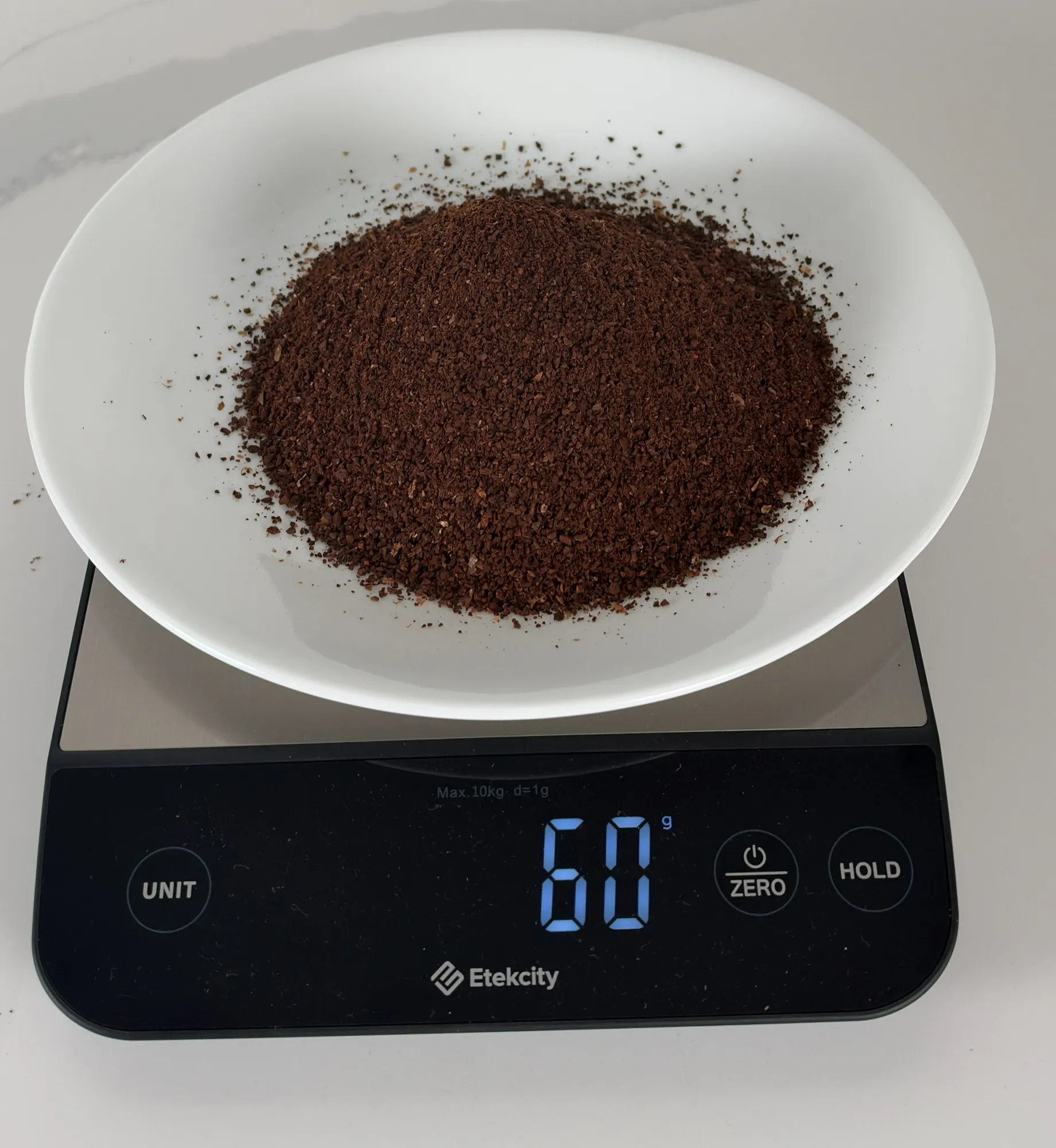
The immediate carafe reading was 183°F, followed by 162°F after 30 minutes on the powered warming plate. The filled-carafe weight I recorded was 1,232 grams, including the carafe. This was the larger amount I tested, although the 8-cup line is below the machine’s 10-cup maximum. Full identifies the selector position used for this amount.

Choosing the Batch Size and Using the Controls
The front controls are simple: one switch starts the brewer and the other selects the batch range. There is no clock or scheduled-start setting in this control layout. Plan to fill the reservoir, add the ground coffee and switch it on when you want to brew.
The selector is a volume setting with a practical purpose. Moccamaster’s KBGV Select quick guide assigns half to 4–6 cups and full to 8–10 cups. Its glass-carafe guidance explains that the switch changes both brewing behavior and hotplate output. I used the half position for my 4-cup recipe and the full position for my 8-cup recipe.
The numbered cups are small brewer portions. The 4-cup mark corresponds to 500 mL of input water, and the manual recommends a minimum of 4 cups for its 8–10-cup brewers. The half setting therefore starts with a half-liter batch. Some water remains with the grounds, so the marked input volume is also different from the amount of coffee collected. For example, two 300 mL mugs need 600 mL of brewed coffee. The 4-cup line holds only 500 mL of water before brewing, so that setting cannot fill both mugs. Use a higher reservoir mark and match the selector to that mark.
Batch Selector and Dose Reference
| Reservoir mark | Nominal input water | Selector | Coffee at my 60 g/L ratio |
|---|---|---|---|
| 4 cups | 0.5 L | Half | 30 g; recorded recipe |
| 6 cups | 0.75 L | Half | 45 g; scaled recipe |
| 8 cups | 1.0 L | Full | 60 g; recorded recipe |
| 10 cups | 1.25 L | Full | 75 g; scaled recipe |
Volumes follow the manufacturer’s chart. The 6- and 10-cup doses extend my tested ratio mathematically; my recorded brews were at 4 and 8 cups. Moccamaster’s manual gives 55 g/L as its own starting guideline.
I used setting 18 on my Virtuoso+; another coffee or grinder may need adjustment. The half/full switch follows the amount in the reservoir; it does not replace choosing the coffee dose and grind size.
The automatic basket drip-stop is another documented feature. Moccamaster says the basket stops the flow when the carafe is removed. Its quick guide also instructs owners to turn the power off if the carafe is emptied before the 100-minute auto-off. The basket’s flow control and the warming plate’s operating time are separate features to understand when serving a pot.
Carafe Temperatures and Keeping Coffee Ready
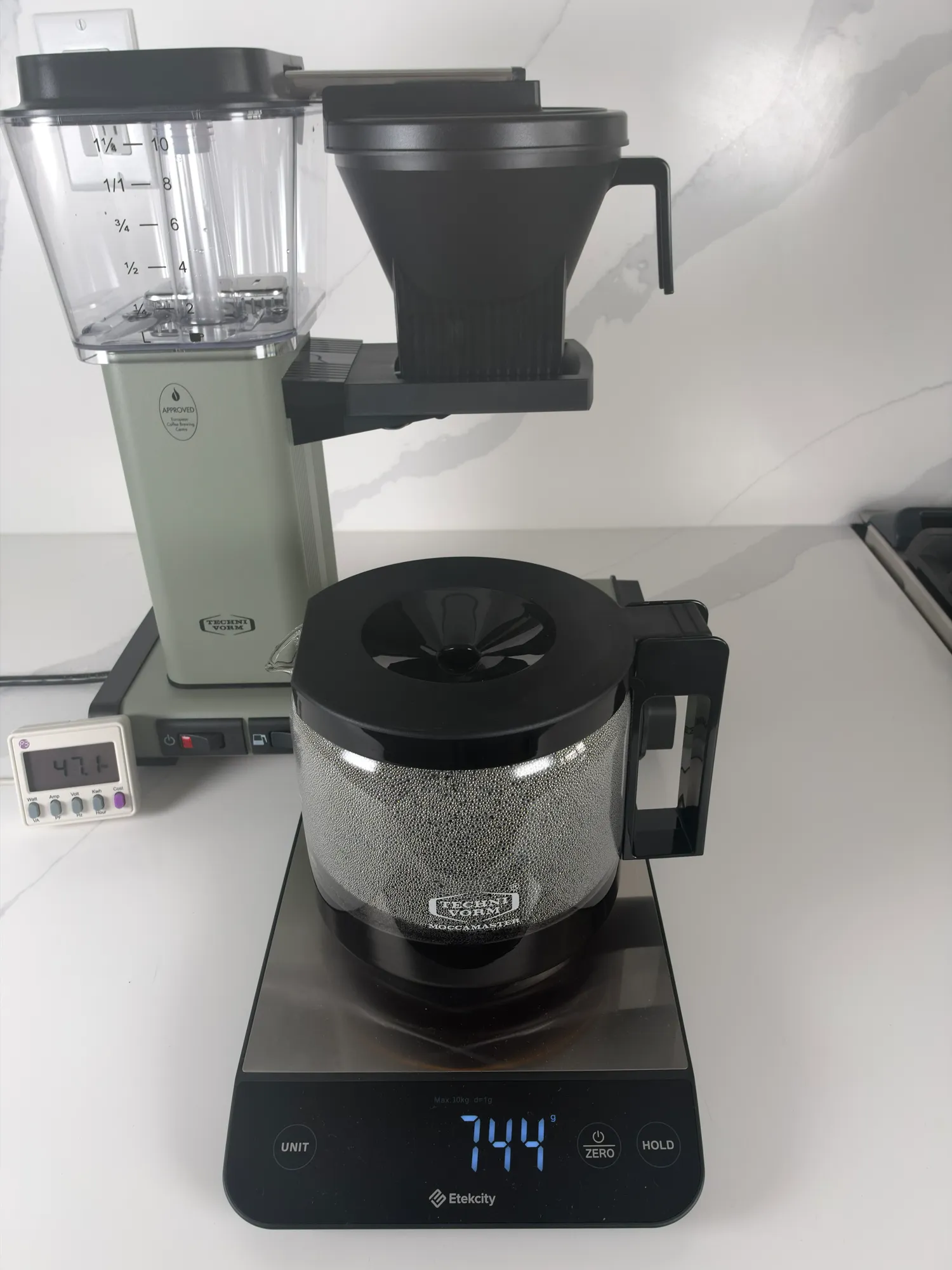
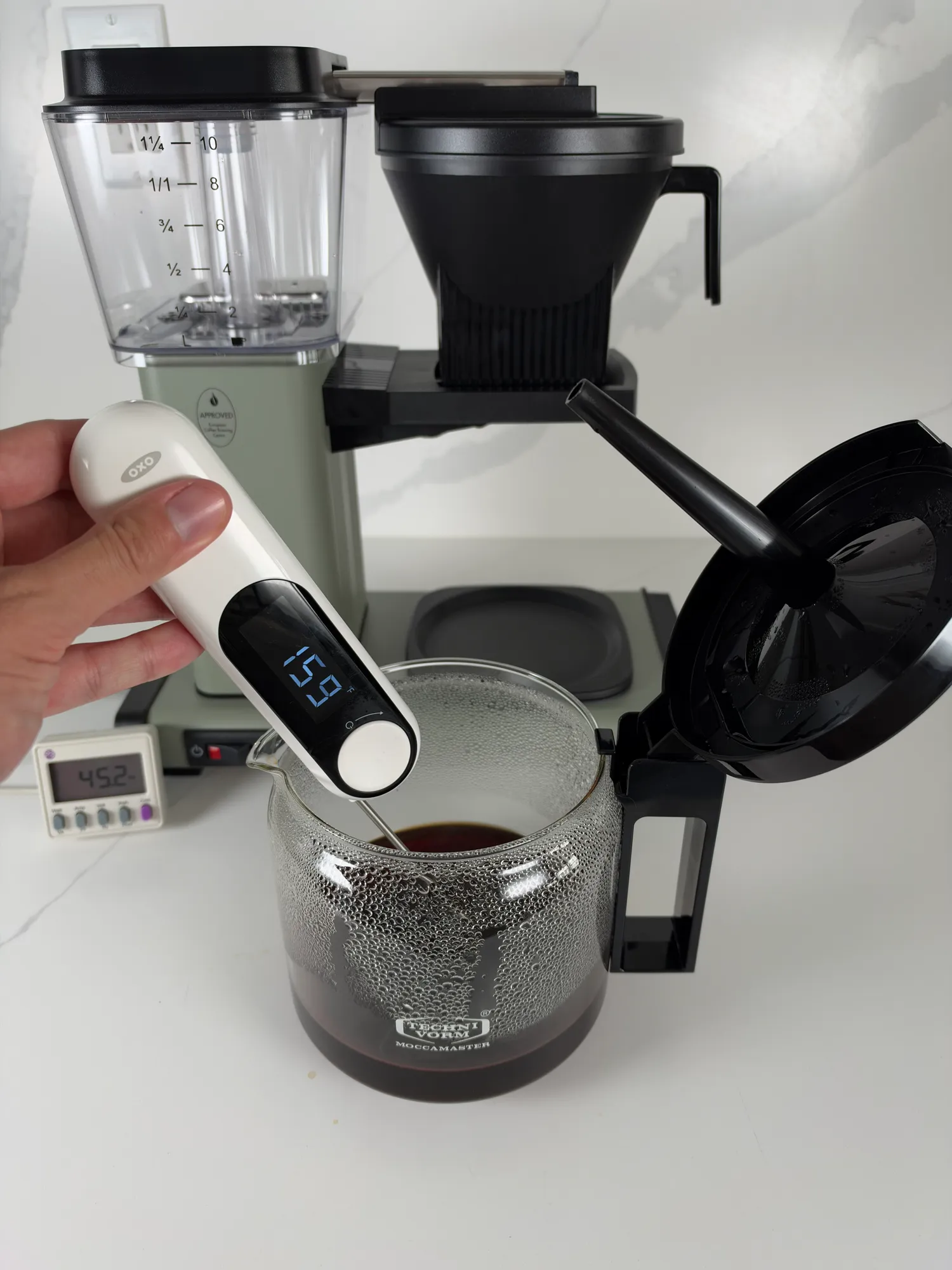
At the 30-minute checks, both batches were still hot enough for me to enjoy. The smaller batch went from 169°F immediately after brewing to 159°F, while the larger batch went from 183°F to 162°F. The warming plate was powered during both holding periods. That makes the warming plate useful for serving a pot over time, with my readings showing how warm the coffee was after half an hour.
For the smaller batch’s fresh reading, I placed the probe into the middle of the coffee in the carafe. The later photograph shows the 159°F check. I noticed no flavor change in that smaller batch after the half hour.
Moccamaster describes a 175–185°F holding range on its glass-carafe brewer page. My two 30-minute carafe readings were below that published range. They describe the coffee in these batches under my home-use conditions; they do not isolate the reason for the difference. That result is relevant if maintaining a particular serving temperature is a priority for you.
Brewing temperature and carafe temperature answer different questions. The water delivered to the grounds drives extraction; the collected coffee then sits in a separate vessel and is poured for drinking. Moccamaster describes a brewing target of 196–205°F in its product guidance. My carafe readings should be read as serving and holding observations, with the measurement location kept clear. Our coffee-maker temperature guide explains those stages.
The manufacturer’s hotplate guidance describes continued warming after brewing as normal. The machine switches off automatically after 100 minutes, and the quick guide says to switch it off sooner if the carafe is emptied.
Materials Along the Water and Coffee Path
I like the solid feel of the body and the Eucalyptus finish, but the contact components deserve a separate look. The machine combines glass and metal with plastic in several places that matter to me. The outside appearance alone does not tell the full story of what holds the water, ground coffee and finished brew.
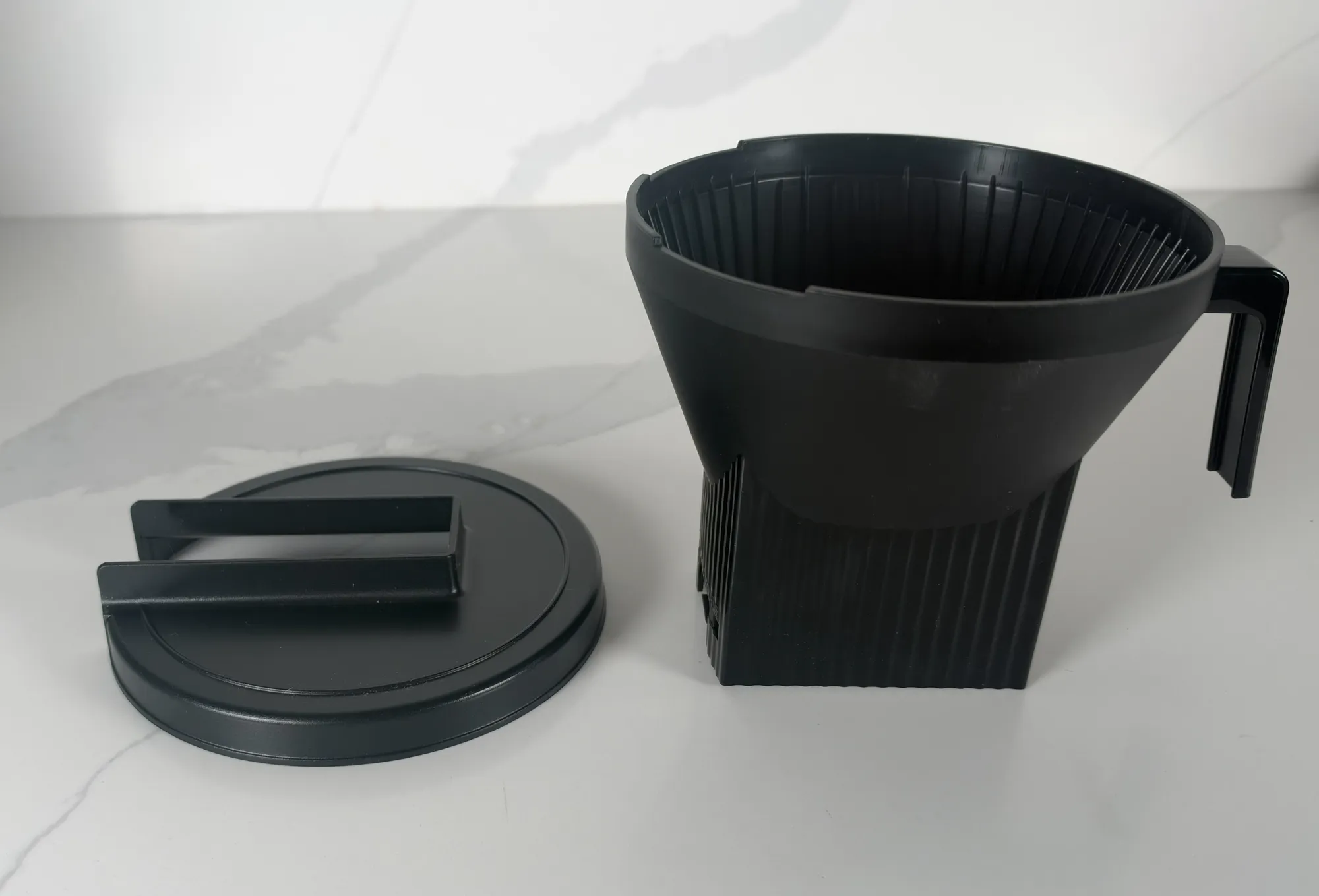
Moccamaster documents a copper boiling element in its water guidance, a glass water-transfer tube, and a stainless steel nine-hole outlet arm. Those are components I appreciate. They sit within a mixed-material system that also includes the plastic reservoir, basket and carafe lid assembly.
The Components Behind My Material Preferences
| Component | Documented material or construction | Why it matters here |
|---|---|---|
| Water reservoir | Plastic | Holds the fresh water for each brew; I would prefer a glass reservoir. |
| Boiling element and riser | Copper element and glass water-transfer tube | Parts of the internal water path, alongside the brewer’s other components. |
| Outlet arm | Stainless steel | Distributes water above the coffee basket. |
| Brew basket | Plastic automatic drip-stop basket | Supports the paper filter and ground coffee during brewing. |
| Carafe and lid | Glass vessel with a plastic lid and mixing tube | The glass body and the lid assembly contribute different materials. |
Moccamaster describes its water- and coffee-contact plastics as free of BPA, BPS, BPF and phthalates in its materials explanation. That is the manufacturer’s disclosure.
The basket supports the paper filter and grounds throughout brewing, so using a paper filter does not remove plastic from the surrounding brew path. The long tube under the carafe lid has a purpose too: Moccamaster says its lid and tube disperse coffee within the carafe for an even taste. That explains why the lid assembly extends into the glass vessel and why I count it when considering contact materials.
I would also prefer a glass reservoir. I fill this one for each brew rather than storing water in it for an extended period, but the tank is still part of the water path. Looking at the basket, reservoir and lid together gives a fuller picture of the materials than the glass carafe alone.
Moccamaster explains its plastic choices through low heat retention, light weight and replaceability. Those are design considerations, while my own preference remains less plastic in the water and coffee path. Our coffee-maker materials guide provides a broader way to assess contact components across brewer designs.
How the Basket and Lids Feel in Use
The plastic basket and lids felt secure once fitted. The basket sometimes took a little adjusting to get into place, which was the minor handling annoyance I noticed. My preference for another material also comes from the feel of the parts: a nonplastic basket and lid assembly would feel more premium to me.
The Upgrade I Would Like Moccamaster to Offer
I would like Moccamaster to offer optional accessories in alternative materials for this brewer, particularly the basket and carafe lid assembly. In the current US KBGV Select parts range, the listed replacement basket and carafe lid with its mixing tube are plastic. I found no Moccamaster-made nonplastic replacements for those components in that range.
Being able to replace a worn or damaged part is useful, but it does not resolve my preference for different contact materials. A compatible upgrade offered by Moccamaster would give me a way to keep the brewing routine I like while addressing the main compromise.
A Light Carafe With a Delicate Feel
The glass carafe was easy to handle and pour from. Its spout helped direct the coffee, and the empty carafe with its lid weighed 11.70 ounces. The glass felt light, but also thin and a little delicate to me. I would prefer a thicker vessel.
I did not have a carafe failure during my use. My concern is how delicate it feels when handling it, especially compared with the solid-feeling brewer body. If you can handle one before buying, check whether that lightness suits you.
Counter Fit, Weight and Everyday Handling
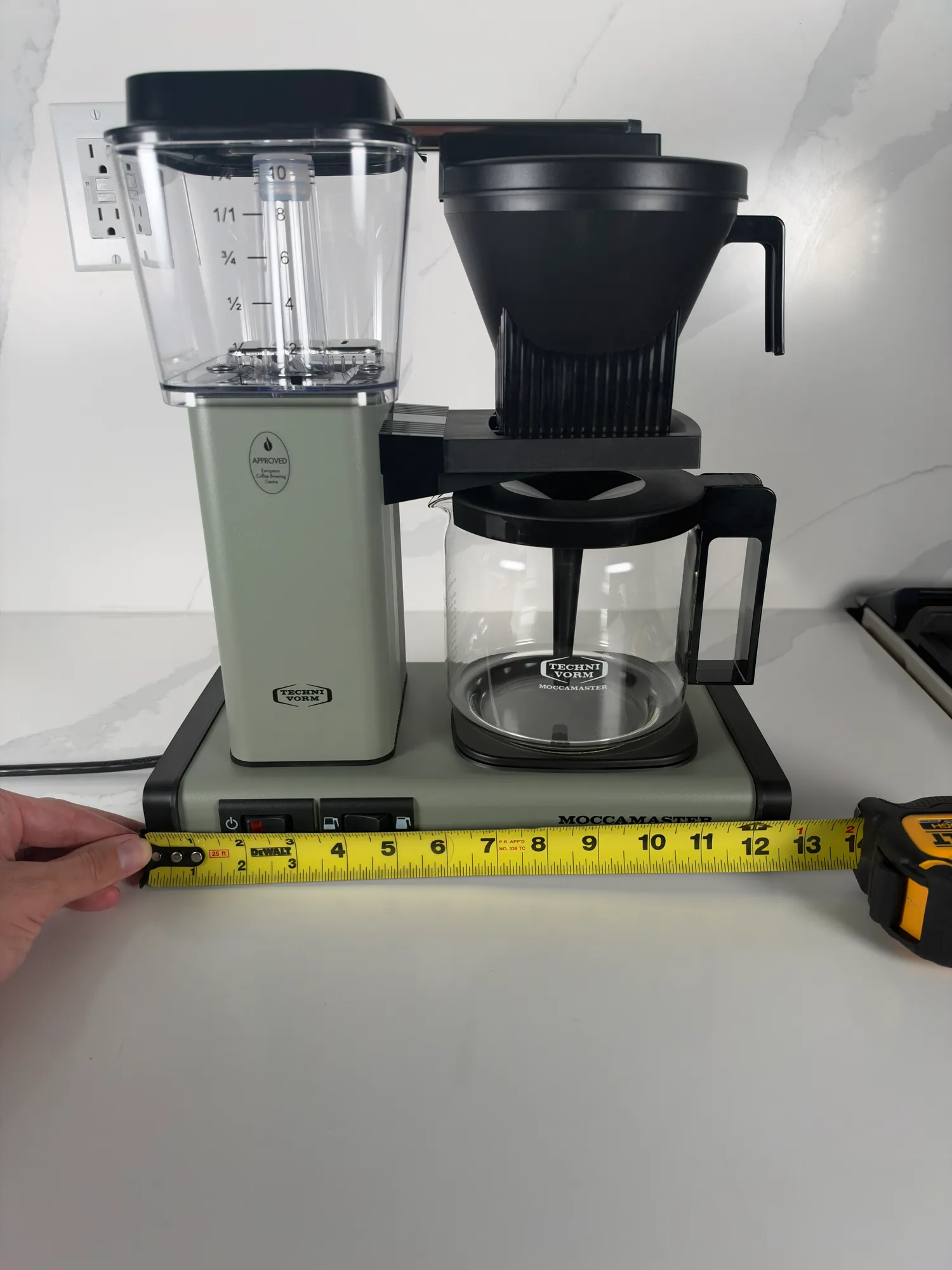
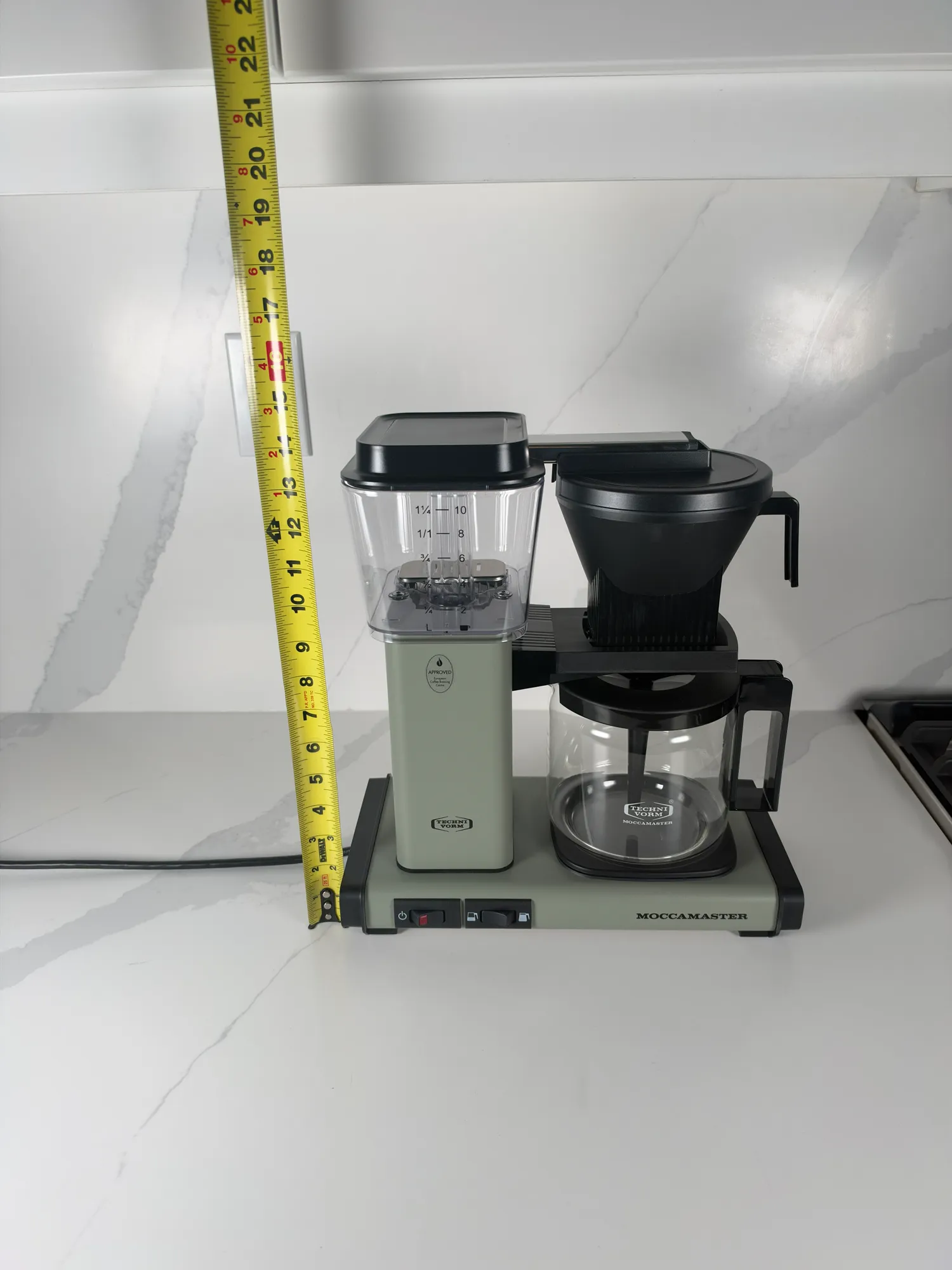
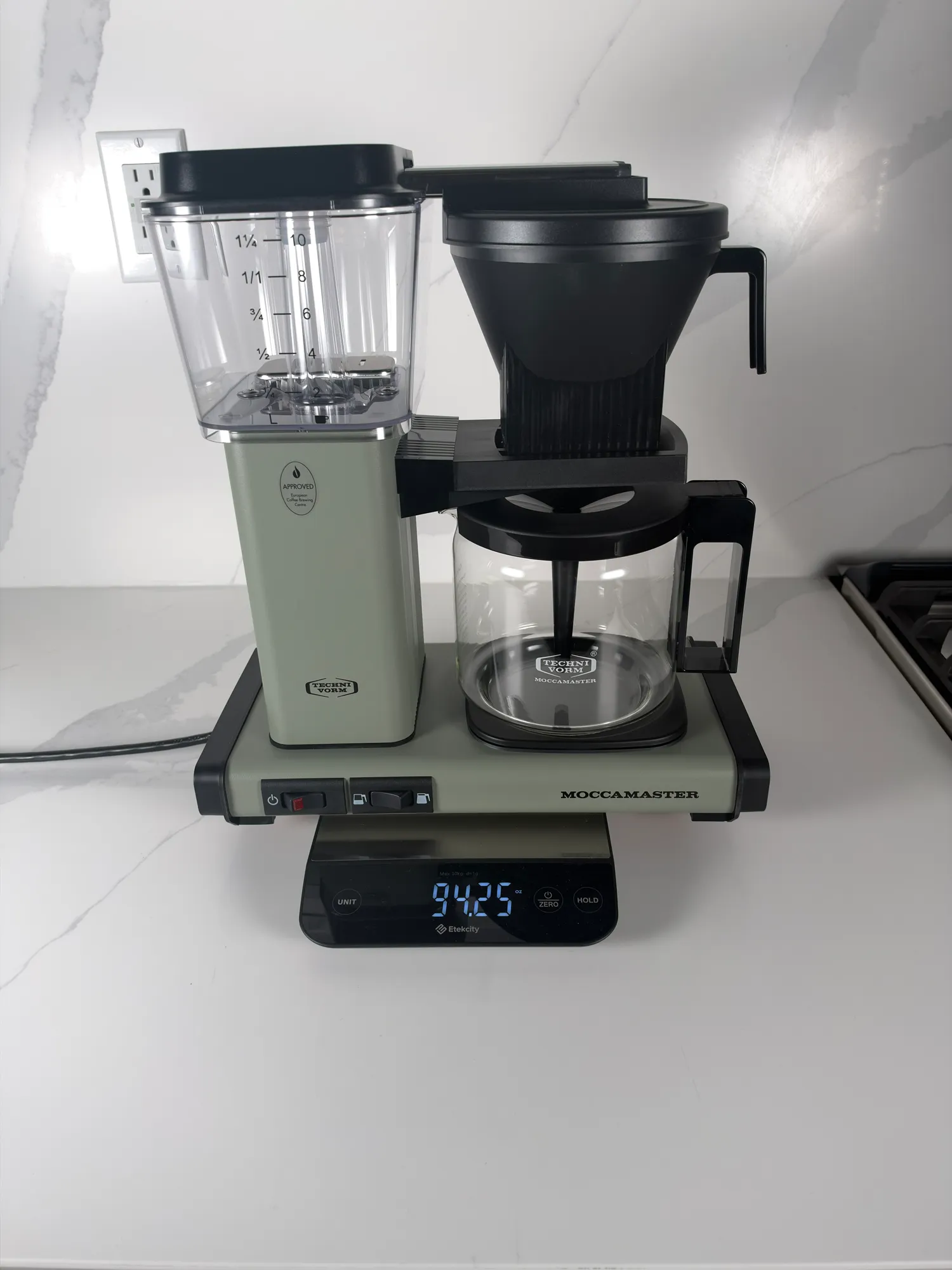
I measured 12.75 inches across the front and about 6.6 inches from front to back. The assembled machine registered 94.25 ounces on my scale, about 5.9 pounds. For standing height, Moccamaster publishes 14 inches. The footprint and the room needed above the reservoir are both relevant when choosing a counter location.
The underside of my kitchen cabinet is 20 inches above the countertop, and I was able to refill the reservoir beneath it. That is useful in my setup, because filling is part of every brew. In another kitchen, check the space needed to remove the lid and tip your usual water jug over the tank. The standing height does not include all of those hand movements.
The empty carafe with its lid weighed 11.70 ounces, and the basket weighed 5.85 ounces. These are the removable components I lift when serving and cleaning.
Our coffee-maker size guide connects footprint, refill clearance and actual serving size. For this Moccamaster, I would check both the wide base and the overhead pouring space before settling on a permanent spot.
Operating Power and What the Recordings Show
The plug-in meter shows a clear difference between the higher draw during water heating and the lower readings after that stage. Both original, unedited recordings run at normal speed and show the meter in watt mode. The values and timestamps below come from those original files. The YouTube demonstrations embedded above are shortened edits.
Selected Readings From the Brew Recordings
| Recorded brew | Video position | Displayed power | Observation |
|---|---|---|---|
| 4-cup Ruta Maya | 00:40 | 1,393 W | During the higher-power brewing stage |
| 4-cup Ruta Maya | 03:20 | 47.2 W | After the large reduction in displayed draw |
| 4-cup Ruta Maya | 03:40 | 35.5 W | Near the end of the recording; coffee was still dripping |
| 8-cup Lifeboost | 00:20 | 1,395 W | During the higher-power brewing stage |
| 8-cup Lifeboost | 04:50 | 30.5 W | After the large reduction in displayed draw |
| 8-cup Lifeboost | 05:12 | 36.0 W | Near the end of the recording; the power light remained on |
These are instantaneous wall-power readings at selected video positions. The rating label on my unit lists 1,475 W.
My written spot readings were 44.0–49.7 W for the smaller brew and 49.8 W for the larger one. These were separate spot readings, not averages of the 30-minute holding period.
From switching the brewer on to the major drop in displayed power, the smaller batch took approximately 3 minutes 15 seconds and the larger batch approximately 4 minutes 45 seconds. These intervals mark the change in electrical draw, not the last drip into the carafe. Coffee was still dripping near the end of the smaller recording, and neither clip establishes the complete brew-to-last-drip time.
I also noticed the watt reading change when I removed and replaced the carafe. That reading describes total power at the outlet; it does not by itself establish a weight-operated warming plate.
Watts describe power at a moment. An electricity-cost calculation for making and holding a pot would require accumulated energy over that whole period, such as watt-hours or kWh. The readings here show how the electrical demand changed while the brewer operated; the 1,475 W label describes its rated power.
Cleanup, Water Choice and Routine Care
Emptying the used filter and grounds and washing and rinsing the removable brewing parts took less than 90 seconds. I did not find difficult areas to clean. That quick turnaround was one of the easiest parts of the brewing routine.
The brewer manual calls for handwashing the carafe and basket with mild dishwashing detergent. The removable parts can go to the sink while the electrical brewer stays on the counter.
Coffee Oils and Mineral Scale Need Different Care
Routine washing, coffee-oil cleaning and descaling address different parts of ownership. Moccamaster’s cleaning guidance distinguishes the residue left by coffee from mineral deposits in the water-heating system. It recommends descaling around every 100 brew cycles; the manual also says to descale at least every three months, with water conditions affecting how quickly scale builds.
The quick wash after serving does not replace periodic internal care. Follow the cleaning or descaling product’s directions and the brewer instructions for dosing and rinsing.
Our coffee-maker cleaning guide explains how to organize washing, oil removal and descaling without treating them as interchangeable tasks.
My RO Water and the Manufacturer’s Recommendation
I used water from my Culligan RO system because I wanted to limit mineral buildup. It does not add minerals back, and that is the water behind the flavor observations in this review. Moccamaster’s current water recommendation is fresh cold tap, filtered or bottled water. It advises against distilled or reverse-osmosis water, saying very low mineral content may damage the copper boiling element over time.
Reducing scale is only one consideration when choosing water for this brewer. Moccamaster’s guidance also addresses its copper element, so my use of RO water should not be taken as the manufacturer’s recommended setup.
Replacement Parts, Repair and Warranty
The KBGV Select replacement-parts range includes the basket, carafe, lids and outlet arm as individual parts. That gives an owner a way to replace a damaged or worn component without replacing the whole brewer. These are standard replacement parts; the listed basket and lid retain the plastic construction discussed above.
Moccamaster’s US repair service adds a more concrete ownership benefit. At the time of this October 2026 review, its flat-rate offer for eligible brewers and grinders is $99, including parts, labor and shipping in both directions through its Portland facility. Moccamaster USA says its repairs carry a one-year warranty. Check the current service terms and eligibility before arranging a repair.
The published US warranty covers eligible new brewers for five years from purchase, subject to its terms and proof-of-purchase requirements. Carafes and replaceable parts are excluded. That exclusion is relevant to my preference for thicker carafe glass: the main brewer’s warranty and replacement of a damaged carafe are different considerations.
Check the exact brewer model when choosing a replacement. A part that appears to fit is not automatically documented as compatible. The warranty includes exclusions for damage or defects resulting from modifications, alterations and unauthorized repairs; that wording should be checked before changing how the brewer is assembled or operates.
Knowing I can buy replacement parts or use Moccamaster’s repair service makes me more confident about keeping the brewer. Our coffee-maker repairability guide explains how to evaluate those arrangements alongside warranty coverage.
Who I Would Recommend It To
I would shortlist the KBGV Select for someone who usually makes at least a small pot, wants straightforward controls and likes serving from a glass carafe. The recommended 4-cup minimum is about half a liter of input water. If your routine is one small cup at a time, consider that recommended batch size before choosing this brewer.
It also suits a household that serves coffee at different times. Both batches were still hot enough for me after 30 minutes, although the measured 159°F and 162°F were below Moccamaster’s published holding range. If you prefer hotter coffee, those actual results deserve weight in the decision. If you want coffee to start automatically before you wake, the manual-start controls are another point to consider.
The main reason I would hesitate is the material mix and the premium feel I would like from the basket and lids. If reducing plastic contact is your priority, compare the specific components with the approaches in our coffee-maker comparison guide. For me, enjoyable coffee, quick cleanup and repair support outweigh those material reservations, so I would buy it.
Specifications, Documentation and THH Measurements
The tables below bring together my measurements, the rating label and the manufacturer’s operating guidance. The evidence column identifies where each specification comes from.
What the Documentation Adds
The model-specific quick guide covers the controls and No. 4 paper filters. The general manual and support pages provide the water, cleaning and parts information used throughout this review.
The KBGV Select also appears in the Specialty Coffee Association’s Certified Home Brewers listing. That is useful third-party context for the model’s brewing credentials. The taste and carafe results in this review come from my own two recorded recipes and the setup described above.
Fit, Weight and Electrical Details
| Specification | Documented or measured detail | Evidence | THH context |
|---|---|---|---|
| Reviewed unit | KBGV; Eucalyptus; article 53636 | THH Observed | Underside label, with half/full controls identifying the Select configuration. |
| Front width | 12.75 in | THH Measured | My recorded measurement across the front. |
| Depth | About 6.6 in | THH Measured | Rounded for practical use from my recorded 6.588 in. |
| Height | 14 in | Manufacturer Documented | Allow additional access to remove the reservoir lid and pour water. |
| Cabinet clearance used | 20 in from countertop to cabinet underside | THH Measured | I could refill the reservoir beneath this cabinet. |
| Assembled scale reading | 94.25 oz, about 5.9 lb | THH Measured | The full brewer setup shown on my kitchen scale. |
| Empty carafe with lid | 11.70 oz | THH Measured | Light to handle; the glass felt delicate to me. |
| Brew basket | 5.85 oz | THH Measured | My recorded component weight. |
| Electrical rating | 120 V; 60 Hz; 1,475 W | THH Observed | Label specification for this US/Canada unit. |
| Manufacture | Netherlands; Technivorm B.V. | THH Observed | Country and manufacturer shown on the underside label. |
Brewing, Materials and Ownership
| Specification | Documented or measured detail | Evidence | THH context |
|---|---|---|---|
| Nominal capacity | 1.25 L; top reservoir mark 10 cups | THH Observed | My larger recorded recipe used the 8-cup line. |
| Batch selector | Half: 4–6 cups; full: 8–10 cups | Manufacturer Documented | Match the selector to the planned reservoir fill. |
| Recommended minimum | 4-cup reservoir mark; 0.5 L | Manufacturer Documented | The minimum recommended for its 8–10-cup brewers. |
| Start controls | Manual power switch; no scheduled-start setting | THH Observed | The other front switch selects the half/full batch range. |
| Paper filter | No. 4 | Manufacturer Documented | My tests used If You Care paper filters. |
| Basket flow control | Automatic drip-stop | Manufacturer Documented | Operates at the basket when the carafe is removed. |
| Warming system | Independent hotplate heating element | Manufacturer Documented | My 30-minute checks used the powered plate. |
| Automatic shutoff | 100 minutes | Manufacturer Documented | Switch off sooner if the carafe is emptied. |
| Carafe construction | Glass vessel; plastic lid and tube | THH Observed | The main container and its lid have different materials. |
| New-brewer warranty | Five years for eligible purchases | Manufacturer Documented | Terms and proof of purchase apply; carafes and replaceable parts are excluded. |
Frequently Asked Questions
Does the KBGV Select make good coffee?
Both recorded brews tasted balanced to me, with medium strength and low perceived acidity. I preferred the smoother Lifeboost Grata recipe; the Ruta Maya was slightly sweeter with a little bitterness.
How much coffee did I use?
I used 30 grams at the 4-cup reservoir line and 60 grams at the 8-cup line. With the manufacturer’s nominal 0.5- and 1-liter marks, both recipes work out to 60 grams per liter of input water. The coffee was weighed; the water was filled to the marked line.
Is the 8-cup setting a full-capacity pot?
The 8-cup fill uses the full selector position, but the reservoir continues to 10 cups, or 1.25 liters. My larger test used the 8-cup line. Numbered brewer cups also differ from the size of a mug, so use the liter marks when planning how much to make.
What does the half/full switch change?
Moccamaster describes it as adjusting the brewing process and hotplate output for the selected batch. The quick guide assigns half to 4–6 cups and full to 8–10 cups. I used half for my smaller recipe and full for the larger one.
How warm was the coffee after 30 minutes?
I recorded 159°F for the smaller batch and 162°F for the larger batch on the powered plate. Both were still hot enough for me to enjoy, and the smaller batch had no noticeable flavor change. Those readings were below the manufacturer’s published 175–185°F holding range.
Is the Moccamaster plastic-free?
The reviewed setup includes a plastic reservoir, brew basket and carafe lid with a mixing tube, alongside its glass and metal components. The main carafe vessel is glass. I would prefer less plastic in the water and coffee path, which is the main material compromise in my recommendation.
Can I use reverse-osmosis water?
Moccamaster advises against RO and distilled water, citing possible damage to the copper boiling element over time from very low mineral content. My recorded brews used Culligan RO water without added minerals, but the manufacturer recommends fresh cold tap, filtered or bottled water.
Can the carafe and basket go in the dishwasher?
The manual calls for handwashing the carafe and basket with mild dishwashing detergent. My cleanup of the removable brewing parts took less than 90 seconds, including emptying the used filter and grounds, washing and rinsing.
Will it fit under a kitchen cabinet?
Moccamaster lists a 14-inch height. I could refill mine beneath a cabinet with 20 inches of clearance above the countertop. I measured a 12.75-inch front width and roughly 6.6-inch depth. Check the room needed to lift the reservoir lid and pour from your own jug, as well as the standing dimensions.
My Final Verdict
The KBGV Select earns its 8.6/10 through enjoyable coffee and an easy routine. I preferred the smoother Lifeboost brew, but both recorded recipes worked well. The carafe poured easily, cleanup was quick, and the coffee remained hot enough for me after 30 minutes.
The main compromise is the material choice: I would prefer less plastic and thicker carafe glass, with compatible upgrades offered by Moccamaster itself. Its current US parts catalog offers replacement plastic baskets and lids, without the alternative-material upgrades I would like.
I would buy it knowing those tradeoffs. For a household that makes a pot and serves coffee at different times, the KBGV Select offers a straightforward routine with coffee I enjoyed.
Important: This article provides general information, not individualized medical, safety, installation, legal, or other professional advice. Product specifications, instructions, and safety information can change; verify current information with the manufacturer and consult an appropriately qualified professional when needed. See our Terms and Conditions for additional information.