
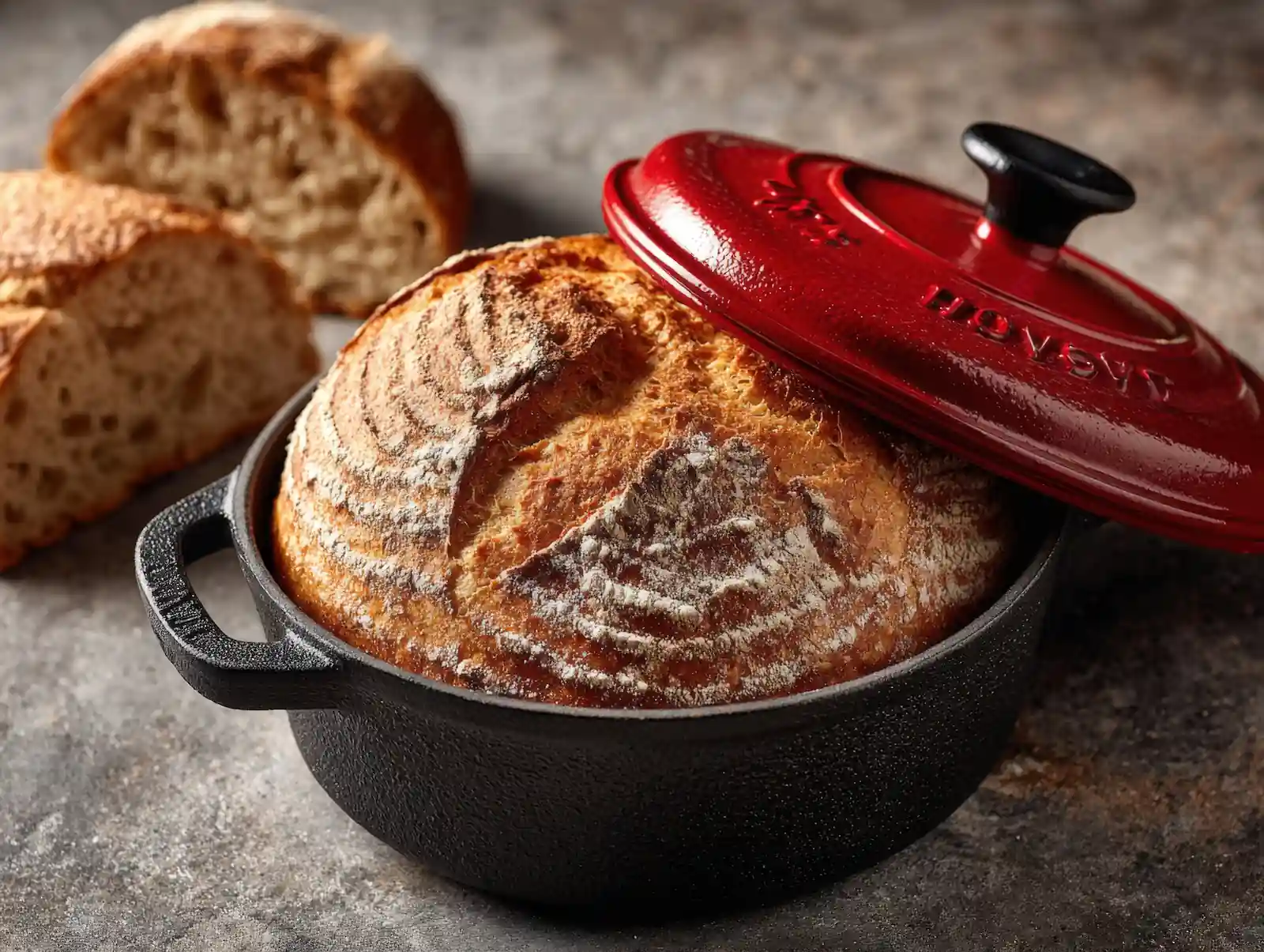
A loaf of banana bread needs tall sides to hold the batter. A tray of cookies needs open space, and roasted vegetables need room to spread out. Those differences in shape matter as much as the material when a baking pan has to earn its spot in a small kitchen.
The finish changes how you use a pan after it comes out of the oven. A ceramic-coated sheet calls for soft utensils and a little care when other pans are stacked on top. A stainless muffin pan has a dozen uncoated wells to grease or line. A glass casserole dish can hold leftovers under a separate lid once the meal has cooled.
The four pieces here include a sheet, a muffin pan, a stoneware loaf pan and a rectangular glass baking dish. For each, we explain the surface that touches your food, the recipes its shape suits and the care that comes with that choice.
Bakeware Comparison: Features and Tradeoffs
We evaluated these bakeware selections using The Hearthful Standard, considering documented materials, pan design, handling, care, and manufacturer support. We selected Caraway’s medium ceramic-coated sheet for cookies and shallow roasting, Le Creuset’s stoneware loaf pan for baking and serving from the same dish, and Fox Run’s uncoated stainless steel muffin pan for a twelve-well batch. Pyrex adds a glass casserole dish with a separate storage lid for leftovers. The glass dish and plastic lid have separate heating instructions.
Some links in this guide are affiliate links. If you purchase through them, The Hearthful Home may earn a small commission at no additional cost to you. As an Amazon Associate, we earn from qualifying purchases.

Best for a ceramic-coated baking sheet
Caraway Medium Baking Sheet
A ceramic-coated sheet for cookies and shallow roasting. The medium format suits smaller batches, with soft utensils, hand washing, and protected storage forming its everyday care routine.
Navy · Medium · Listed 15 × 10 × 1 in · One sheet

Best for baking and serving a loaf
Le Creuset Heritage Loaf Pan
Glazed stoneware gives a loaf-shaped recipe a dish that can also go to the table. Choose the 1.5 qt selection around your recipe, with room for protected handling and cooling before cleanup.
Cerise · Glazed stoneware · 1.5 qt · One loaf pan

Best for stainless steel muffin batches
Fox Run Stainless Steel Muffin Pan
Twelve wells organize a muffin or cupcake batch in one stainless steel pan. Choose liners or recipe-appropriate preparation, and plan on hand washing around the wells and rim.
4868 · 18/0 stainless steel · 12 standard wells · One pan

Best for casseroles and covered leftovers
Pyrex Basics Glass Baking Dish
A rectangular glass dish with a separate storage lid suits baked meals and covered leftovers. Choose the 3 qt capacity around your recipe and shelf space, keeping the body and lid’s heating instructions separate.
1149919 · Rectangular · 3 qt · Glass dish and plastic lid
What Actually Matters in Bakeware
Write down the dishes you make most often before choosing a set. A shallow sheet, a loaf pan, and a deeper rectangular dish solve different problems. Buying around those jobs helps you build a collection in which each piece earns its cupboard space.
Read the Baking Surface and Body Separately
A ceramic-coated metal sheet and a glazed stoneware dish have different constructions. Likewise, a stainless steel pan can have a bare surface or an added coating. Look for the body material, the food-contact finish, and the care directions for that combination.
Our bakeware materials guide compares the main options. For coated products, the guide to nonstick coatings and PFAS claims explains how to read disclosures such as ceramic, PTFE-free, and PFAS-free. Use the exact product’s documentation to understand what a claim covers.
Match the Pan to the Recipe
Start with the pan shape, dimensions, and material specified by the recipe. King Arthur Baking’s comparison of metal, glass, and stoneware shows how heat transfer and pan geometry can change a bake. When switching materials, use recipe-specific guidance and check doneness as the bake progresses.
For a batch of cookies, compare the Caraway sheet’s usable flat area with the number you usually bake. For banana bread, the Le Creuset loaf pan gives the batter sides to rise against. For a casserole that goes straight to the table, check how the Pyrex dish fits your oven and serving space, including room to grip it with mitts.
If the new pan is a different size, compare its interior dimensions and depth before adding batter. The baking pan conversion calculator helps compare pan arrangements and scale a recipe while keeping fill depth in view. A named capacity and a usable batter fill are separate measurements.
Measure Oven Fit and Baking Space
The dimensions that decide whether a pan fits an oven are its outside measurements, including handles or rolled edges. The space available for food is inside those edges. Check both before using a product’s size label to plan a batch.
Three Measurements, Three Different Jobs
Keep these measurements separate when comparing a product listing with a recipe. The dimensions needed for oven clearance are different from the dimensions used to scale batter.
Measure the full length and width, including handles. Compare these with the rack space remaining after the oven’s required clearances.
Check the inside dimensions against the recipe. Tapered walls and rounded corners can change the room available at the bottom.
Plan the recipe’s fill level and room for rising. A vessel’s total capacity does not tell you how much batter belongs in it.
Use the baking sheet size guide and oven-fit checker to compare a rectangular pan’s outer footprint with your usable rack space. Measure the cupboard and sink as well, especially when replacing a pan with a larger format.
Check the Complete Heating Instructions
Match the product’s permitted appliances and heating conditions to the way you cook. Oven approval, broiler approval, and permission to preheat an empty pan are separate details. A plastic storage lid has its own instructions even when supplied with an oven-safe dish.
Glass and stoneware deserve particular attention to temperature changes. For the Pyrex glass selection below, the maker specifies a preheated conventional or convection oven. Keep the product’s full directions available so you can follow the correct loading, cooling, and washing sequence.
Choose a Release and Cleaning Routine
Decide whether you prefer a bare baking surface that you prepare for each recipe or a coated surface with specific utensil and washing guidance. Muffin wells, corners, and rolled rims also affect where residue collects and how easily you can reach it.
The bakeware cleaning guide covers different surfaces and finishes. Check each product’s directions before choosing a soaking method, abrasive cleaner, or dishwasher cycle. A pan that matches the cleanup you are willing to repeat is a more useful purchase.
Look at Construction and Support Together
For metal bakeware, consider the full construction: material, thickness, rim design, and the way it will be heated. The guide to bakeware warping explains how those details interact. A heavy pan still needs an appropriate heating and cooling routine.
For every material, read the warranty scope and save the exact model. Check whether the maker identifies a suitable replacement lid or offers a clear support route. Coverage length and replacement-part availability answer different ownership questions.
How We Evaluate Bakeware
Our recommendations in this guide are research-based. Manufacturer material disclosures, exact product formats, heating and cleaning instructions, and support policies form the evidence base for this comparison. We use those details to compare each pan’s intended baking role and ownership requirements.
The assessment considers the documented design and its usefulness for the product’s intended baking role.
Manufacturer statements remain attributed to their sources, while the profiles explain the practical fit of each selection. Choose the pan shape your recipe needs, then use the factors to compare its ownership demands.
Materials
We consider the body, baking surface, coating or glaze, and accessories as a complete construction. The material assessment concerns the documented product; the clarity and scope of its supporting information are considered separately under transparency.
Design & Function
We assess the shape, batch format, rim or handle arrangement, and useful size information. The question is how well those features support the baking job the product is designed to do.
Use & Interaction
We consider preparation, lifting and serving, release, washing, and storage. Documented heating conditions and component-specific directions help show how comfortably a pan fits a daily routine.
Durability & Longevity
We examine the construction, care requirements, and published support for ongoing ownership. Surface protection, glass or stoneware handling, and the ability to obtain help or compatible parts all inform this factor.
Transparency & Trust
We assess whether the exact model is identifiable and its material, care, and warranty information is accessible. Where versions or components differ, we keep those distinctions attached to the selected product.
A Closer Look at Each Pick
Best for a ceramic-coated baking sheet
Caraway Medium Baking Sheet
Navy · Medium · Listed 15 × 10 × 1 in · One sheet
Choose Caraway for a medium sheet with a documented ceramic coating and a clear care routine. Match its size to your usual batch before committing cupboard space to a larger collection.
Price and availability last updated: 2026-11-25 at 19:25.
Materials
The manufacturer identifies an aluminized steel body beneath the ceramic coating. Caraway states that the coating is made without PFAS, PTFE, PFOA, lead, and cadmium. That disclosure describes the finish on a metal pan.
Design & Function
Caraway lists dimensions of 15 × 10 × 1 inches and a weight of 2.2 pounds. Compare the pan’s full footprint with your usable rack space and plan the spacing between cookies or other portions.
Use & Interaction
The bakeware care guide permits oven use up to 550°F and excludes broiling. Prepare the surface for the recipe, preheat the oven, and load the filled pan. Use wood, silicone, or nylon utensils.
Durability & Longevity
Caraway’s one-year US warranty covers qualifying material, construction and workmanship defects. Normal wear and damage from overheating, sharp utensils or improper storage remain excluded. Cool the pan before soft-sponge hand washing, and separate its coated surface from other pans in the cupboard.
Transparency & Trust
Caraway identifies the aluminized steel body, ceramic coating, dimensions, heating limits and care sequence. Its US warranty states seller eligibility and exclusions, so keep the purchase record with those instructions. These documents provide a clear basis for comparing the selected sheet and arranging support.
- Named body material and coating disclosure
- Medium format for a dedicated sheet-baking role
- Published dimensions, care guide, and warranty
- Larger recipes may need separate batches
- Hand washing and surface protection are part of ownership
- Oven-only use; keep it out of the broiler
Best for baking and serving a loaf
Le Creuset Heritage Loaf Pan
Cerise · Glazed stoneware · 1.5 qt · One loaf pan
Choose the Heritage when a loaf-shaped dish that also serves at the table fits your recipes. Plan around the recipe’s size, a comfortable grip, and the cooling step before cleanup.
Price and availability last updated: 2026-11-25 at 19:25.
Materials
Le Creuset describes the Heritage family as glazed stoneware, including an enameled interior. The ceramic body and finished surface work together, making utensil choice and handling part of the ownership routine.
Design & Function
The selected Cerise listing is the 1.5-quart loaf pan. Match the recipe’s interior dimensions and batter depth before making a substitution. Allow room to grip the ends with oven mitts and place the dish on a suitable protected surface.
Use & Interaction
Le Creuset permits oven use up to 500°F, microwave use and dishwasher cleaning for its stoneware, with separate directions for frozen food. Broiling is also allowed when the rim remains at least 2½ inches from the heat source. Those options support baking, serving and cleaning in one dish, provided the specified handling and cooling sequence is followed.
Durability & Longevity
Le Creuset’s ten-year stoneware warranty covers material and workmanship defects under its domestic-use conditions. That is a longer stated support period than the other bakeware selections here, although accidental damage and normal wear remain excluded. Cool the dish before washing, complete the full dishwasher cycle when used, and follow the maker’s residue-removal instructions without immersing the whole dish.
Transparency & Trust
The current US stoneware warranty covers qualifying material and workmanship defects for ten years. Keep the purchase record and supplied instructions so the service team can identify the piece and assess its coverage.
- Glazed stoneware with a serving role
- Dedicated 1.5-quart loaf format
- Detailed stoneware care and support information
- Check recipe fit using interior dimensions
- Allow cooling time before washing
- Glazed ceramic needs protected handling and storage
Best for stainless steel muffin batches
Fox Run Stainless Steel Muffin Pan
4868 · 18/0 stainless steel · 12 standard wells · One pan
Choose Fox Run when a stainless steel muffin pan is the missing piece in your collection. Its twelve-well format is a clear fit for bakers comfortable preparing the surface and washing the tray by hand.
Price and availability last updated: 2026-11-25 at 19:25.
Materials
The manufacturer specifies 18/0 stainless steel for model 4868. It also discloses nickel content below 1 percent. This gives buyers a more specific material description than a general stainless steel label.
Design & Function
Fox Run lists the pan at 13.75 × 10.5 × 1.25 inches. Check that full tray size against the oven rack and cupboard. The twelve separate wells suit portioned recipes, while another pan shape serves a continuous cake or loaf.
Use & Interaction
In its answers for model 4868, Fox Run describes a steel surface without nonstick properties and recommends hand washing. Its product page permits use with or without liners, so choose the preparation your recipe requires. The twelve wells provide a familiar portioned format, with release and cleanup planned before filling.
Durability & Longevity
The bare steel surface has no nonstick finish to maintain, and Fox Run gives model-specific hand-washing advice. The more significant support limitation is its manufacturer document stating that the item has no warranty. Check the seller’s return terms before ordering and dry the wells and rim before storing.
Transparency & Trust
Fox Run’s exact model page discloses 18/0 stainless steel, 0.30 mm thickness and nickel content below 1 percent. Its branded answers clarify the uncoated surface and recommend hand washing, even though the retailer’s separate specification table lists top-rack dishwasher cleaning. Follow the maker’s recommendation and supplied directions, and keep the explicit no-warranty statement with the purchase record.
- Specific 18/0 stainless steel disclosure
- Twelve standard wells in one tray
- Can be used with liners or recipe-appropriate preparation
- Prepare the surface for release
- Hand washing is the maker’s recommendation
- The linked document specifies no warranty
Best for casseroles and covered leftovers
Pyrex Basics Glass Baking Dish
1149919 · Rectangular · 3 qt · Glass dish and plastic lid
Choose Pyrex for a shared baked dish that can hold leftovers after appropriate cooling. Its useful combination is a visible glass vessel, familiar rectangular shape, and dedicated storage cover.
Price and availability last updated: 2026-11-25 at 19:25.
Materials
The selected Basics package contains a glass dish and a BPA-free plastic lid. The glass is the baking vessel; the lid is a separate component for storage and permitted microwave use.
Design & Function
The 3-quart rectangular format suits layered bakes and shared portions. Clear sides let you see the contents. Check the actual outer footprint against your oven, refrigerator shelf, and sink, and keep the dish level when carrying food.
Use & Interaction
Follow Pyrex’s glass and lid instructions: use a preheated conventional or convection oven, with the plastic lid removed. For microwaving, remove the lid or vent it at least ¼ inch. The glass is excluded from broilers, stovetops, and countertop appliances. Once the dish has cooled as directed, the lid lets you refrigerate leftovers in the same dish.
Durability & Longevity
Pyrex provides a two-year limited warranty for oven-heat glass breakage and manufacturing defects in nonglass accessories, subject to the stated care and household-use conditions. That gives the dish and lid a defined support route without promising protection from accidental breakage. Cool the glass before washing or refrigerating, use nonabrasive cleaning tools and retire chipped, cracked or severely scratched pieces.
Transparency & Trust
Pyrex publishes a two-year limited warranty covering oven-heat breakage of glass and manufacturing defects in nonglass accessories under its conditions. For a spare lid, match the dish markings with the maker’s part description and confirm availability.
- One glass vessel for baking and serving
- A separate plastic storage lid is included
- Published component-specific care instructions
- Plastic lid comes off for oven use
- Glass needs care during temperature changes
- Confirm exact fit and stock when seeking a spare lid
Tips for Better Bakeware Ownership
Buy for the Next Few Recipes
Look at the recipes you expect to repeat, then choose the missing shape or size. This gives you a clearer first purchase than a large matching set whose smaller pieces may rarely be used. Keep the pans that already suit their jobs.
Save the Exact Product Instructions
Keep a copy of the model number and care directions with your kitchen records. A familiar brand name can cover several materials, sizes, and generations. Follow the instructions supplied for your particular pan, especially when an accessory has different heating permissions.
Prepare the Surface for the Recipe
Use the recipe’s preparation method together with the pan maker’s guidance. Choose compatible liners and utensils, and have a suitable cooling area ready before baking. Planning release before filling is easier than improvising when the finished bake is ready to come out.
Learn One Change at a Time
When using a new pan, start with a familiar recipe. Record its size, material, oven setting, and the doneness cues you observed. Changing the recipe, pan, and batch size together makes the result harder to interpret for the next bake.
Make Washing and Storage Easy
Let the pan cool as directed, then use its approved cleaning method. Dry it fully before putting it away. Arrange the cupboard so a favorite pan can be lifted out without dragging another piece across its baking surface. Protect coated and glazed surfaces when nesting.
Measure before buying, prepare the surface for the recipe, and keep the care directions close. Build the collection one useful piece at a time, giving each pan a clear role from filling and baking through serving, washing, and storage.
Bakeware FAQs
What does non-toxic bakeware mean in this guide?
It describes the buying focus: clear food-contact material information, documented finishes, and appropriate use and care. The selections include different constructions. Read the exact coating, glaze, body, and accessory details to choose the combination that fits your preferences.
Which piece should I buy first?
Start with the baking job you repeat most. Choose a sheet for spaced portions or shallow roasting, a loaf pan for loaf-shaped recipes, a muffin pan for individual wells, or a deeper rectangular dish for layered bakes. Check your recipes before choosing the size.
Are ceramic-coated bakeware and stoneware the same?
They describe different constructions. The Caraway sheet has a coating over metal. The Le Creuset loaf pan has a glazed stoneware body. Their heating, handling, and washing directions belong to the specific product, so compare those alongside the material name.
Does a nonstick label mean a pan contains PTFE?
Check the maker’s coating disclosure. Nonstick describes a release characteristic; coatings can use different chemistries. The bakeware coatings guide explains PTFE, PFAS, ceramic, and silicone-based claims and which product details to look for.
Can I swap a metal pan for glass or stoneware?
If the recipe gives directions for a glass pan, use those. Two pans with the same outside dimensions can hold batter at different depths, so compare their inside measurements too. Check that the dish is rated for the heating method. Monitor the recipe’s doneness cues when trying the substitution.
Can I use a different size pan?
Compare the complete pan arrangement, including how many pans the recipe fills. Our pan substitution calculator helps estimate a recipe multiplier from the dimensions you enter. Keep the planned batter depth and the recipe’s room for rising in view.
Do I need to preheat an empty baking pan?
Follow the recipe only when the pan’s instructions permit that method. Caraway advises against preheating its bakeware empty. Pyrex instructs you to preheat the oven before inserting its filled glass dish. Heating the oven and preheating the vessel are different steps.
Can every oven-safe dish go under the broiler?
Broiler use needs explicit product approval. Pyrex excludes it for this glass bakeware. Le Creuset permits broiling for its stoneware with the specified distance from the heat source. Check the full directions for the exact piece before choosing that cooking method.
Should I replace a pan because it is stained?
Inspect the actual condition and follow the maker’s guidance. A stain, a damaged coating, a chip, and a distorted base are different findings. The cleaning guide can help with approved residue removal; contact the maker when damage or continued use is uncertain.
Is a set better value than separate pieces?
Compare the price with the shapes and sizes you will use. Separate pieces let you choose a different construction for each baking job. A set can be useful when its contents match your recipes and you have room to wash and store every piece.
Important: This article provides general information, not individualized medical, safety, installation, legal, or other professional advice. Product specifications, instructions, and safety information can change; verify current information with the manufacturer and consult an appropriately qualified professional when needed. See our Terms and Conditions for additional information.