
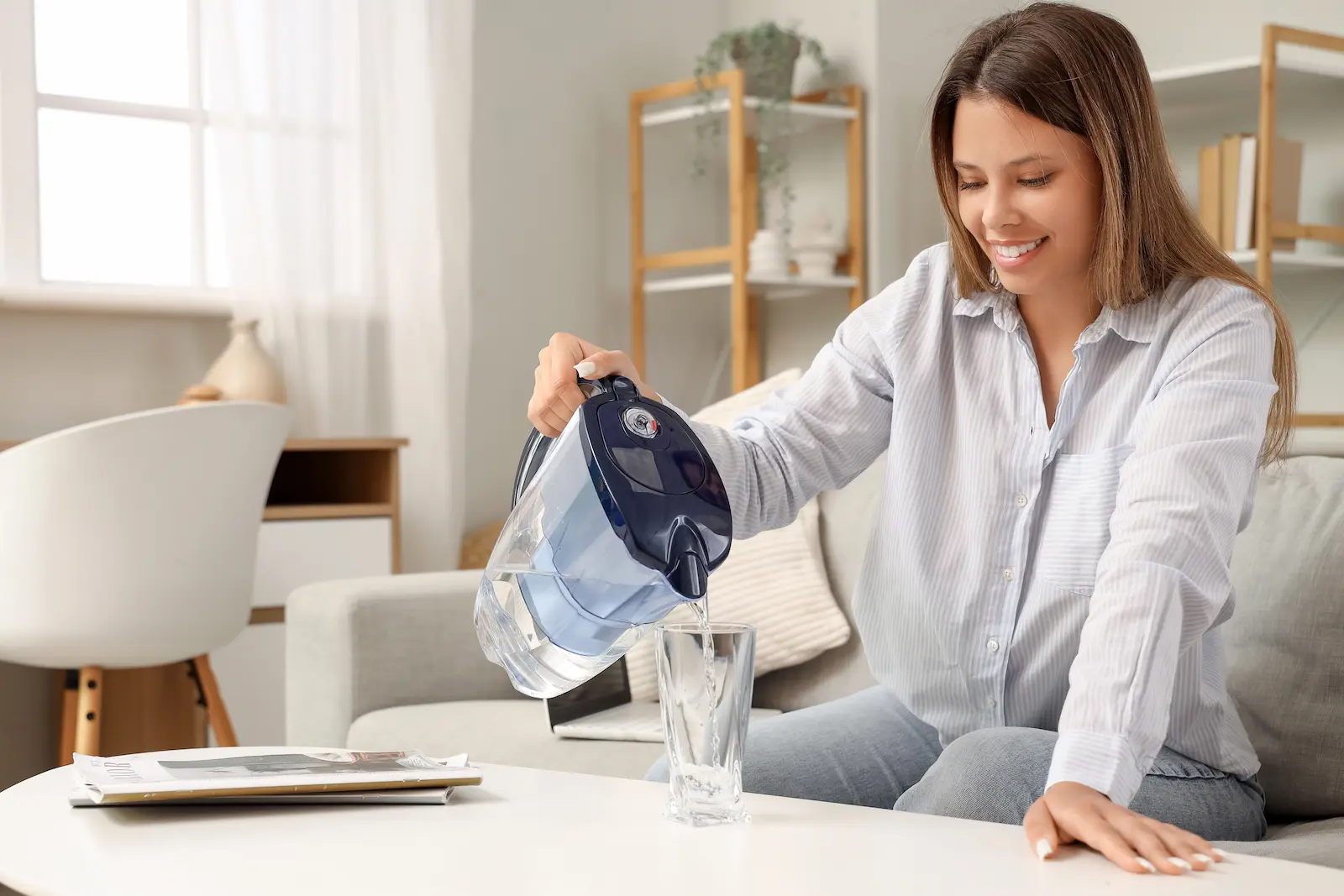
A water filter pitcher has two jobs at the kitchen counter. Water passes through a particular filter, then the pitcher holds enough filtered water for the next round of glasses. A pitcher that fills the dinner table in one pour may be awkward on a refrigerator door. A smaller one may need refilling just as everyone sits down.
The cartridge determines which substances a filter is designed to reduce. Two pitchers that look alike can have different documented claims, even within the same brand. The CDC’s guide to choosing a home water filter explains how to match the filter to the concern you have about your water.
The four pitchers here also ask different things of their owners. One uses granules poured into a reusable steel cartridge. Others use replaceable filters, including a system with two components on different replacement schedules. We compare those routines alongside filtered capacity and the claims documented for each exact filter.
Water Filter Pitcher Comparison: Filtration and Daily Use
We evaluated these pitchers using The Hearthful Standard, considering construction, filter design, everyday handling, replacement needs, and the clarity of performance claims. We selected Aarke for its glass vessel and reusable steel filter housing. Waterdrop offers conventional cartridge changes in a glass outer body, though its inner liner is plastic. Brita Everyday with Elite earned its place for a manufacturer-rated 120-gallon filter capacity, while LifeStraw Home combines a glass serving vessel with separate membrane and carbon/ion-exchange filters.
Some links in this guide are affiliate links. If you purchase through them, The Hearthful Home may earn a small commission at no additional cost to you. As an Amazon Associate, we earn from qualifying purchases.

Best for a refillable filter housing
Aarke Purifier Large
The Purifier Large combines a glass vessel with a reusable steel filter cartridge. Refill it with the specified granules, follow the manual date dial, and plan around its 1.66 L filtered-water capacity and the handling weight of glass.
Large · Glass vessel · Pure granules · 1.66 L filtered capacity

Best for glass with cartridge changes
Waterdrop PT-09W Glass Pitcher
The PT-09W combines a glass outer body, plastic inner liner, and replaceable cartridge. Its manual date dial supports replacement reminders. The advertised 10-cup format suits shared use, with space needed for the complete pitcher and hand washing.
PT-09W · White · Advertised 10-cup capacity · Replaceable cartridge
Best for a longer rated filter interval
Brita Everyday with Elite Filter
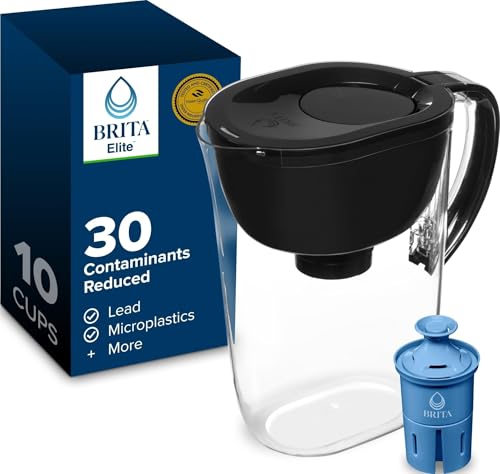
The Everyday pitcher with an Elite cartridge suits households that want a longer rated replacement interval. Brita specifies up to 120 gallons for Elite. Match the blue OB06 filter, track household use, and keep the pitcher on its hand-washing routine.
Everyday · Black · 10 cups · Elite OB06 cartridge

Best for two-stage filtration
LifeStraw Home 7-Cup Glass
The Home 7-Cup Glass combines a membrane microfilter with a separate carbon and ion-exchange filter. The Stormy Blue version pairs that system with a glass serving vessel and silicone base. Choose it around its smaller serving capacity, hand washing, and two replacement schedules.
Stormy Blue · 7-cup glass pitcher · Membrane and carbon/ion-exchange filters
What Matters When Choosing a Water Filter Pitcher
Match the Filter to Your Water
For utility-supplied water, start with the supplier’s water-quality report. A concern related to your own plumbing or a private well may call for appropriate testing at the tap. Write down the substance you want to address, then look for the corresponding claim for the exact pitcher-and-cartridge combination.
A chlorine taste-and-odor claim, a lead claim, and a claim for specified PFAS each answer a different question. NSF explains that drinking-water standards cover different treatment purposes. Compare the named reduction claim, model number, rated capacity, and use conditions together. Our pitcher certification guide shows how to read those details and follow the certification record.
Follow the Whole Water-Contact Assembly
A glass vessel can still have a plastic reservoir, filter housing, lid, or handle components. A stainless steel cartridge can hold replaceable resin and carbon media. Read the parts list and the cleaning instructions together: they explain both the materials you will use and which pieces need separate care.
Aarke and LifeStraw have glass serving vessels with separate working components. Waterdrop combines a glass outer body with a plastic inner liner, while Brita uses a plastic pitcher. Choose the documented assembly that fits your material preferences and lifting routine, then evaluate its filtration evidence separately.
Separate Ready-to-Pour Water From the Headline Size
Pitcher size can describe the total vessel, the filtered-water chamber, or a maker’s advertised cup count. The reservoir above the filter takes up some of the available space. Reading those labels separately helps you plan how much water will be ready to pour.
Fill the jug or bottles you use at one meal and note the total. Compare that with the pitcher’s filtered-water capacity, since water waiting above the filter is not ready to pour. Then check whether the cartridge is certified for the specific substance you want reduced. A longer replacement interval only helps once the pitcher meets both requirements.
Measure the shelf or counter space, including room for the handle, lid opening, and lifting the pitcher out. Use the pitcher size guide and capacity planner to compare available filtered water with the amount your household uses between refills.
Plan the Replacement Routine Before Buying
A refillable housing still needs fresh filter media. A replaceable cartridge needs preparation and a schedule that matches its instructions. Check both the volume rating and time limit, along with any water-quality conditions that can shorten the interval. Add the cost and availability of the exact replacement to your comparison.
For a practical ownership estimate, use our filter replacement and cost planner. Enter the cartridge’s stated limits and your household use to see which replacement trigger is likely to arrive first. Keep the manufacturer’s instructions alongside that planning estimate.
Choose a Cleaning Routine You Can Maintain
Check the vessel, reservoir, lid, indicator, and filter individually. Some approved pitcher parts can go in a dishwasher; others need hand washing. Filters themselves have separate preparation and care instructions. A convenient routine gives you room to remove parts, clean the vessel, and reassemble it correctly.
How We Evaluate Water Filter Pitchers
Our recommendations in this guide are research-based. Manufacturer manuals, current performance data sheets, exact retail formats, material disclosures, and replacement instructions form the evidence base for this comparison.
For filtration suitability, use the exact reduction claims and operating conditions described in the product notes.
Materials
The serving vessel, reservoir, lid, filter housing, and other disclosed components. We consider how clearly the complete assembly is described and how its construction fits handling and cleaning.
Design & Function
The relationship between usable capacity, filter design, filling, pouring, and the product’s intended role. Published performance information helps identify which water concerns the selected system addresses.
Use & Interaction
The steps needed to refill the pitcher, prepare filters, track replacement, and store the assembled vessel. Clear indicators and manageable maintenance support everyday use.
Durability & Longevity
Care requirements, reusable components, replacement arrangements, and the handling demands of the vessel. The assessment considers what keeping the system in service involves.
Transparency & Trust
Exact pitcher and cartridge identifiers, accessible instructions, current performance records, and clear conditions attached to claims. A useful document helps the buyer choose the right system and order the correct replacement.
A Closer Look at Each Pick
Best for a refillable filter housing
Aarke Purifier Large
Large · Glass vessel · Pure granules · 1.66 L filtered capacity
Choose the Purifier Large for a glass serving vessel and a filter housing you refill. It is a practical fit when you welcome that hands-on routine and have a comfortable place to lift and store it.
Price and availability last updated: 2026-11-25 at 19:25.
Materials
Aarke identifies a glass vessel and stainless steel components, alongside thermoplastic parts. That makes the Purifier Large material list useful for following the complete assembly. Choose it for its glass-and-steel construction while accounting for the other parts that make the pitcher work.
Design & Function
Aarke specifies 1.66 L of filtered-water capacity within a 2.84 L total vessel, so the larger number is not the amount ready to pour. The Pure granules combine activated carbon and polyacrylate ion-exchange resin. Aarke describes reducing limescale, chlorine, lead and copper under its stated test conditions; these manufacturer claims should be matched to the required substance rather than treated as a broad purification promise.
Use & Interaction
The refill routine involves emptying and replenishing the reusable cartridge, then setting the manual date dial. Aarke’s US instructions give a granule limit of up to 120 L or eight weeks. Match the supplied granules and their instructions when you reorder, and keep the vessel where its weight is comfortable to lift.
Durability & Longevity
The reusable housing supports repeated refills, while the glass vessel benefits from careful handling around a hard sink. Aarke permits dishwasher care at 140°F with the granules removed. Leave room to take the assembly apart and clean it between refills.
Transparency & Trust
The separate total and filtered capacities, named granule formulation, and US care instructions make this system relatively straightforward to document. For a particular contaminant concern, match the relevant performance evidence to the exact granules you plan to use.
- Glass vessel and reusable steel filter cartridge
- Separate filtered and total capacities are published
- Manufacturer-approved dishwasher routine
- Granule changes involve emptying and refilling the housing
- Glass handling and full-pitcher weight need consideration
- Replacement instructions must match the selected granules
Best for glass with cartridge changes
Waterdrop PT-09W Glass Pitcher
PT-09W · White · Advertised 10-cup capacity · Replaceable cartridge
Choose the PT-09W when the glass outer vessel and conventional cartridge-change routine are the deciding features. Its short stated warranty and incomplete exact-system certification trail are meaningful compromises. If a named contaminant reduction is essential, prioritize documented coverage for that precise system before choosing the vessel material.
Price and availability last updated: 2026-11-25 at 19:25.
Materials
The PT-09W has a glass outer vessel with a plastic inner liner and a silicone base, plus a separate lid, reservoir, and cartridge. The PT-09 instruction manual shows the removable parts. Consider the complete water-contact assembly when deciding whether this construction fits your preferences.
Design & Function
The 10-cup figure is the retail size designation for the white pitcher. Use an explicitly stated filtered capacity when comparing how much water is ready to pour. The selected PT-09W listing identifies the WD-PF01A-P cartridge, while the PT-09 manual specifies up to 100 US gallons or two months, whichever comes first. The manual date dial records a replacement reminder rather than measuring remaining filtration capacity. Leave clearance for lifting the lid and reservoir when filling or changing the cartridge.
Use & Interaction
The PT-09 instructions call for a ten-minute cold-water filter soak, secure cartridge seating and discarding the first two filtered batches. Those are defined preparation steps rather than an unusually complicated routine. Keep the exact WD-PF01A-P identifier with the instructions, since the similarly named PF01APlus is a different cartridge.
Durability & Longevity
Waterdrop specifies hand washing with mild detergent and avoiding abrasive cleaners, hot water and freezing. Its linked PT-09 manual states a three-month system quality warranty and a 30-day cartridge warranty, a limited support period that weighs against long-term ownership confidence. Keep the glass pitcher cool and away from direct sunlight, with enough room to remove and dry the parts.
Transparency & Trust
The IAPMO W-14269 listing covers WD-PF01A-P chlorine, taste and odor reduction under NSF/ANSI 42 in specified PT-04, PT-05, PT-07 and PT-61 systems. It does not list PT-09, so that certificate alone does not establish coverage for this selected pitcher. This recommendation is limited to its glass-vessel and replaceable-cartridge format; for a specific reduction requirement, choose a system whose exact pitcher-and-filter combination is documented for that claim.
- Glass outer body with a protective silicone base
- Replaceable cartridge and manual date reminder
- Separate parts shown in the care instructions
- Pitcher components require hand washing
- Advertised cup size should be checked against usable filtered capacity
- Short stated warranty and no PT-09 entry in the reviewed IAPMO certificate
Best for a longer rated filter interval
Brita Everyday with Elite Filter
Everyday · Black · 10 cups · Elite OB06 cartridge
Choose Everyday with Elite for its longer rated cartridge interval and a clear replacement code. It fits a household prepared to track use and maintain the pitcher separately from the filter.
Price and availability last updated: 2026-11-25 at 13:10.
Materials
The Everyday uses a plastic vessel with a removable reservoir and cartridge, a practical construction for regular lifting and hand washing. Glass remains an alternative material preference rather than an automatic quality upgrade. Separate the body, lid and filter during care instead of assuming every component can be washed the same way.
Design & Function
The selected retail model is OB46 with the blue Elite OB06 filter, a combination identified in Brita’s current performance sheet. The document includes lead and chlorine reduction for that combination. Some other claims have narrower system lists, so OB60 entries should not be transferred to this OB46 pitcher merely because both can appear under the Everyday name.
Use & Interaction
Brita rates Elite for up to 120 US gallons, described as about six months for average family use. The same performance sheet recommends processing no more than two gallons daily for maximum efficiency. Track both time and use rather than treating six months as an unconditional interval for every household.
Durability & Longevity
Brita’s filter and pitcher care guidance calls for cold tap water and hand washing of the appropriate pitcher parts. Keep the cartridge out of the wash, prepare replacements as directed, and clean the vessel as part of the ongoing routine. Hard water can call for earlier filter replacement.
Transparency & Trust
Brita provides a named cartridge, system-specific performance tables, operating conditions and certification conformance statements in one accessible document. The footnotes distinguish OB46 from systems covered for additional claims, making those boundaries usable when comparing a water report. Keep OB46 and OB06 together when ordering a replacement or checking a claim.
- Elite has a 120-gallon rated capacity
- Current performance sheet identifies the system and filter
- Documented lead and chlorine reduction claims
- Plastic vessel rather than glass
- Hand washing remains part of ownership
- Replacement timing follows usage and filter instructions
Best for two-stage filtration
LifeStraw Home 7-Cup Glass
Stormy Blue · 7-cup glass pitcher · Membrane and carbon/ion-exchange filters
Choose the Stormy Blue LifeStraw Home 7-Cup Glass for its two-stage system and glass serving vessel. Check that its seven-cup capacity suits your needs, and allow for hand washing and two separate filter-replacement schedules.
Price and availability last updated: 2026-11-25 at 13:10.
Materials
LifeStraw specifies a borosilicate-glass pitcher with a silicone base and plastic working components. The glass holds the filtered water while the filter housing organizes the two stages. Consider the complete assembly and leave room for careful handling at the sink.
Design & Function
The Home uses a membrane microfilter together with an activated carbon and ion-exchange filter. LifeStraw describes these as complementary stages with separate replacement parts. The removable housing keeps the filtration assembly distinct from the glass serving vessel, which has a seven-cup format for everyday refills.
Use & Interaction
Track the two replacement schedules separately. LifeStraw specifies up to 264 gallons or one year for the membrane and 40 gallons or two months for the carbon and ion-exchange filter. Initial setup includes aligning the housing and pitcher spouts and preparing the filters as directed.
Durability & Longevity
Separate replacement filters let you maintain the system without replacing the glass pitcher at each interval. LifeStraw’s current care card calls for hand washing the vessel and rinsing the filter assembly with water. Keep soap off the filters and protect the glass from knocks during cleanup.
Transparency & Trust
LifeStraw names the two replacement filters and provides separate setup, cleaning, and replacement instructions. Save the Home model name and both filter descriptions with your purchase records. When a specific reduction claim guides the purchase, match the supporting document to the exact version and filter combination.
- Glass serving pitcher with a silicone base
- Membrane filtration paired with carbon and ion-exchange media
- Membrane and carbon filters are replaced separately
- Two filter types have different replacement schedules
- Seven-cup serving size may require more refills
- Glass handling and hand washing remain part of the routine
Make the Pitcher Easy to Own
Save the Cartridge Code With the Instructions
Keep the exact replacement code, preparation instructions, and opening date together. A photograph of the cartridge package makes the next order easier. If you change filter type, update the schedule and performance information at the same time.
Use Cold Water and Prepare Each New Filter
Follow the selected filter’s soaking, rinsing, or flushing steps before serving water. Use the water temperature permitted by the maker. Preparation instructions differ across these systems, so a familiar routine from a previous cartridge may need adjusting.
Keep Cleaning Separate From Cartridge Replacement
Replacing filter media is one maintenance task; cleaning the pitcher and reservoir is another. Follow the wash instructions for each part and reinstall the cartridge correctly. Keep the pitcher in the storage conditions the maker specifies, with enough space to remove it comfortably.
Check the Claim Again When Your Needs Change
If a new water report identifies a different concern, revisit the exact filter’s performance sheet. A cartridge chosen for taste may have a different scope from one chosen for lead or specified PFAS. The EPA’s PFAS filter guidance directs buyers to certification information for the relevant reduction claim.
Water Filter Pitcher FAQs
Which pitcher should I choose first?
Choose by the job you need it to do. Aarke suits a refillable steel cartridge and glass serving vessel. Waterdrop offers glass with conventional cartridge changes. Brita Everyday with Elite emphasizes a longer rated filter interval. LifeStraw Home combines a membrane and carbon filter in a seven-cup glass pitcher, with two replacement schedules. Match any required reduction claim before deciding on materials and convenience.
Is a glass pitcher completely plastic-free?
Check the full parts list. A glass vessel can use plastic in its reservoir, lid, filter housing, or other components. Aarke pairs its glass serving vessel with other working parts. Waterdrop’s selected model has a glass outer body and a plastic inner liner.
Does a filter-change light measure contamination?
Read how the indicator works for that exact model. A manual date dial is a reminder, and electronic systems may track time or an estimate of use. Follow the cartridge’s replacement instructions and water-quality conditions when deciding when to replace it.
Can a pitcher reduce PFAS?
Some pitcher-and-cartridge combinations have claims for specified PFAS. Check the named substances, applicable system, certified claim, and rated service life. Keep that defined scope with the claim.
Will a pitcher solve hard-water problems?
The USGS describes water hardness mainly in terms of dissolved calcium and magnesium. Some pitcher media are designed to reduce hardness-related scale for the water you pour through them. Choose a product with relevant documentation for that purpose. Treating a pitcher of drinking water and treating a home’s full water supply require different equipment.
Can I use these pitchers during a boil-water advisory?
Follow the advisory and your local water authority’s instructions, including any direction to use bottled or boiled water. Check the exact pitcher’s instructions too, and follow the prescribed water-use precautions throughout the advisory.
Is a larger gallon rating always better value?
Compare the filter price, rated volume, time limit, and actual household use together. At lower use, the time limit may arrive before the volume limit. At higher use, the volume limit can determine replacement. Include the preparation and cleaning routine in the decision as well as cartridge cost.
Important: This article provides general information, not individualized medical, safety, installation, legal, or other professional advice. Product specifications, instructions, and safety information can change; verify current information with the manufacturer and consult an appropriately qualified professional when needed. See our Terms and Conditions for additional information.