
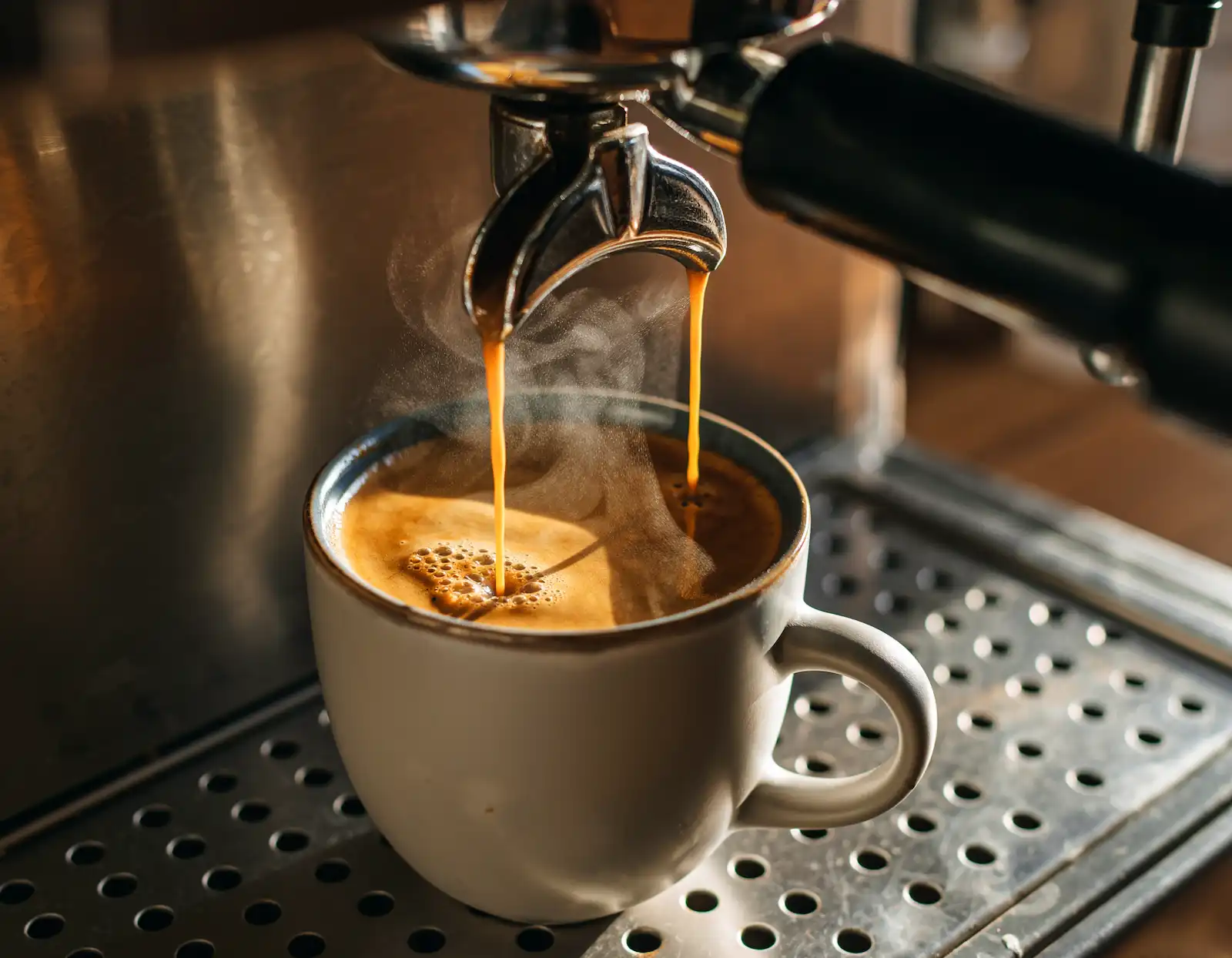
A coffee maker can look almost entirely glass or steel on the counter while water travels through a plastic tank, a hose and a filter basket before it reaches the carafe. A pour-over brewer is easier to picture. Hot water leaves the kettle, passes through the grounds and filter, and lands in the vessel below.
That route is what makes a low-plastic coffee maker worth looking at piece by piece. The FDA distinguishes a finished food-contact article from the materials used to make it. A glass carafe tells you where the finished coffee sits. It says little about the components upstream.
The practical choice is also about how you like to brew. An automatic machine can handle a batch while you make breakfast. A glass pour-over turns that time into a hands-on pour, and a stainless steel press trades paper filters for a metal screen that needs rinsing. Those differences matter long after you’ve settled the materials question.
Coffee Maker Comparison: Materials and Tradeoffs
We evaluated these coffee makers using The Hearthful Standard, which considers materials, design, everyday use, durability, and the clarity of product information. We chose the Ratio Eight Series 2 for automatic brewing with a stainless steel basket and glass carafe. Our manual picks offer three other useful approaches: CHEMEX combines brewing and serving in one glass vessel, Frieling pairs immersion brewing with an insulated stainless steel press, and the Hario V60 provides a compact ceramic dripper for brewing into a separate mug or server.
Some links in this guide are affiliate links. If you purchase through them, The Hearthful Home may earn a small commission at no additional cost to you. As an Amazon Associate, we earn from qualifying purchases.
Automated batches, plastic cold-water tank
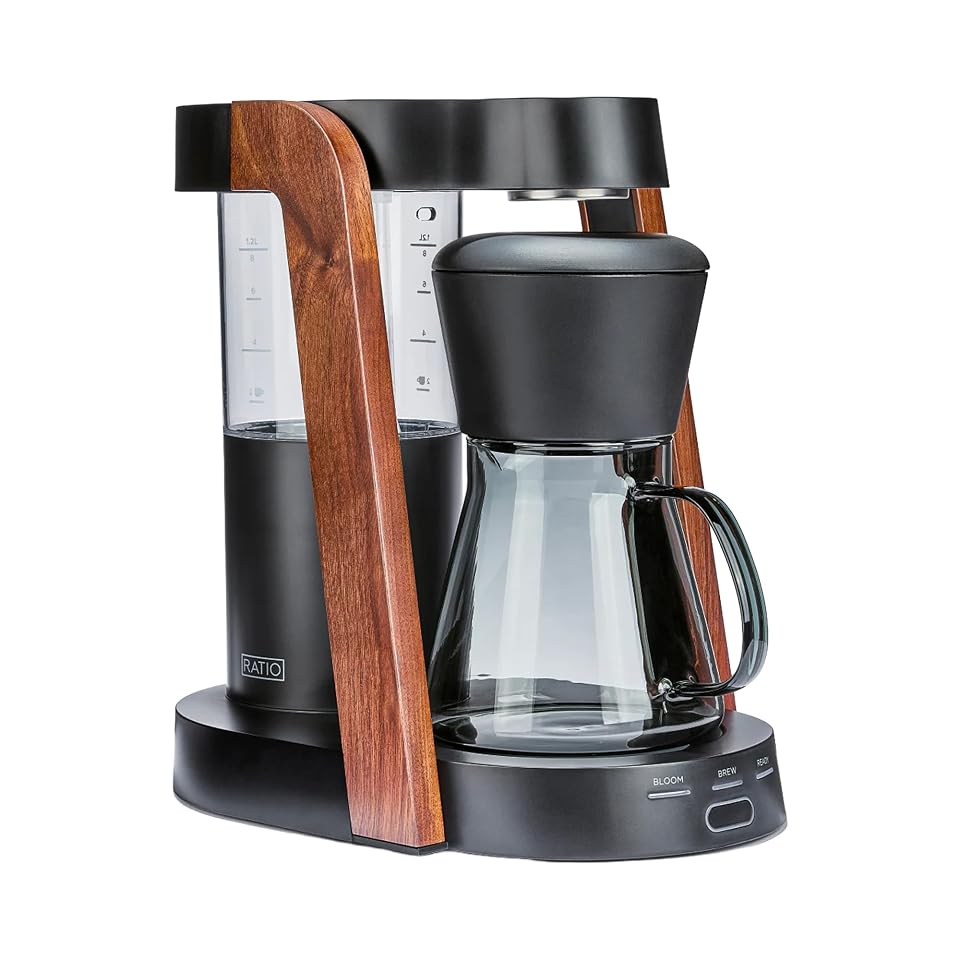
Ratio Eight Series 2 Coffee Maker
The Eight Series 2 pairs automatic brewing with a stainless basket and glass carafe. Two batch programs handle water delivery, while the Tritan reservoir and silicone connections remain part of the machine. It suits a routine where you want less manual pouring and serve coffee soon after brewing.
R8S2-72-W-GCS-1 · Matte black · Glass carafe

Larger glass batches, hands-on pouring
CHEMEX Classic 8-Cup Coffee Maker
The CHEMEX combines brewing and serving in one glass vessel, making it a useful choice for sharing coffee. Its paper filter and visible coffee path keep the setup straightforward, while manual pouring and careful handling remain part of every batch.
CM-8A · Glass, wood collar

Insulated steel, more filter cleanup
Frieling 36-Ounce Stainless Steel French Press
Frieling pairs an insulated steel vessel with a reusable metal filter for an immersion brewing routine. It suits someone who wants to skip disposable papers and glass handling, with filter cleaning and the weight of a filled press worth considering.
0144 · Brushed stainless steel

Compact ceramic, separate serving vessel
Hario V60 Ceramic Coffee Dripper 02
The ceramic V60 makes a compact starting point when you already have a suitable mug or server. It gives you direct control over the pour and a simple dripper to clean, while the kettle, paper filters, and serving vessel complete the setup.
VDC-02W · White porcelain
What Actually Matters in a Plastic-Free or Low-Plastic Coffee Maker
Start with your ordinary batch and the time you want to spend making it. Then trace the water and coffee through the complete setup. These checks keep the shortlist practical while the supporting guides explore each question in greater detail.
Trace the Complete Water and Coffee Path
For an automatic brewer, identify the reservoir, heater, connecting lines, showerhead, basket, and carafe. For a manual setup, include the kettle, dripper or press, filter, and serving vessel. Note which parts contact cold water, hot water, grounds, brewed coffee, or condensation. A plastic handle outside that path is a different consideration from a plastic brew basket.
The coffee maker materials guide provides the detailed contact map. Product photos help identify visible parts, but model-specific documentation is needed for internal components. Keep the exact basket, carafe, lid, and any optional accessories in the comparison. For a closer look at those tradeoffs in daily use, our Moccamaster KBGV Select review covers its plastic basket and lids, glass carafe, and cleanup.
Decide What Plastic-Free Means for Your Purchase
You may want a brewer without plastic parts, a hot-water path centered on glass and metal, or simply fewer plastic components. Set that preference before comparing products. This guide describes the actual arrangement instead of treating all three goals as interchangeable. Silicone is identified separately where documented, since avoiding all synthetic polymers is a stricter requirement.
If you want an automatic brewer, the Ratio Eight Series 2 keeps the basket steel and the carafe glass, but its reservoir is Tritan and its connections include silicone. If your priority is seeing every surface the hot coffee touches, compare the glass CHEMEX with its paper filter and the Frieling steel press with its reusable metal filter. One asks you to pour the water, the other to clean the press after brewing.
BPA-free is a claim about a particular substance, not a synonym for plastic-free. Likewise, food-contact suitability depends on the material and its intended use; the FDA’s conditions-of-use categories distinguish different food types and temperature conditions. A material preference is useful on its own without turning the choice into a promised health benefit.
Choose the Amount of Brewing Attention You Want
A pour-over gives you responsibility for the water delivery. A French press replaces repeated pouring with an immersion period and a press. An automatic drip machine handles the delivery sequence after you prepare the filter, grounds, and water. All three still involve setup, serving, and cleanup.
Our manual vs. automatic coffee maker guide compares those routines. Think about whether you enjoy attending to a single brew or need to prepare breakfast while a batch runs. The best fit should work on an ordinary weekday as well as a relaxed weekend.
Translate Brewer Cups Into Your Own Mugs
A manufacturer’s cup count may be much smaller than the mug you normally fill. CHEMEX defines its cups as 5 fl oz, so an eight-cup model has a 40 fl oz rating. That does not mean eight large mugs. A dripper’s cup range is different again, because the mug or server underneath sets another limit.
Measure a normal serving and count how many people drink together. Include the manufacturer’s minimum batch and the difference between water added and coffee collected. Our coffee maker size guide explains those distinctions, including retained water in the grounds and practical batch examples.
Match the Filter and Pouring Style to Your Preferences
CHEMEX and the ceramic V60 use shaped paper filters, while the Frieling uses a reusable metal filter assembly. Filter choice, grind, and method all contribute to the cup and the cleanup routine. A reusable filter needs thorough washing; paper needs a compatible shape and an ongoing supply.
For pour-over brewing, the kettle and grind are part of the setup. Baratza’s V60 brew guide explains how pouring and grind adjustments affect that method. Our coffee and tea kettle guide and coffee filter guide can help complete the arrangement without adding equipment you will rarely use.
Separate Brewing Temperature From Serving Temperature
The water at the coffee grounds and the coffee in your mug are different measurements. A glass vessel can suit prompt serving, while a thermal vessel may fit people who drink at different times. Look at the chosen brewer’s heating and holding arrangement rather than expecting a particular exterior material to establish temperature performance.
The SCA Certified Home Equipment program evaluates specific brewer models under its standards. Check the exact listing when certification matters; a brand name or a different generation does not establish it for another machine. Our brewing temperature guide explains what to check at the grounds and how batch size affects the conditions.
Look at the Parts You Will Wash Every Day
A wide opening can make the inside easier to reach. A press filter has screens and joints to separate. A one-piece glass brewer combines brewing and serving in the same vessel. Examine those ordinary tasks before choosing on appearance, and check whether dishwasher guidance applies to the whole item or only named parts.
Washing away coffee residue and removing mineral scale are separate jobs. The USGS explains how heating hard water can leave calcium carbonate deposits. Use the maker’s recommended cleaning and descaling methods for the specific equipment. Our cleaning and descaling guide covers the difference without applying one cleaner to every material.
Check Replacement Parts Before You Need Them
Look for the exact carafe, basket, filter assembly, collar, lid, or seal in the parts catalog. Matching a brand is not enough when generations and capacities differ. A visible service route also matters for an automatic machine with a heater and electronics.
The coffee maker repairability guide explains how to compare parts access, service, and warranty terms. Distinguish a manufacturing-defect warranty from accidental glass breakage, wear, or scale damage. A simple design can reduce the parts involved while still requiring complete replacement if its main body breaks.
Budget for the Whole Setup and Its Ongoing Supplies
A dripper may need a separate vessel, filters, kettle, and scale. A French press needs heated water and a suitable grinder setting. An automatic brewer may include the carafe and basket but still require filters, cleaning supplies, and an optional thermal vessel if your serving routine calls for one.
Start with what you already own and add only the missing pieces. Compare the exact model and bundle, then account for filter availability, cleaning, and likely replacement parts. A compact manual brewer can be an affordable starting point; automatic water delivery is a separate convenience to decide whether you value.
How We Evaluate Plastic-Free and Low-Plastic Coffee Makers
Our recommendations in this guide are research-based. Manufacturer technical documentation, component descriptions, brewing instructions, and authoritative coffee and materials guidance form the evidence base for this comparison.
A product is assessed on how well its documented design supports its intended role.
Manufacturer materials, capacity, temperature, filtration, care, and warranty claims remain attributed to their sources. The product breakdowns connect those details to everyday choices, from preparing a batch to cleaning and replacing parts.
Materials
We evaluate the documented materials in the water and coffee path, serving vessel and frequently handled components. The component map distinguishes glass, steel, ceramic, plastic and silicone, together with the care each arrangement requires.
Design & Function
We consider the brewing method, batch range, water delivery, filtration and serving arrangement together. A straightforward manual design can serve its role well without a long feature list.
Use & Interaction
We examine preparation, pouring or pressing, filling, serving, washing and the attention a batch needs. The useful question is whether those steps suit the person likely to choose that brewing format.
Durability & Longevity
We consider construction, replaceable parts, cleaning access, repair options and warranty terms. Separate support for the main body and smaller working parts helps explain the practical ownership arrangement.
Transparency & Trust
We check exact model identification, component materials, capacity definitions, care instructions and warranty conditions. Consistent documentation helps the buyer understand the selected configuration before ordering.
Their factors reflect different ownership arrangements, including an automatic machine with extended support, a renewable exterior grip, replaceable press components and a simple porcelain dripper with brief defect coverage. Use the product breakdowns to decide which arrangement fits your routine.
A Closer Look at Each Pick
Automated batches, plastic cold-water tank
Ratio Eight Series 2 Coffee Maker
R8S2-72-W-GCS-1 · Matte black · Glass carafe
Choose the Eight Series 2 when automatic batch brewing and a stock stainless basket matter enough to justify the purchase. Its glass-carafe arrangement fits prompt serving, with a documented plastic reservoir and silicone connections to consider alongside the metal and glass brewing components.
Price and availability last updated: 2026-11-25 at 11:13.
Materials
The Series 2 materials breakdown identifies borosilicate glass water lines, an aluminum heater, silicone connections, and a 304 stainless showerhead. The stainless basket and glass carafe continue that clearly described contact path. Ratio separately explains that its Tritan reservoir holds cold water before heating. The brewing path uses glass and metal where the manufacturer identifies those components. It also sets the scope: this is a low-plastic machine with silicone components, rather than a brewer made entirely without polymers. The choice is about the materials you prefer, without assigning a health outcome to that preference.
Design & Function
The current product specifications describe a brewer that makes up to 40 fl oz, or eight of the manufacturer’s 5 fl oz cups. That is a shared batch, not eight full-size mugs. Its one-button control runs the bloom and brew sequence, with a choice between two programs. Ratio documents Recipe B for smaller batches of two to four brewer cups and Recipe A for four to eight. The machine manages water delivery without a complicated control panel. Match its batch range to your usual serving needs using our coffee maker capacity guide.
Use & Interaction
The glass-carafe version fits someone who serves coffee once the batch is ready. Ratio’s serving guidance recommends preheating the vessel and serving promptly; a separately purchased thermal carafe is the alternative for a longer morning. The brewer has no warming plate, so how you serve the coffee is part of choosing this version. Daily care remains accessible: the Series 2 cleaning instructions describe a wide opening for reaching the interior and recommend hand washing. Automatic pouring reduces the attention needed during brewing, while filling, removing the used filter, and washing the basket and carafe remain ordinary parts of the routine.
Durability & Longevity
Ratio provides a five-year limited machine warranty and a stated paid-repair route for excluded faults. Its catalog lists a replacement Series 2 glass carafe and separate drippers and carafes, giving the owner a way to replace those pieces independently of the powered brewer. The longer machine coverage and defined repair route are useful reasons to choose this automatic system for ongoing ownership. Accidental damage, scale-related neglect and the glass carafe itself are excluded from warranty coverage; the owner pays shipping to the service center. Follow Ratio’s descaling instructions alongside daily washing and retain the model, serial number and purchase record.
Transparency & Trust
The documentation makes a meaningful distinction between the cold-water tank, the heating path, and the parts that hold brewed coffee. That detail earns more confidence than judging the machine from its exterior alone. The Ratio model guide also separates the standard Six basket from the Eight Series 2 arrangement, helping you identify which version you are buying. Keep that same specificity when comparing listings: the glass carafe is included here, while the thermal version is an additional purchase. Ratio identifies the remaining plastic and silicone components. Its brewing claims come from the manufacturer.
- Stock stainless brew basket and included glass carafe.
- Two batch programs with automatic water delivery.
- Detailed component information and a repair service route.
- Tritan cold-water tank and silicone remain in the system.
- Glass carafe suits prompt serving; thermal carafe costs extra.
- Hand washing and regular descaling are required.
Larger glass batches, hands-on pouring
CHEMEX Classic 8-Cup Coffee Maker
CM-8A · Glass, wood collar
Choose the Classic 8-Cup when you want a larger manual batch in a single glass brewer and server. It is especially appealing if you enjoy the preparation and have space to handle the glass carefully. Match the 40-ounce size to your real mugs and check the Amazon seller.
Price and availability last updated: 2026-11-25 at 11:13.
Materials
CHEMEX identifies its brewer as borosilicate glass and its bonded filter paper as wood pulp in its materials documentation. With the standard paper filter installed, the brewing and serving route is paper and glass. The wood collar and leather tie sit outside that route and provide the grip.
This is the main materials advantage: you can see the vessel that receives the coffee and distinguish it from the exterior handling pieces. Check any optional filter, lid, or storage accessory separately if you change the standard arrangement.
Design & Function
The CM-8A specification combines the filter support and serving pot in a single glass body. Lift out the spent paper filter and the pot is ready for the table. CHEMEX counts each cup as 5 US fluid ounces in its size guide, so the Classic 8-Cup holds 40 ounces. Compare that capacity with the mugs you actually fill.
The design also keeps the brewing water under your control. It makes sense when the preparation is part of the routine you enjoy. If several people need coffee while you handle breakfast or leave for work, consider whether you have time to manage the pour alongside those tasks.
Use & Interaction
The CHEMEX brewing guides cover brewing, filter folding, and tying the collar. Those small setup details are worth learning because the filter and collar are working parts of the routine. Lay out the filter, coffee, and kettle before starting so the process stays comfortable.
Cleanup includes the vessel and its grip. The care guidance allows hand washing or a carefully secured dishwasher position after removing the collar and tie. Consider that extra handling when comparing it with a simple open dripper, especially if your sink or dishwasher is usually crowded.
Durability & Longevity
CHEMEX sells a replacement large collar and tie that fits this model, so wear to the removable grip does not require discarding an intact brewer. The single glass body has no valve, motor or filter mechanism to service, and its inside is accessible with a suitable brush. Give it a protected place to wash and store, with the collar removed for the manufacturer’s permitted cleaning method.
With no electronics to maintain, the main care priorities are protecting the glass and keeping the inside clean. A clear landing area and a suitable cleaning brush may matter more to long-term ownership than buying another accessory. Our repairability guide explains how to assess replaceable parts.
Transparency & Trust
CHEMEX publishes material, sizing, care, and spare-part information, making the main ownership questions relatively easy to answer. One purchase detail deserves attention: its warranty terms limit Amazon coverage to purchases from the Chemex Coffeemakers seller account with valid proof of purchase. Check the seller when ordering.
The clear glass-and-paper construction supports this recommendation without needing a broader purity promise. Choose it for the documented beverage path and manual batch format. Water quality, the kettle, the filter you use, and the brewing recipe still contribute to what reaches your cup.
- Paper-and-glass brewing and serving path.
- Integrated brewer and serving vessel for shared batches.
- Replacement collar and tie available.
- Pouring and filter setup require attention.
- Collar and tie come off for washing.
- One-piece glass body needs careful handling.
Insulated steel, more filter cleanup
Frieling 36-Ounce Stainless Steel French Press
0144 · Brushed stainless steel
Choose the Frieling when you want an insulated steel press with replaceable filtration parts and a reusable-filter routine. Check whether the filled weight suits your hands and serving habits, then confirm the seller’s warranty eligibility before ordering.
Price and availability last updated: 2026-11-25 at 11:13.
Materials
Frieling describes the brushed French press as entirely stainless steel, including its insulated body and lid. The documented 18/10 steel construction gives this pick a particularly straightforward material case. It also uses a reusable metal filtration assembly instead of a disposable paper cone.
For this guide, the appeal is the specified vessel and coffee-contact construction. There is no glass carafe to handle, and the brushed exterior avoids the care differences associated with Frieling’s colored finishes. The exact finish and model should remain visible when comparing listings, since the family includes several sizes and treatments.
Design & Function
The double-wall arrangement suits someone who wants insulation built into the brewer. Model 0144 has a listed empty weight of 2.5 pounds, which is worth considering before adding water and coffee. The model specifications make that handling tradeoff clear.
The coffee steeps in the serving pot. The grounds take up some of its 36-ounce capacity, so allow for a smaller finished batch when deciding how many mugs you can serve together.
Use & Interaction
The Frieling instructions call for medium-ground coffee, water below the bottom of the spout, and a four-minute steep followed by gentle plunging. That provides a clear starting routine. Fine grounds or excessive force are unsuitable for the press, so follow its instructions when setting up the grind and serving.
Afterward, empty the grounds and clean the vessel and filter assembly. The stainless exterior version and its components are dishwasher safe according to the manual. The reusable filter removes paper purchases from the routine, while giving you more pieces and retained grounds to clean after brewing.
Durability & Longevity
Frieling lists replacement screens and brushed plunger assemblies separately from the complete press. That gives the owner a defined replacement route for the filter assembly while keeping an intact steel body in use. Confirm current stock for the exact 36-ounce size and brushed finish before relying on a replacement, and keep the model number with your purchase record.
Check which parts you can replace before you choose the brewer. A strong vessel is more useful when its smaller working components are obtainable. Inspect the filter assembly during cleaning and follow the supplier’s guidance when replacement is needed. Availability today is a useful buying signal, even though future stock can change.
Transparency & Trust
Frieling’s current manufacturer page states a five-year warranty, while the Amazon listing details showed one year when checked. Confirm which terms apply to your purchase. Frieling’s warranty policy also requires an authorized seller; Amazon fulfillment alone does not establish that eligibility.
The manufacturer provides useful construction and parts information, but its absolute sediment claims should remain attributed marketing. Confirm which warranty applies to the exact model and seller. Make the decision around the steel construction, reusable filtration, and serviceable parts rather than an assumed guarantee of perfectly sediment-free coffee.
- Manufacturer specifies stainless steel throughout.
- Insulated body and lid with reusable filtration.
- Separate screens and plunger assemblies listed by size.
- Grounds and filter assembly need cleaning after use.
- The listed 2.5-pound empty weight increases when filled.
- Published warranty periods differ and need confirmation.
Compact ceramic, separate serving vessel
Hario V60 Ceramic Coffee Dripper 02
VDC-02W · White porcelain
Choose the ceramic V60 02 when a compact manual dripper and your own serving vessel fit the routine. It makes a useful entry into controlled pour-over brewing, provided you are comfortable supplying the kettle, matching filters, and attention to the pour.
Price and availability last updated: 2026-11-25 at 16:43.
Materials
The US specification for VDC-02W identifies the dripper as porcelain made in Japan. The classic body includes its own base and handle. Used with a fitted paper filter over a suitable vessel, it provides a simple paper-and-ceramic brewing arrangement with the server chosen separately.
That separate vessel is part of the materials decision. A ceramic cone does not establish what touches the finished coffee in your mug, server, or lid. Choose those pieces intentionally, and check the complete water and coffee path if minimizing plastic contact is the reason for the purchase.
Design & Function
The VDC-02W design description shows spiral ribs inside the cone and one large opening underneath. Hario’s V60 brewing manual explains how pouring speed changes the brew. Once you find a grind you like, you can adjust the pour for the next cup.
The dripper needs a stable seat on its receiving vessel and enough room below for the planned batch. A manufacturer’s cup range should not be read as a promise of that many large mugs. Our coffee maker size guide helps translate brewer labels into the amount you actually serve.
Use & Interaction
The Hario V60 brew guide pairs the size 02 dripper with matching paper filters, a kettle, a scale, and a mug or server. Its preparation includes warming the dripper and vessel with the filter rinse. That illustrates the appeal and the attention involved: a small brewer can still support a deliberate routine.
Start with a repeatable batch and change one brewing variable at a time. A kettle that pours comfortably is especially useful here. Consider the gooseneck features that affect control before buying more accessories, particularly if your existing kettle already makes the pouring process comfortable.
Durability & Longevity
The open ceramic body gives straightforward access for cleaning, with no plunger assembly to maintain. Its one-piece shape also means a damaged cone or handle is a brewer replacement decision. Protect it from impacts during washing and storage, and inspect it if it has been knocked.
The Hario USA limited warranty covers manufacturing defects for 90 days on non-electric products bought from an authorized US seller, with normal wear and negligence excluded. That short defect-coverage period is a specific ownership limitation even though the open porcelain body has little mechanism to maintain. Keep the receipt and exact model details for any support request.
Transparency & Trust
The model code makes a useful difference. Hario’s ceramic dripper catalog identifies VDC-02W as the classic white porcelain model. The newer Switch & Match ceramic 02 has a removable plastic base, so the two should not be treated as the same material configuration when shopping.
Use that model number when checking parts and instructions. Choose the listed classic version for its documented construction, then assess the filter and receiving vessel as separate components. Keeping the exact model in your purchase record also makes it easier to follow the appropriate care instructions and locate matching filters.
- Classic one-piece porcelain dripper with integral handle.
- Compact body works with a suitable separate mug or server.
- Open design provides easy access for cleaning.
- Kettle, paper filters, and receiving vessel are separate needs.
- Pouring and measuring remain manual tasks.
- Porcelain needs protection from knocks and drops.
Tips for Better Coffee Maker Ownership
A useful setup combines the brewer with a repeatable routine and care that suits its materials. Begin with the manufacturer’s instructions, then make small adjustments around the coffee and serving sizes you actually use.
Build a Repeatable Starting Recipe
Measure the coffee and water instead of changing the dose, grind, and pour pattern at the same time. Record a starting recipe that fits the brewer’s intended batch range. When a result needs adjustment, change one variable so the next brew tells you something useful.
For a manual brewer, include the kettle routine and pouring pattern in that record. Our coffee grinder guide and coffee scale guide cover tools that can make those steps easier to repeat. An existing tool that does the job is a good place to start.
Size the Batch Around When People Drink
Prepare a shared batch when everyone will drink together, or consider a smaller brew when coffee would otherwise sit. Follow the brewer’s maximum fill and minimum batch guidance. Leave the working room required for grounds, foam, and the press assembly where applicable.
Use the capacity guide to translate the rated size into your mugs. If you want to keep a portion for later, check the material and lid arrangement of a separate coffee carafe as carefully as the brewer itself.
Keep Coffee Residue and Scale on Separate Care Routines
Remove used grounds and filters, then wash the approved removable parts as directed. Reach the seams, screen edges, underside of the lid, and other places where residue collects. A water rinse may remove loose grounds without completing the manufacturer’s cleaning routine.
Descale equipment with a heated water path using its approved method and interval. Follow the separate kettle guidance for a manual setup. Our coffee maker cleaning guide distinguishes washing, periodic deeper cleaning, and descaling so each task addresses the right problem.
Protect Glass and Ceramic During Handling
Give the brewer a stable place to stand and enough room around the sink. Follow its temperature and cleaning instructions, and avoid knocking the rim, spout, or base against hard surfaces. Check for damage before use and replace a cracked brewing or serving vessel.
Do not assume that a glass coffee maker is suitable for every stovetop or warming device. Use only heat sources and accessories the manufacturer expressly permits for that model. A steel or ceramic exterior does not replace those instructions.
Keep Filters and Replacement Details Easy to Find
Record the selected model, filter shape and size, and the part numbers for components likely to need replacement. Save the receipt and warranty information. For a press, keep the filter assembly’s disassembly and reassembly instructions with that record.
Check fit before ordering parts from another generation or capacity. The repairability guide shows how a little research before purchase can make a later replacement more straightforward.
Match Water Treatment to an Actual Need
Begin with suitable drinking water and the brewer’s water guidance. If scale builds quickly, review local hardness information and the manufacturer’s descaling advice. If considering a filter, check which substances it is designed to reduce; filtration does not automatically mean hardness removal.
Keep material choices, water chemistry, and brewing adjustments distinct when troubleshooting taste. A new carafe material alone does not establish why a cup changes. The brewing temperature guide explains how heat fits alongside the other extraction variables.
Plastic-Free and Low-Plastic Coffee Maker FAQs
Which of these coffee makers should I choose?
Choose Ratio Eight Series 2 for automatic batches with a documented low-plastic arrangement, CHEMEX for a glass pour-over brewer and serving vessel in one, Frieling for stainless immersion brewing, or the classic ceramic V60 for a compact dripper paired with your own mug or server. Start with the method you want to use regularly.
Which of these coffee makers can I use to avoid plastic contact?
For the simplest water path to check, start with a manual pour-over. The automatic Ratio includes a Tritan cold-water reservoir and silicone connections. The manual selections offer simpler glass, stainless steel, or porcelain brewing components, but the complete setup still includes your chosen kettle, filter, and any separate vessel or lid. Check those parts if your goal is to avoid all plastic contact.
Does BPA-free mean a coffee maker is plastic-free?
No. BPA-free describes the absence of a particular substance under the stated claim. A BPA-free reservoir or basket can still be plastic. The materials guide explains how to separate substance claims from the actual material used in each part.
Does a stainless steel exterior mean the inside is stainless steel?
No. A metal housing can surround a plastic reservoir or basket. For example, Moccamaster identifies plastic in its replacement auto drip-stop brew basket. Trace the exact water and coffee path instead of extending an exterior-material description to internal components.
Can a paper filter make a plastic basket irrelevant?
A paper filter does not turn the basket into a different material or establish complete isolation from hot water and coffee. Include the supporting basket in your contact map, along with its outlet and the carafe lid. Choose a basket material that fits your preference rather than assuming the paper settles the question.
Is silicone the same as plastic?
Silicone is commonly identified separately from the thermoplastics used in many reservoirs and baskets. It is still a synthetic polymer. If your preference excludes all synthetic polymers, identify silicone seals and connections as well. Our component guide keeps those distinctions visible.
Will a plastic-free brewer automatically make better-tasting coffee?
Material preference alone does not establish a taste result. Beans, grind, dose, water, filtration, extraction, and cleaning all matter. A controlled drip-coffee study found relatively small temperature effects within its tested 87–93°C range when strength and extraction were held comparable, illustrating why a single variable should not stand in for the whole brewing process.
Does a manual coffee maker need a gooseneck kettle?
A controlled stream is useful for a pour-over routine, but the brewer’s instructions and your pouring comfort determine what is needed. A French press does not require repeated precision pours. The gooseneck kettle features guide explains when the spout and handle can make a practical difference.
How many mugs does an eight-cup coffee maker make?
Check the maker’s definition of a cup. A 40 fl oz rating is equivalent to four 10 fl oz servings as volume arithmetic, not a guarantee that every recipe and fill produces exactly that amount in your mugs. Our size guide separates nominal capacity, water input, and finished yield.
Is the Hario V60 a complete brewing set?
The selected classic white ceramic 02 is a dripper. Plan for compatible paper filters, heated water, and a stable mug or server underneath. Check the vessel opening and capacity. Other Hario sets and newer designs can include different bases or accessories, so match the exact model.
Can I wash all these brewers in the dishwasher?
Use the instructions for the exact model and each removable part. Wood, leather, glass, metal assemblies, and electric components can have different care requirements. Do not infer dishwasher suitability from one material alone. The cleaning guide explains how to separate those tasks.
Do manual coffee makers need descaling?
They do not contain the same powered heating path as an automatic drip machine, but deposits can still appear on parts exposed to water. The kettle also needs its own scale care. Use each manufacturer’s approved cleaning method rather than applying an automatic-machine procedure to every piece.
Should I buy a glass carafe or a thermal carafe?
Glass suits visible filling and prompt serving. A thermal vessel may suit a batch served over a longer period, with the lid, seal, opening, and cleaning access still worth checking. The carafe guide compares those ownership choices.
What should I check for long-term repairability?
Look for exact replacement vessels, baskets, filter assemblies, lids, seals, and a usable service route. Check whether parts match the selected generation and whether warranty coverage depends on the seller. Our repairability guide explains why exterior material and warranty length are only part of that assessment.
Do I need an automatic brewer if I make several cups?
No. A suitable manual brewer can prepare a shared batch, but it changes the work involved. Compare the batch size, pouring or pressing routine, serving needs, and cleanup. The manual vs. automatic guide helps decide whether automated water delivery earns its place in your morning.
Important: This article provides general information, not individualized medical, safety, installation, legal, or other professional advice. Product specifications, instructions, and safety information can change; verify current information with the manufacturer and consult an appropriately qualified professional when needed. See our Terms and Conditions for additional information.