
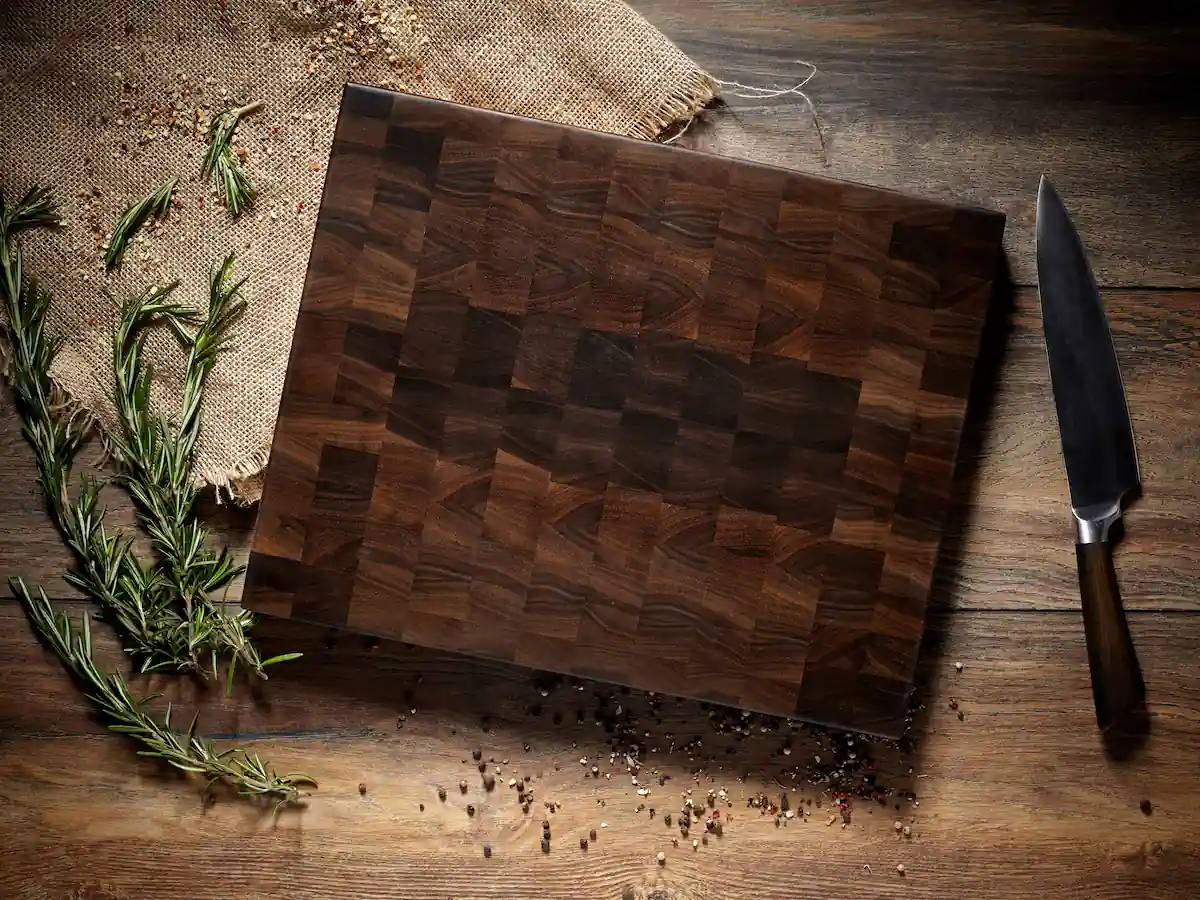
A cutting board earns its space the first time you have an onion, a pile of sliced peppers and half a head of cabbage on it at once. A broad board leaves room to move ingredients aside as you chop. For an apple or a sandwich, a slim board you can pull from a cabinet may see more use than a heavy block that lives on the counter.
Wood comes with a particular kitchen routine. A thick maple end-grain block needs a place to stand, while a wide teak edge-grain board needs enough room at the sink to wash both faces. Both need time to dry and periodic oiling. The paper-and-resin composite board in this guide can go in the dishwasher and hang up afterward.
The four boards cover everything from quick prep beside the stove to chopping several ingredients for dinner. We look at the working surface, how easily each board moves between counter and sink, and where it can dry before the next meal.
Cutting Board Comparison: Features and Tradeoffs
We evaluated these cutting boards using The Hearthful Standard, considering construction, usable prep space, handling, care, and product documentation. We selected John Boos for a thick maple block that can stay in a dedicated counter position, and TeakHaus for a broad surface with hand grips and two usable faces. Epicurean’s paper-and-resin composite offers a slim, dishwasher-approved option. Ironwood Gourmet combines an acacia end-grain surface with a broad 20-by-14-inch footprint and less height than the Boos block, giving it a different fit for a regular preparation station.
Some links in this guide are affiliate links. If you purchase through them, The Hearthful Home may earn a small commission at no additional cost to you. As an Amazon Associate, we earn from qualifying purchases.

Compact chopping block, raised work surface
John Boos Maple End-Grain Chopping Block
The Boos block brings a small square work area and recessed finger grips to a regular chopping routine. It suits a dedicated counter position, with hand cleaning, thorough drying, and scheduled oiling forming part of everyday ownership.
CCB121203 · 12 × 12 × 3 in · Maple

Broad preparation area, regular wood care
TeakHaus Traditional Edge-Grain Cutting Board
The TeakHaus board provides a broad preparation area with hand grips and two usable faces. It suits meals involving several ingredients, with room beside the sink for handwashing and drying, plus regular conditioning to maintain the wood surface.
106 · 20 × 15 × 1.5 in · Teak

Slim everyday prep, upright drying
Epicurean Kitchen Series Cutting Board
The Kitchen Series pairs a slim paper-composite board with a hanging hole and two working faces. It suits everyday chopping when easy storage and dishwasher cleaning matter, with space set aside to dry the board upright before putting it away.
001-151103 · Nutmeg · 14.5 × 11.25 × 0.25 in

Rectangular prep space, scheduled conditioning
Ironwood Gourmet Charleston Prep Station
The Charleston Prep Station gives everyday chopping a broad wooden work area. Choose it around a familiar meal, with room for nearby bowls and a convenient washing position. Its ownership routine includes hand cleaning, supported drying, and regular oiling.
28217 · Acacia end grain · 20 × 14 × 1.25 in
What Actually Matters in a Cutting Board
Choose the working surface first, then follow the board through the rest of the task. A useful purchase makes sense on the counter, at the sink, and in the place where it will dry and wait for the next meal.
Measure the Whole Route Through Your Kitchen
Measure the clear counter area where you actually cut, leaving room for your knife, hands, and nearby bowls. Then check the sink opening, drying position, and storage slot. For dishwasher-approved boards, include the rack space and clearance needed for the spray arm.
Mark the candidate board’s outline on the counter with a tape measure, then carry the measure to the sink and drying spot. A wider face can be useful for a full meal, but a board you cannot comfortably wash or stand on edge may be awkward every day. Repeat the check with the smallest board that still fits the food you prepare.
The cutting board size guide helps turn those measurements into a practical shortlist. Compare outer dimensions with the area inside any groove, handle, or raised edge. These features change how much of the board is available for cutting.
Four Board Footprints at One Scale
Compare the counter space each selected board occupies, viewed from above. Allow additional room for bowls and your knife hand when measuring the actual preparation area.
Choose a Material and Care Routine Together
Compare the complete board construction: wood species and grain layout or the stated composite ingredients, along with any feet, grips, and surface treatment. A product’s care instructions show how those materials are intended to be maintained.
Wood appeals to cooks who want its substantial feel and are comfortable with hand washing and conditioning. A dishwasher-approved composite board can fit a different cleanup routine. Our cutting board materials guide explores the options, including knife contact, weight, and component disclosures.
Treat Thickness as Part of the Handling Decision
Picture the board at your normal working height. Extra thickness raises the cutting surface and can add a substantial amount to carry. A slim design occupies less vertical storage space, while its footprint still determines how much counter and sink room you need.
Consider how you will lift a wet board and where your fingers can grip it. Recessed handles, tapered edges, and a hanging hole offer different ways to move or store a board. Choose the arrangement that suits your hands and available space.
Match Grooves and Grips to the Food You Prepare
A groove provides a route for collecting liquid around the cutting area. A plain face leaves more uninterrupted room for ingredients and moving a scraper. Reversible designs can offer both, so check what each side actually includes.
Feet and grips also deserve a close look. Check how the board sits on your counter and how you can access the underside for washing and drying. Before cutting, make sure the surface is fully supported and the board stays in place.
Plan Separate Surfaces for Raw and Ready-to-Eat Foods
The USDA’s cutting board guidance allows wood or a nonporous surface for raw meat and poultry and recommends a separate board for foods such as produce and bread. Plan that separation alongside your material choice.
Our guide to cutting boards for raw meat connects board condition, food separation, and cleanup. A practical kitchen setup may include a main prep board and another clearly identified board for raw meat, poultry, and seafood.
Check the Washing and Drying Instructions
Look for an explicit dishwasher instruction for the exact board. For hand-care models, make sure you can reach both faces, the edges, and any grooves comfortably. Also identify a drying position that leaves the board appropriately supported with air circulation.
The cutting board cleaning guide explains washing, sanitizing, and drying as separate steps. For wood, the guide to warping and cracking covers how moisture, heat, and storage affect care decisions.
Read Support Terms for the Seller You Will Use
Check the model, size, finish, and included pieces before ordering. Then read the current warranty and retailer return terms for that purchase. A brand’s direct-store policy can differ from the coverage available through a marketplace seller.
Keep the receipt and care instructions together. Later, use the cutting board replacement guide to assess the working surface, including cracks, loose pieces, and grooves that become difficult to clean.
How We Evaluate Cutting Boards
Our recommendations in this guide are research-based. Manufacturer specifications, material descriptions, exact retail models, care instructions, and published support terms form the evidence base for this comparison. We connect those details to prep space, handling and continued ownership.
The assessment considers the documented construction and its fit for the board’s intended kitchen role.
Manufacturer dimensions, material statements, features, and care claims remain attributed to their sources. The selected size and version guide each assessment, with practical attention to prep space, handling, washing, drying, storage, and continued use.
Materials
We consider the stated cutting surface, construction, finish, and added components. Material disclosure, knife-contact considerations, weight, and care requirements help explain what the board brings to everyday preparation.
Design & Function
We assess the documented dimensions, thickness, cutting faces, grooves, handles, and grips. These details define the working area and the types of prep that fit the board’s shape and layout.
Use & Interaction
We consider moving the board, managing ingredients, washing each surface, and finding a practical drying and storage position. The assessment connects the board’s documented features to the repeated work of using it.
Durability & Longevity
We consider the maker’s maintenance guidance, surface-care options, and support terms. Clear instructions help owners plan conditioning, inspection, and appropriate decisions about continued use.
Transparency & Trust
We look for clear model identification, useful specifications, accessible care instructions, and understandable purchase and warranty terms. The exact material, size, and seller information should support a well-informed choice.
Match the selected dimensions to your work surface and the food you prepare. A suitable footprint and manageable care routine are central to the purchase.
A Closer Look at Each Pick
Compact chopping block, raised work surface
John Boos Maple End-Grain Chopping Block
CCB121203 · 12 × 12 × 3 in · Maple
Choose this block for a regular chopping station where you like a compact work area. Match its raised surface to your posture, then build cleaning and conditioning into the kitchen routine.
Price and availability last updated: 2026-11-25 at 17:14.
Materials
John Boos identifies Northern Hard Rock Maple, end-grain construction and an oil finish in the CCB121203 specification.
Design & Function
Reversible faces and recessed grips give the block a straightforward layout. Its three-inch thickness raises the working surface, so compare that cutting height with your counter and comfortable arm position.
Use & Interaction
John Boos lists this compact block at 13 pounds, so lifting and turning it is a substantial part of cleanup. Its three-inch thickness also raises the cutting surface above the counter. Allow room to support the board securely while reaching both faces, and alternate clean faces as the care instructions recommend.
Durability & Longevity
The cleaning and conditioning routine calls for washing with mild soap and water, towel drying and applying oil to every face. John Boos recommends oiling at least monthly, adjusted for use and household conditions. It also describes fine sanding for minor scratches, followed by dust removal and the regular conditioning routine.
Transparency & Trust
John Boos’s U.S. warranty covers manufacturing defects for one year on eligible purchases through the company or an authorized reseller. For an Amazon order, check the seller’s authorization and retain the receipt.
- Reversible work surfaces with recessed finger grips.
- Published guidance for conditioning and minor surface renewal.
- The maker lists a substantial 13-pound board weight.
- Hand cleaning and oiling require regular attention.
Broad preparation area, regular wood care
TeakHaus Traditional Edge-Grain Cutting Board
106 · 20 × 15 × 1.5 in · Teak
Choose the Traditional 106 when a broad surface fits the way you prepare meals. Check that the same board is comfortable to wash and store, then plan regular conditioning around how often you use it.
Price and availability last updated: 2026-11-25 at 11:19.
Materials
TeakHaus identifies the Traditional 106 as an FSC-certified edge-grain teak board. Its care FAQ describes the mineral-oil-and-beeswax finish.
Design & Function
The wide rectangular format provides room to arrange a recipe across the board. Two usable sides and recessed grips support a simple layout with access for turning and moving it.
Use & Interaction
The selected TeakHaus 106 measures 20 by 15 inches and weighs 12 pounds, according to the current manufacturer specifications. That broad, heavy format needs more lifting and sink clearance than a slim prep board. Check the counter-to-sink route and a supported drying position before choosing it.
Durability & Longevity
TeakHaus recommends mineral-oil conditioning two or three times a month and keeping the board out of the dishwasher. The one-year website warranty applies to direct website purchases and excludes Amazon purchases. Confirm any separate seller or package coverage before ordering, since ordinary wood maintenance does not resolve that purchase-channel limitation.
Transparency & Trust
TeakHaus identifies the selected model, dimensions, weight, construction and conditioning routine. Its warranty policy also clearly states the Amazon exclusion and provides a contact route when a package label promises coverage. Keep that policy and any seller-specific terms with the receipt so the available support is clear.
- Broad, reversible surface with recessed hand grips.
- Maker identifies the applied oil-and-beeswax finish.
- A full-size board needs room for washing and drying.
- Confirm coverage for the selected Amazon seller.
Slim everyday prep, upright drying
Epicurean Kitchen Series Cutting Board
001-151103 · Nutmeg · 14.5 × 11.25 × 0.25 in
Choose this Kitchen Series size for daily preparation with a slim storage profile and a choice of washing methods. Give it a stable working position and an upright drying place that you can use consistently.
Price and availability last updated: 2026-11-25 at 17:14.
Materials
Epicurean identifies paper layers bonded with thermosetting resin, with the layers arranged and pressed into a solid sheet. This is a documented paper-and-resin composite cutting surface. Compare that named construction with your material preferences and the maker’s permitted washing methods.
Design & Function
The Kitchen Series specification lists two working faces, a hanging hole, and a 14.5 × 11.25-inch outline for this size. The Nutmeg 001-151103 is a quarter inch thick, so it fits a narrow storage slot or hangs from a suitable hook.
Use & Interaction
Epicurean permits hot soapy washing or a dishwasher. Its separate storage guidance calls for thorough drying upright and on edge. Plan that drying position when choosing where the board will live after a meal.
Durability & Longevity
Epicurean makes routine oiling optional and describes light surface refreshing on a dry board. It also provides a lifetime warranty against material and workmanship defects, which is broader in duration than the stated coverage on the wood boards here. Normal wear, misuse and missed care instructions remain excluded, so continue drying it upright and checking its condition.
Transparency & Trust
Epicurean publishes a lifetime warranty for material and workmanship defects, with normal wear, misuse, and missed care instructions excluded. The model information, material explanation, and separate care pages make the intended ownership routine straightforward to check.
- Quarter-inch profile and an integrated hanging hole.
- Manufacturer-approved dishwasher cleaning.
- Published material, maintenance, and warranty guidance.
- Dry upright and on edge before storing.
- The material includes a thermosetting resin binder.
- Match the flat board to a stable working position.
Rectangular prep space, scheduled conditioning
Ironwood Gourmet Charleston Prep Station
28217 · Acacia end grain · 20 × 14 × 1.25 in
Choose the Charleston for a regular preparation station where the board has room to work and dry. Make its initial conditioning schedule part of setup, then keep the care instructions available for continued use.
Price and availability last updated: 2026-11-25 at 10:08.
Materials
The Ironwood product catalog identifies the Charleston model 28217 as an acacia end-grain prep station.
Design & Function
The rectangular format suits a preparation station with bowls close at hand. Compare the selected footprint with the space left for your knife hand and ingredients as a recipe progresses.
Use & Interaction
The maker’s care directions specify hand washing, towel drying and supported air drying, plus daily oiling during the first week. That initial conditioning schedule adds repeated setup work before the monthly maintenance routine. Choose a place where the broad board can remain supported while drying between meals and care sessions.
Durability & Longevity
Ironwood’s published care sequence explains washing, supported drying and ongoing oiling for the acacia surface. Ironwood’s 30-day standard warranty can be extended to one year through registration. Complete that registration and keep the confirmation with the receipt, then follow the monthly conditioning schedule during the first year.
Transparency & Trust
The model catalog, care directions, and warranty page explain what you are buying and how to maintain it. Ironwood’s contact route also gives buyers a place to confirm registration, product details, or a care question.
- A named acacia end-grain construction and model.
- Published conditioning and warranty-registration guidance.
- Initial oiling takes attention during the first week.
- Handwashing and supported drying need a suitable place.
Tips for Better Cutting Board Ownership
A useful care routine starts with the exact board’s instructions and a workable place to wash, dry, and store it. Keep the routine simple enough to finish after an ordinary meal.
Give Each Board a Clear Job
Keep the raw-food board easy to distinguish from the board used for bread and other ready-to-eat ingredients. Store them where everyone preparing food can recognize the arrangement. The raw-meat prep guide helps plan the separation.
Finish Cleanup Before Putting the Board Away
USDA guidance calls for washing boards with hot, soapy water after use, followed by rinsing and drying. Follow the manufacturer’s material-specific method, including any dishwasher permission. Our cleaning and sanitizing guide explains how to choose the appropriate additional sanitizing step when needed.
Build Wood Care Around the Maker’s Directions
Keep the recommended conditioner with the board’s care information. Follow the specified application and drying routine, including both faces and edges where directed. The wood board care guide explains the connection between moisture, drying, and storage.
Inspect the Working Surface as You Clean
Look over the faces, edges, grooves, and joined areas while they are easy to see. USDA recommends replacing boards that become excessively worn or develop hard-to-clean grooves. Use the replacement guide to distinguish surface marks from damage that affects cleaning or secure use.
Cutting Board FAQs
Which of these cutting boards should I choose?
Choose the role first: John Boos offers a substantial square block, TeakHaus provides a broad wood prep surface, Epicurean offers a slim board with dishwasher-approved care, and Ironwood Gourmet offers a broad acacia prep surface. Match the selected dimensions and care instructions to your counter, sink, and storage.
What size cutting board is best for everyday cooking?
Choose enough room for the ingredients you usually prepare and the knife movements you make, with clear space around the board. Check the sink and drying position before sizing up. The size guide includes a practical fit worksheet for the whole routine.
Is a thicker cutting board always the better choice?
Thickness changes working height, storage space, and often the amount you lift. Compare those details with the board’s construction and your preferred setup. A thick block can suit a dedicated prep position, while a slim board may fit frequent moving and compact storage.
Should I choose wood or a composite board?
Choose the surface together with its handling and care requirements. Read the exact construction and finish information, then compare washing, drying, storage, and maintenance. The materials guide explains construction, knife contact, handling, and care.
Do I need a juice groove?
A groove can be useful for jobs that release liquid around the food. A plain face provides uninterrupted space for chopping and transferring ingredients. Check whether the selected board offers both faces and how much area remains inside its groove.
Can I use a wooden cutting board for raw meat?
Yes. USDA permits wood or a nonporous surface for that task and recommends separating raw-food preparation from foods such as bread and produce. Choose a board in sound condition and follow its cleaning instructions. Our raw-meat guide explains the preparation sequence.
Can these boards go in the dishwasher?
The selected Boos, TeakHaus, and Ironwood boards use hand-care routines. Epicurean documents dishwasher permission for its selected composite board. Check the current directions and physical rack fit before washing, then complete the specified drying routine.
Does a wooden board need oiling?
Follow the maker’s conditioning instructions for that board and finish. They should identify the appropriate product and application routine. Keep the board’s washing and drying steps in place as well; the warping and care guide explains how these steps work together.
Can a composite board need special drying care?
Yes. Read its maker’s storage and drying guidance alongside the wash instructions. A composite cutting board has its own material construction and care requirements. The Epicurean profile links to its current drying guidance.
How do I know when a cutting board needs replacing?
Assess whether its surface can be cleaned thoroughly and whether the board remains intact and secure in use. Deep grooves, cracks, loose sections, and peeling material deserve attention. The replacement guide explains the checks for different materials.
Important: This article provides general information, not individualized medical, safety, installation, legal, or other professional advice. Product specifications, instructions, and safety information can change; verify current information with the manufacturer and consult an appropriately qualified professional when needed. See our Terms and Conditions for additional information.