

Filling a teapot and making a pour-over both start with a kettle, but they ask different things of the spout. For tea, it’s satisfying to fill the pot in one steady pour. For coffee, a narrow stream lets you wet one part of the coffee bed at a time without flooding the filter.
Temperature is another reason two households might want different kettles. An electric model with an adjustable dial can bring water to a chosen temperature and hold it while you get the cups ready. A simple boil switch makes sense when boiling is the whole job. On the stove, a whistle can be enough of a cue for someone who is already cooking breakfast.
The four kettles here include both electric and stovetop options, with two goosenecks and two larger vessels for filling cups or pots. Spout shape, usable capacity and the space a kettle takes on the counter tend to be more revealing than a long list of settings.
Kettle Comparison: Features and Tradeoffs
We evaluated these kettles using The Hearthful Standard, which considers materials, design, everyday use, durability, and the clarity of product information. We recommend the Stagg EKG Pro Studio for the controlled pouring, balanced handling, and easy temperature dial we experienced in daily use. COSORI adds a larger glass vessel and simple boil switch; All-Clad provides an induction-compatible stainless steel stovetop kettle; and Hario Buono offers a narrow spout for manually directing a pour-over.
Some links in this guide are affiliate links. If you purchase through them, The Hearthful Home may earn a small commission at no additional cost to you. As an Amazon Associate, we earn from qualifying purchases.

Controlled pouring, slower mug filling
Fellow Stagg EKG Pro Studio Edition
The Pro Studio has handled our daily coffee and tea since December 2023. Its easy dial, useful Hold setting, and balanced gooseneck make brewing enjoyable, with a slower pour when all you want is to fill a mug.
EPS0AAUS · Black + walnut

Roomier electric boiling, simpler controls
COSORI 1.7L Glass Electric Kettle
The COSORI brings a generous fill and straightforward electric boiling to everyday tea and coffee routines. Its clear body makes the water easy to see, while the simple controls suit households that usually want boiling water and can manage any cooling separately.
CGK-G173-WUS · White

Stovetop capacity, manual heat control
All-Clad 2-Quart Stovetop Tea Kettle
The All-Clad suits a stove-centered kitchen where a traditional kettle and a larger batch feel natural. Its whistle provides a boiling cue and the steel construction is straightforward to care for, while managing the burner and cooling water remain part of the routine.
E8619964
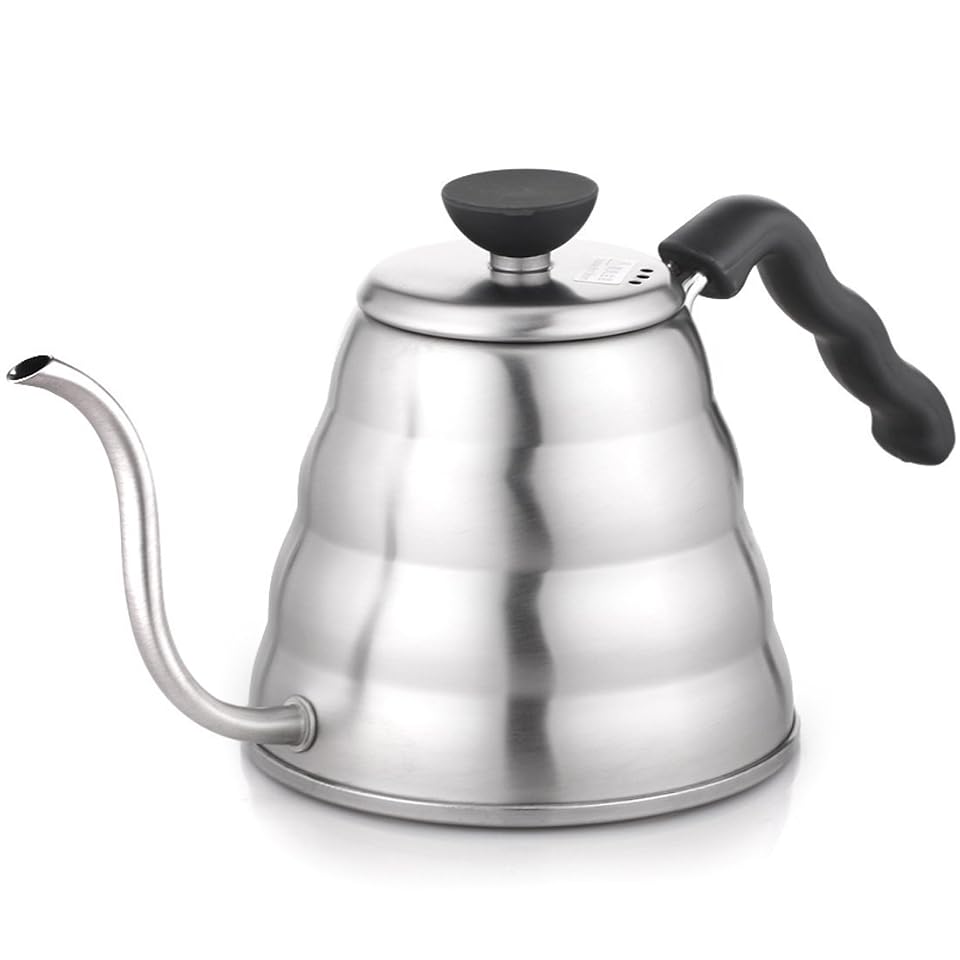
Controlled stovetop pouring, smaller working fill
Hario V60 Buono Stovetop Kettle
The Buono brings a narrow pouring spout to a simple stovetop setup, with an 800 mL practical fill for brewing. It suits hands-on pour-over routines, while temperature management and the smaller working batch need to fit the way you make coffee.
VKB-120HSV
What Actually Matters in a Kettle
Treat a kettle as a tool for a particular sequence: fill, heat, lift, pour, and clean. Each step offers a useful buying checkpoint. The supporting guides below cover the detailed comparisons, so you can focus here on choosing a design that fits the whole routine.
Choose the Heating Method First
An electric kettle brings its own heating base and local controls. A stovetop kettle uses a burner or cooking zone, so compatibility, available space, and turning off the heat become part of the routine. Neither format settles the material or pouring question by itself.
Check the exact electric version for your market and the cooktop guidance for a stovetop model. A whistle announces boiling; it does not switch the burner off. A kettle intended for its powered base should not be placed on the stove.
Match the Spout to the Pour
For pour-over coffee, a narrow curved spout can make directing a small stream more manageable. For tea, a wider opening can suit straightforward mug filling. Think about the drink you make most often before paying for a pouring style that solves a different task.
The handle, balance, and control as the kettle empties matter alongside spout shape. Our gooseneck kettle feature guide explains those details without treating every gooseneck as equivalent.
Buy Temperature Control for a Repeated Need
If you brew green tea at 160°F and pour-over coffee near 200°F, the Fellow’s dial lets you select each temperature and use Hold for a second cup. If you mainly boil water for black tea or a large pot, the 1.7 L COSORI gives you room for more water in one fill. It boils from a switch, so you handle any cooling yourself. Choose between those electric kettles by the temperature you need at pouring time and the amount you serve together.
Consider how you will use Hold as well as the temperature setting. Our temperature-control kettle guide compares adjustable targets, presets, and keep-warm features. More settings are valuable when they remove an everyday step.
Compare Working Fill, Not Just the Largest Number
A capacity headline needs its fill instructions. Hario, for example, distinguishes the selected Buono’s 1.2 L full capacity from its 0.8 L practical capacity in the Hario Buono manual. Use the practical figure when planning a batch.
Measure your mugs and include water used to rinse a coffee filter if that belongs in your routine. Our kettle capacity guide covers batch examples, minimum-fill limits, and the handling tradeoff of lifting more water.
Look at All the Water-Contact Components
A stainless or glass body is only one part of the construction. Check the heating surface, lid underside, seals, spout filter, and any temperature probe. An exterior material label does not describe every component, and a plastic handle is a different question from a part inside the water path.
Our kettle materials guide explains how to read those disclosures. Look for component-level information and suitable care instructions rather than treating one material label as proof of safety, taste, or lifespan.
Check the Lift, Lid, and Counter Space
Leave room for the handle and spout as well as the base. A lid that opens comfortably under your cabinets can make refilling simpler. Consider whether the kettle is manageable at the amount you normally heat, especially if the capacity is much greater than your usual batch.
For stovetop use, follow the handle and burner instructions even when a handle looks insulated. For electric use, think about the cord route and lifting the kettle clear of the base. These are practical fit questions that a close-up product photograph may leave out.
Separate Heating Noise From Alerts
Heating water, switching mechanisms, and electronic chimes create different sounds. A mute setting can change an alert while leaving the heating cycle audible. A stovetop whistle serves a different purpose again, particularly when you need a reminder to turn off the heat.
Our electric kettle noise guide explains the measurements and sound patterns to compare. Listen to a complete routine rather than judging a kettle from a few quiet seconds at the end of a demonstration.
Plan for Limescale and Cleaning Access
Hard water can leave mineral deposits as it is heated, as the USGS water-hardness explanation describes. A glass or steel interior still needs appropriate care. Access to the heating surface and clear instructions are more useful than expecting the finish to prevent buildup.
Our kettle limescale guide distinguishes deposits from dissolved brewing-water minerals and explains what to check before descaling. Use the exact model’s method, including whether a cleaning solution should be heated.
Consider the Water You Heat and the Controls You Keep
The Energy Saving Trust kitchen guidance recommends heating only the water you need. Stay within the kettle’s minimum and maximum limits, and include any extra water your actual brewing method requires. A larger capacity does not mean filling it completely for every drink.
Holding water can be convenient for a second cup, while heating a fresh batch may suit a different schedule. Check the available hold duration, local controls, and replacement-part support. Electrical input alone does not tell you the total energy used across that whole routine.
How We Evaluate Kettles
Our recommendations for the COSORI, All-Clad, and Hario kettles are research-based. We tested the Fellow Stagg EKG Pro Studio Edition in our kitchen, recording heating time, temperature and pour speed alongside our daily use.
The five core Hearthful Standard categories guide this comparison. We consider how well each kettle serves its intended role, including heating, pouring, controls, and upkeep.
Materials
The kettle body, heating surface, lid assembly, seals, filter, handle, and clarity of water-contact information. We consider material suitability and care requirements together, with credit for useful component disclosures.
Design & Function
Heating method, practical capacity, pouring design, temperature selection, holding features, and how the parts work together. A stovetop kettle can serve a straightforward boiling routine with very few controls.
Use & Interaction
Filling and lid access, readable levels, control layout, lifting and pouring considerations, alerts, and the steps required during normal use. Convenience is judged against the intended routine, including manual stovetop attention where relevant.
Durability & Longevity
Care requirements, exposed or replaceable parts, support options, mechanical and electronic complexity, and the applicable warranty.
Transparency & Trust
Clear model identification, usable capacity information, material details, operating limits, care instructions, and warranty terms. Specific guidance helps a buyer match the listing to the kettle and use it appropriately.
Performance & Results
Included for the hands-on Fellow Pro Studio Edition: documented heating times, temperature checks, pouring behavior, and the results of using the controls. The full review records the test conditions and observations behind this additional factor.
A Closer Look at Each Pick
Controlled pouring, slower mug filling
Fellow Stagg EKG Pro Studio Edition
EPS0AAUS · Black + walnut
The Pro Studio earns its place through comfortable daily use, controlled pouring, and useful temperature selection. We would buy it again for our coffee-and-tea routine. Its slower mug fill and 0.9 L capacity deserve equal consideration if fast tea service or several servings matter more in your kitchen. Read our full Fellow Stagg EKG Pro Studio Edition review.
Price and availability last updated: 2026-11-25 at 11:19.
Materials
The stainless chamber and wooden handle and lid knob have held up well in our kitchen. Fellow’s component disclosure identifies a 304 stainless interior, a silicone ring around the temperature probe, a steel lid underside, and polypropylene and silicone within the lid assembly. For the owned kettle, we also examined the condition of those components.
Design & Function
The 0.9 L capacity and gooseneck suit our mix of green tea and pour-over coffee. Turning the dial between a personal 160°F tea setting and around 200°F for coffee is straightforward. Hold earns its place when we return for a second glass of tea. The main compromise is the deliberate stream: filling a tea mug takes longer than we would like.
Use & Interaction
The full kettle feels balanced, the lid removes easily, and the pour stops without dripping. App pairing and a firmware update both worked easily. Scheduled heating also worked when tried, although filling with fresh water in the morning better suits our routine. Fellow describes the app as a firmware updater; ordinary heating and settings remain on the kettle in its product information. The wooden grip is comfortable, while the hot body and surrounding lid metal still need care.
Durability & Longevity
We have used the black Studio kettle daily for coffee and tea since December 2023. At our August 2026 inspection, it showed no paint chips, coating wear, exterior damage, interior rust, or flex, and it had experienced no issues during daily use. We use reverse-osmosis water and have not needed to descale it. That is the record for this kettle and water supply. Follow Fellow’s care guidance and adjust descaling to the deposits in your own kettle.
Transparency & Trust
Fellow provides useful component, care, and firmware information, while some parts, base-material, app, and warranty wording needs better alignment across its documents. The full review explains those specific differences. Its dedicated parts guidance provides the current route to replacement bodies and bases. Its warranty page lists two years standard for a qualifying new Pro Studio purchase. Check the actual seller and retain the receipt.
Performance & Results
In our recorded heating test, 500 g of water starting at 82°F reached the ready signal in 2 minutes 43 seconds with 200°F selected. During the Hold check, the display and separate probe both read 199°F at the start, 198°F after 15 minutes, and 200°F after 30 minutes. Those checks support the display’s agreement with the thermometer at the recorded temperatures.
Three 10-second pours delivered 213 g, 242 g, and 237 g, with a smooth stream each time. The full-hour energy measurement was 0.43 kWh with 500 g of water, 200°F selected, and Hold enabled, including the initial heat-up. The complete review includes the test conditions, power and sound readings, and handling observations.
- Smooth, controlled pouring, balanced handling, and an easy temperature dial in daily use.
- Useful Hold, matching probe and display readings at three recorded checkpoints, and successful scheduling and firmware trials.
- More than two and a half years of daily ownership without reported issues or observed finish wear.
- The gooseneck fills a tea mug more slowly than a wider spout.
- The 0.9 L capacity may require another fill for several servings.
- Manufacturer documentation has inconsistencies, and the hot body and lid metal need care when handling.
Roomier electric boiling, simpler controls
COSORI 1.7L Glass Electric Kettle
CGK-G173-WUS · White
Choose the COSORI when a visible fill, everyday capacity, and simple electric boiling are the priorities. It fits mug and teapot use especially well. Give temperature control more weight if repeatedly cooling boiled water is already the inconvenient part of your routine.
Price and availability last updated: 2026-11-25 at 19:57.
Materials
COSORI describes a glass and stainless steel water path in its product information. The clear vessel lets you see the fill and spot deposits during ordinary use. The material description applies to water contact; the complete kettle also includes its external handle, lid assembly, and powered base.
Design & Function
A wide opening and large-angle lid make the inside more approachable for routine care. The broad spout suits filling mugs or a teapot, and the blue light makes the heating state visible. If your tea needs water below boiling, allow time for it to cool after the kettle switches off.
Use & Interaction
The current US manual includes the white CGK-G173-WUS model and lists 1.7 L capacity with 1500 W rated power. The switch starts heating and the kettle shuts off after boiling. Fill between the marked limits, including for smaller batches. The wattage describes electrical input; your fill and starting water temperature still affect waiting time.
Durability & Longevity
The glass body makes deposits visible, and the exact-model manual provides a descaling sequence and service contact. Cool and unplug the kettle before cleaning, keep powered connections dry, and leave the stainless steel filter attached to its lid. These are ordinary care requirements for this design; avoid impacts around the sink and contact support for faults beyond the described maintenance.
Transparency & Trust
The current white Amazon listing and US manual both identify CGK-G173-WUS, with matching 1.7 L and 1500 W specifications. Warranty wording is less consistent: the model manual states two-year coverage and separately explains the California start date, while the current website places a California-only qualifier beneath its two-year heading. Both require an eligible purchase and proper care. Confirm the coverage that applies to your location and retain the supplied manual and receipt; this regional ambiguity is the remaining documentation drawback.
- 1.7 L capacity for shared hot-water use
- Clear vessel and accessible lid opening
- Simple switch with automatic boil shutoff
- Lower brewing temperatures require a separate cooling step
- Glass needs care during handling and cleaning
- Filter remains attached during cleaning
Stovetop capacity, manual heat control
All-Clad 2-Quart Stovetop Tea Kettle
E8619964
Choose the All-Clad when traditional stovetop use, a steel vessel, and a 2-quart nominal capacity match your kitchen. It asks you to stay involved with the heat and the pour. An adjustable electric kettle is a closer fit when automatic temperature holding is the feature you value most.
Price and availability last updated: 2026-11-25 at 18:49.
Materials
All-Clad specifies a heavy-gauge, single-ply stainless steel body with a bonded base in its kettle specifications. This gives the kettle a substantial metal construction and an induction-compatible base. The polished finish suits a traditional kitchen and keeps the material visible for ordinary inspection.
Design & Function
The hinged spout cap, riveted handle, and whistle support a conventional tea-kettle workflow. The whistle supplies an audible cue when water boils, while the user manages the burner. It is a different approach from an electric kettle that automatically stops heating or holds a selected temperature.
Use & Interaction
The listed 2-quart model matches the manufacturer UPC and includes an internal fill line. Use that mark when planning a batch. A fuller kettle adds water weight to the lift, so a comfortable pour matters as much as the nominal capacity when several mugs are involved.
Durability & Longevity
The heavy-gauge steel vessel and bonded base provide a substantial structure for repeated stovetop use, and All-Clad links its limited lifetime repair-or-replacement warranty to this exact model. That combination supports the ownership assessment, subject to the authorized-seller, normal-use and care conditions. All-Clad lists the kettle as dishwasher safe but recommends handwashing; let it cool, use gentle cleaning tools and remove limescale according to its instructions.
Transparency & Trust
The limited lifetime warranty covers qualifying manufacturing defects for the original purchaser, subject to authorized-seller and care requirements. Normal wear and damage from misuse are excluded. Keeping proof of purchase gives a future support request a clear starting point; the warranty does not establish how many years a particular kettle will last.
- Stainless steel body with bonded base
- Compatible with induction and other stovetops
- Whistle and marked fill line
- Burner operation remains manual
- No selected-temperature or keep-warm function
- A larger fill adds weight during pouring
Controlled stovetop pouring, smaller working fill
Hario V60 Buono Stovetop Kettle
VKB-120HSV
Choose the Buono for a hands-on pour-over routine that benefits from a dedicated spout and does not require electronic temperature holding. Its practical fill is the deciding capacity figure. Check that 800 mL covers the brew and any preparation water you normally need before choosing this size.
Price and availability last updated: 2026-11-25 at 18:49.
Materials
Hario identifies a stainless steel body and lid, with phenol resin used for the handle and lid knob, on the US product page. Those details make the construction easy to understand. The metal vessel is paired with shaped gripping parts rather than an entirely metal exterior.
Design & Function
The long, narrow spout is the main reason to choose this shape. It supports aiming a smaller stream during manual coffee brewing. That deliberate approach is useful over a dripper, although filling several large mugs calls for a different kind of pour. Let your most frequent use set the priority.
Use & Interaction
Capacity needs particular care here: the Buono instruction manual distinguishes 1.2 L full capacity from 0.8 L practical capacity. Plan around the 800 mL working fill. The manual supports gas and induction among its compatible cooktops, with heat management and a suitable handle grip remaining part of use.
Durability & Longevity
The manual calls for washing, removing remaining water, and drying before storage. It also warns that the handle can become hot during heating. Keeping the vessel clean and the flame within the base on gas helps preserve the kettle and its resin parts. This is simple equipment, but it still benefits from consistent care.
Transparency & Trust
Hario clearly publishes the model, practical fill, component materials, and care instructions. Its US warranty policy covers manufacturing defects on non-electric products for 90 days when bought from an authorized US seller. This shorter coverage period is a useful ownership detail to compare alongside the kettle design.
- Narrow spout for directed manual pouring
- Clearly documented 800 mL practical capacity
- Works with gas and induction cooktops
- Nominal 1.2 L size exceeds the practical fill
- Temperature and burner control remain manual
- Handle may require protection after heating
Tips for Better Kettle Ownership
A suitable kettle works best with a routine built around its fill marks, controls, and care instructions. These everyday checks help turn the buying decision into a consistent part of making coffee and tea.
Set a Useful Everyday Fill
Measure the water needed for your normal batch, then compare it with the permitted range. Include preheating or filter-rinsing water if you use it. The capacity guide helps you avoid choosing from nominal volume alone.
Keep the Heat Source Matched to the Kettle
Use the supplied electric base or an approved cooktop as directed. For gas, keep the flame within the kettle base where the manufacturer instructs. Follow both the kettle and induction hob guidance when matching a small stovetop base to a cooking zone.
Make Temperature and Hold Deliberate Choices
Set the temperature for the drink you are making and select a hold duration that matches when you will return. If several people use the kettle, agree on the usual settings. An easy-to-understand routine can be more helpful than enabling every available feature.
Inspect and Descale With the Correct Method
Look inside when the kettle is cool and use the approved cleaner, dilution, contact time, and rinse sequence. Fellow electric-kettle care guidance is one model-family example; its method should not automatically be applied to the other selections. The limescale guide explains the distinction.
Keep Pouring and Hot Parts in Mind
Secure the lid as directed, use the intended grip, and keep hands clear of steam and the spout. Stovetop handles can become hot, and the whistle does not make the body safe to touch. Check the specific handle-care directions before the first heating cycle.
Save the Model and Purchase Details
Keep the exact model, seller, receipt, and supplied instructions together. That makes warranty questions and replacement-part checks easier later. A similar product name or an unchanged retail listing does not always establish that every supplied unit has the same revision.
Kettle FAQs
How should I choose between these four kettles?
Choose electric or stovetop heating first. Then decide whether controlled pour-over or straightforward mug filling matters more. Fellow combines adjustable temperature with a gooseneck, COSORI offers roomier electric boiling, All-Clad suits a traditional stovetop routine, and Hario suits smaller manual pour-over batches.
Do I need a gooseneck for coffee and tea?
It is useful when directing a small stream is part of your brewing method. Tea-mug filling may be more convenient with a wider spout. Our gooseneck feature guide covers control, balance, and the practical tradeoffs.
Is temperature control worth paying for?
It can be when you regularly use different brewing temperatures or return for more water at a selected setting. A boil-only model may be sufficient for simpler tasks. The temperature-control guide helps match the controls to the routine.
What size kettle should I buy?
Start with the amount your drinks and brewing preparation require at one time. Check the minimum fill as well as the maximum, and consider the weight you will lift. Our kettle size guide includes practical examples.
Why is the Hario listed with both 1.2 L and 0.8 L?
The selected VKB-120HSV has 1.2 L full capacity and 0.8 L practical capacity. The practical figure is the useful one for planning a normal heating batch. Do not treat the larger headline volume as permission to fill it to the brim.
Is the Fellow in this guide the same Pro Studio we tested?
Yes. The model in our full Fellow review is the Stagg EKG Pro Studio Edition in Matte Black with a walnut handle and lid pull.
Can the Fellow app start heating remotely?
Fellow describes EKG Updater as a firmware-update tool. Heating, temperature selection, and scheduling are handled through the kettle’s controls. App compatibility should therefore be considered in the context of updates rather than remote kettle operation.
Does the COSORI offer temperature presets or Hold?
The selected 1.7 L glass model is a boil-only kettle. It provides a straightforward route to hot water with automatic shutoff rather than a menu of brewing temperatures. Choose a different control format if holding at a selected temperature is central to your routine.
Are stainless steel and glass kettles completely plastic-free?
The body material does not describe every seal, filter, lid component, handle, or electrical part. Read the component disclosure and keep a water-contact claim within its stated scope. Our kettle materials guide explains what to inspect.
Can both stovetop selections work on induction?
All-Clad lists induction compatibility for its selected tea kettle, and Hario includes induction in the Buono manual. Check your hob’s minimum base-size requirement and the kettle’s instructions. Compatibility with the heating method still needs to suit the particular cooking zone.
Will the stovetop kettles switch the heat off?
No. They depend on you to control the stove. The All-Clad whistle is an audible signal, while the selected Buono is a manual pour-over design without automatic shutoff. Stay with the heating process and turn off the heat as instructed.
Which kettle is quietest?
This comparison does not provide a standardized noise ranking for these four selections. Heating sound, alerts, room position, and the measured water fill all affect a useful comparison. See our kettle noise guide for the details to check.
Will filtered water prevent all limescale?
That depends on what the treatment removes. A taste-and-odor filter does not automatically reduce hardness, and a spout screen catches particles rather than dissolved minerals. Follow the kettle’s care routine and use the kettle limescale guide to investigate recurring deposits.
Can I put an electric kettle in the dishwasher?
Follow the exact appliance instructions. The powered assembly and connections need appropriate protection, and a removable-looking part is not automatically dishwasher-safe. Stovetop products also have their own care requirements; a permission for one model should not be transferred to another.
Does a longer warranty mean the kettle will last longer?
A warranty describes coverage and conditions, not a predicted service life. Look at care requirements, replaceable parts, seller eligibility, and support access alongside the term. A simple mechanical design and an electronic design can require different kinds of attention over time.
Important: This article provides general information, not individualized medical, safety, installation, legal, or other professional advice. Product specifications, instructions, and safety information can change; verify current information with the manufacturer and consult an appropriately qualified professional when needed. See our Terms and Conditions for additional information.