
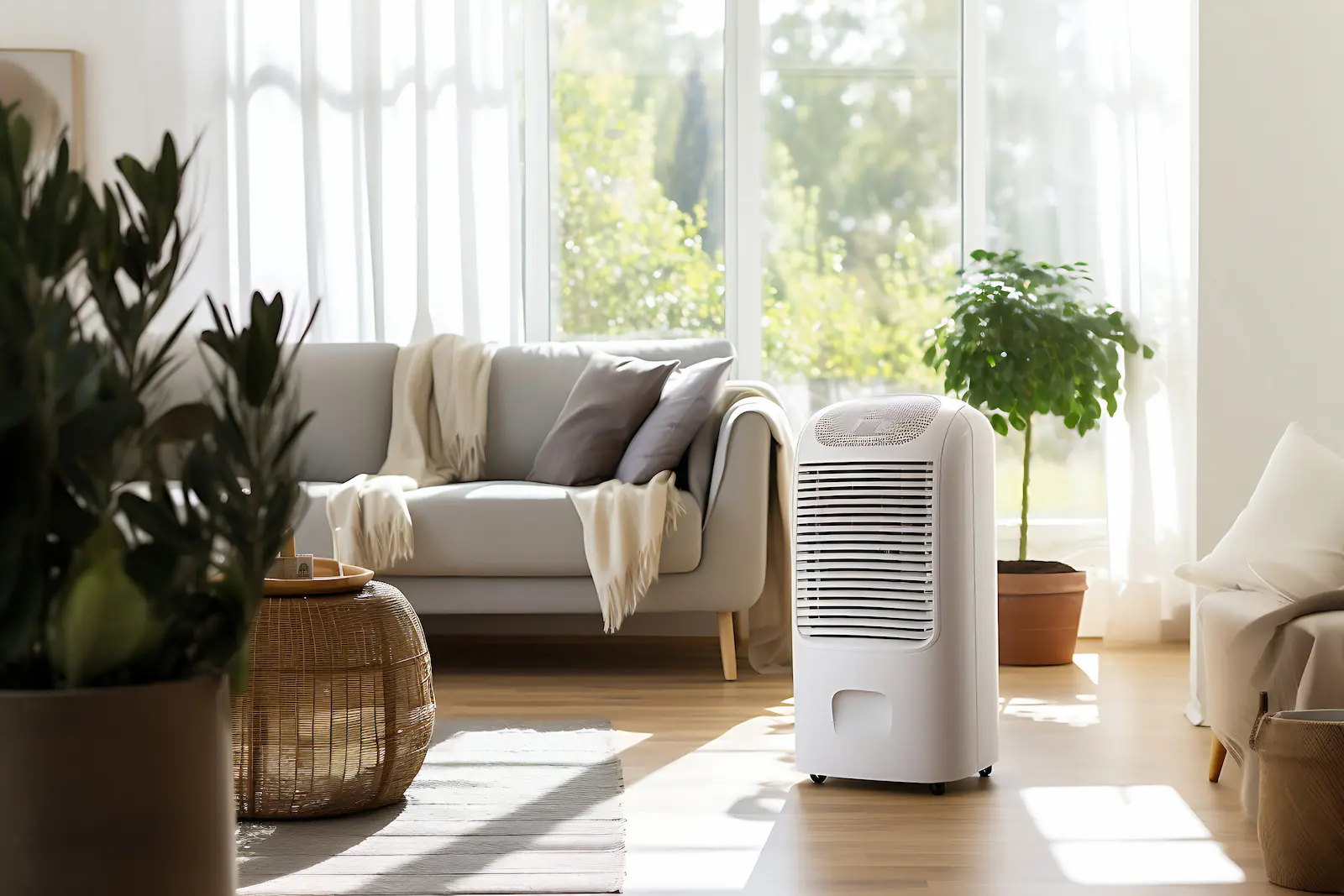
A dehumidifier has to move water twice. First it collects moisture from the room air. Then that water has to leave the machine. In a laundry room with a nearby sink, a removable bucket can be practical. In a crawl space you seldom enter, where a hose can run downhill to a drain, carrying a bucket may be the last thing you want to do.
The pint figure in a model name describes a different job from the size of its tank. A certified daily removal rate tells you how much water the machine removes under standard test conditions. The bucket determines how much it can collect between emptying trips. Two units with similar removal rates can ask very different things of the person handling the water.
We compare four dehumidifiers with different capacities, bucket designs and drain arrangements. We also look at where you can reach the filter and controls once the unit is in place. When dampness comes from a leak or water entering the building, the EPA’s moisture-control guidance explains why fixing the source belongs in the same conversation.
Dehumidifier Comparison: Features and Tradeoffs
We evaluated these dehumidifiers using The Hearthful Standard. We matched each model to its ENERGY STAR record for water removal and efficiency, then checked its bucket, drain connection and filter access against the manufacturer’s instructions. We chose Frigidaire for a higher moisture load with a front bucket, Midea for fewer trips to the sink, DREO for a lighter load with app monitoring, and ALORAIR for a fixed location with a downhill drain.
Some links in this guide are affiliate links. If you purchase through them, The Hearthful Home may earn a small commission at no additional cost to you. As an Amazon Associate, we earn from qualifying purchases.

For higher moisture loads
Frigidaire 50-Pint Wi-Fi Dehumidifier
The Frigidaire pairs the highest certified removal capacity here with a front bucket and app controls. A raised drain needs a separate pump.
FHDD5034Y1 · 49.71 certified pints/day

For fewer emptying trips
Midea Cube 35-Pint Dehumidifier
The Cube makes sense if you want fewer trips to the sink. Each time you empty it, you lift the upper unit off the tank.
MAD35S1QGR-A · 35.82 certified pints/day

For lighter moisture loads
DREO 733S Smart Dehumidifier
The 7-liter tank and app suit a room with a lighter moisture load. Its certified capacity falls well below the 35- and 50-pint models here.
DR-HDH003S · Gold · 22.09 certified pints/day
For a fixed drain
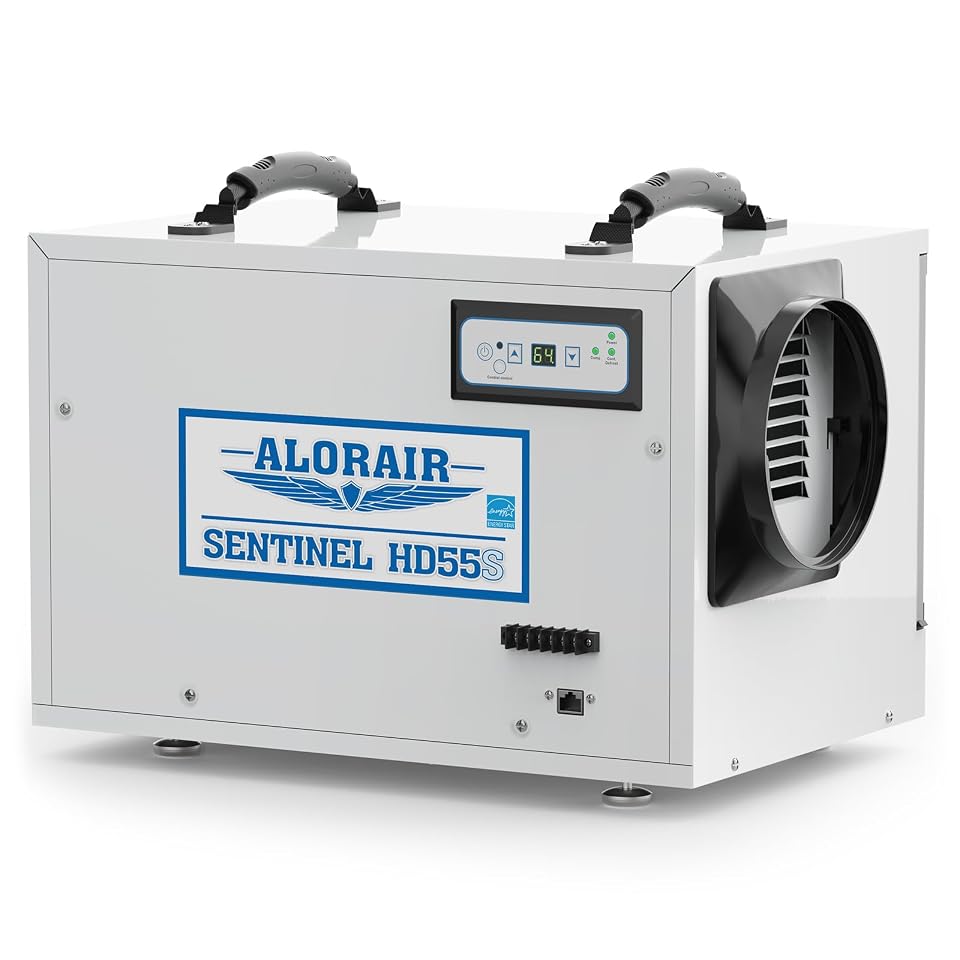
ALORAIR Sentinel HD55S
The low cabinet can stay in a crawl space with a permanent downhill drain. Choose a portable model if you need a collection bucket.
Sentinel HD55S White · 36.33 certified pints/day
What Actually Matters in a Dehumidifier
Treat a dehumidifier as a moisture-removal and water-handling appliance. The buying decision should start with the room, then move to collection, control, maintenance, and the functions you expect to use. The supporting guides below handle the detailed calculations and setup questions.
Start With the Humidity Level the Room Actually Needs
A musty smell or wet window deserves investigation, but a humidity reading helps establish whether the room needs ongoing dehumidification. The EPA mold and moisture guide recommends keeping indoor relative humidity below 60%, ideally between 30% and 50%. Surface temperature and condensation can require a lower target.
Choose equipment to maintain an appropriate range, rather than automatically selecting its lowest setting. Our shared guide to indoor humidity levels explains seasonal adjustments, condensation, and when adding or removing moisture may help.
Match Removal Capacity to the Moisture Load
Pints per day describe moisture removal at stated test conditions. Bucket capacity describes how much collected water can be stored. A larger reservoir can reduce interruptions without changing the machine’s extraction rating.
ENERGY STAR capacity guidance explains why newer portable-unit ratings can be lower than older ratings after testing moved to cooler conditions. Compare like ratings, then use our dehumidifier sizing guide to account for room area, starting humidity, and moisture load. An up-to coverage claim is not a room-by-room performance guarantee.
Choose the Technology for the Actual Room Temperature
All four selections here use compressor technology. This is a shortlist of different capacity and ownership options, with operating limits that still need to suit the room. A larger advertised pint number does not establish better removal when the rating conditions differ.
Check the permitted operating range before comparing convenience features. Automatic defrost does not establish unrestricted cold-weather use. Our compressor and desiccant comparison explains the temperature, energy, and moisture-removal tradeoffs without treating either technology as universally better.
Plan the Water Route Before Paying for a Pump
Stand where the dehumidifier will sit. If you plan to carry the water to a sink, check the route and how much weight you can comfortably lift. Leave room to slide out the Frigidaire’s front bucket or set down the Midea Cube’s upper unit while you empty its reservoir.
For continuous drainage, trace the hose from the machine to the outlet. A gravity hose needs a downhill path. If the hose must climb over the rim of a utility sink, you need a pump. Leave the connection accessible for inspection. Our dehumidifier drainage guide covers hose routing and pump options.
Look at Cleaning Access and Water-Contact Parts
Judge the parts you will regularly handle: the collection bucket, its opening and handle, the filter, and the drain connection. An attractive housing does not tell you whether those jobs will be convenient. Removable does not automatically mean dishwasher-safe, and a drain hose does not make the appliance maintenance-free.
Use the exact model manual to identify what can be washed, what needs to dry before replacement, and which areas are intended for owner access. Check that the bucket and filter can both come out easily from the spot where you plan to put the unit.
Compare Efficiency Alongside the Cost of Ownership
ENERGY STAR buying guidance describes integrated energy factor, or IEF, as water removed per unit of electricity. A higher comparable IEF indicates better efficiency under the rating procedure. It does not tell you how many hours your particular room will require.
Account for capacity, runtime, your utility rate, and any replacement parts or app-related requirements. Our guide to dehumidifier electricity use covers the calculation.
Judge Noise in the Room Where the Unit Will Run
Fan airflow, compressor cycling, water movement, and vibration can all affect whether a dehumidifier is tolerable near a bed or desk. A low-fan option is useful, but it does not establish quiet compressor operation or guarantee that automatic mode will remain on that speed.
For a bedroom, check which fan setting the manufacturer used for its sound figure and how close the unit will be to the bed. A reading taken on low fan tells you little about a compressor starting in a quiet room. Our dehumidifier noise guide explains how to compare those figures.
Pay for Controls That Solve a Repeated Task
A usable humidistat, clear full-bucket indication, restart behavior, and accessible local buttons are strong starting points. App access, recurring schedules, and remote alerts are worth more when they solve a task you actually have.
Check what survives a power interruption and distinguish a countdown timer from a repeating schedule. Our guide to dehumidifier features worth paying for covers those differences. The individual profiles below identify model-specific details that can change the buying decision.
Investigate Persistent Dampness Beyond the Display
A satisfactory reading beside the appliance does not prove that a cold corner, separate room, or damp wall is under control. Continue checking the problem area and the water source, especially when the dehumidifier runs for long periods without a clear improvement.
EPA’s moisture-control advice includes repairing leaks and removing moisture at its source. Buying a larger machine should not be the automatic response to seepage or persistent condensation. The goal is a workable moisture-control plan, not simply a fuller bucket.
How We Evaluate Dehumidifiers
Our assessment of all four models is research-based. We used ENERGY STAR certification records and the manufacturers’ manuals. For water removal and efficiency, we compared the published figures from standardized certification tests for each exact model. That gives us a common basis for comparison when a brand also advertises a higher pint rating under warmer or more humid conditions. We checked the published operating range separately to judge whether a unit suits a cool basement.
The next question was what a week of ownership would require. We traced how the bucket comes out, whether the unit restarts after a power interruption in the selected drainage mode, and which filters the owner can wash. We checked manuals and warranty terms for the exact model because a similar-looking version can have a different pump or control system. EPA guidance informs the humidity targets in this guide. Sound figures come from the manufacturers, with the fan setting identified where available.
Materials
We look at the parts that carry or collect water: the bucket, handle, internal collector and drain connection. We use parts lists and care instructions to identify what you can reach and clean. On the Sentinel, for instance, the parts list distinguishes the galvanized housing from the plastic collector inside.
Design & Function
We compare compressor capacity, operating temperature and drainage design together. A high-capacity unit with a front bucket can serve an accessible utility room. In a crawl space, a low cabinet, room to remove the filter, and a reliable hose route can matter more than another few pints of rated capacity.
Use & Interaction
We follow the emptying sequence in the instructions. Can you slide the bucket straight out, or do you lift the upper machine first? We also check which adjustments are available on the unit and which the app handles. Changing a setting remotely is useful when the unit sits downstairs, even if you still empty it by hand.
Durability & Longevity
We check the cleaning schedule, replacement parts and service options, then read what the warranty covers at each stage. On a fixed installation, later coverage for selected refrigeration parts can still leave the owner paying for labor and transport. That distinction matters before you put a machine somewhere difficult to reach.
Transparency & Trust
We look for a model number that agrees across the listing, manual and certification. We also look for the conditions behind capacity and noise figures, and check whether a feature has an exception. For example, Midea’s manual excludes bucketless operation from its auto-restart function. That detail changes whether the Cube suits a room you rarely visit.
Compare Certified Capacity and Water Collection
Midea’s Cube and ALORAIR’s Sentinel each remove about 36 pints per day under the standardized ENERGY STAR test. That figure describes water removed from the air. The bucket size determines how much you can collect between trips. The Cube collects water in a bucket. The Sentinel needs a continuous drain. If your only drain is uphill, both selected models require a separate pump. For bucket use, compare the Cube’s lower fill settings with the weight you can comfortably carry.
| Model and certified capacity | Where the water goes |
|---|---|
| Frigidaire FHDD5034Y149.71 pints/day | The 2.7-gallon front bucket pulls out while the machine stays in place. A downhill hose route is an alternative to carrying it. |
| Midea Cube MAD35S1QGR-A35.82 pints/day | Lift the upper unit to reach the reservoir. At maximum fill the bucket weighs about 40.5 lb, according to Midea. Lower fill settings make it easier to carry. |
| DREO 733S DR-HDH003S22.09 pints/day | The 7-liter tank gives this lower-capacity unit room to store water. It also accepts a gravity-drain hose. |
| ALORAIR Sentinel HD55S White36.33 pints/day | Plan a continuous downhill drain at a fixed location. An uphill route requires a separate condensate pump. |
A Closer Look at Each Pick
All four models require a separate pump to send water to a drain above the unit.
Connected controls, conventional bucket
Frigidaire 50-Pint Wi-Fi Dehumidifier
FHDD5034Y1
Choose the Frigidaire if your room calls for a 50-pint-class unit and you want a bucket that slides out from the front. Use the app to adjust humidity or schedules from another room. The Frigidaire model page lists continuous drainage without a pump, so an elevated drain would require a separate pump or a pump-equipped model.
Price and availability last updated: 2026-11-25 at 12:28.
Materials
The front bucket and removable dust filter provide direct access to the parts that need routine cleaning. The bucket can be taken out while the main appliance stays in place, making water-contact care practical without separating the upper housing from the reservoir.
For everyday ownership, prioritize access to the water-contact surfaces. A tidy cabinet position loses its appeal if the surrounding furniture makes basic cleaning difficult.
Design & Function
The Frigidaire specification sheet lists a 2.7-gallon bucket and three fan speeds. The front bucket can be removed without lifting the upper appliance, which simplifies access compared with a Cube.
The design offers useful collection capacity without pump hardware. That simplicity fits gravity drainage, but an elevated discharge point needs a different arrangement.
Use & Interaction
Frigidaire documents app control for power, humidity, fan speed, and custom schedules. Physical controls remain available when you prefer making changes at the appliance.
Manufacturer sound ratings span 47–51 dBA across fan settings. Those figures describe the published specification; they do not establish a noise advantage under matching room conditions. Placement still matters near a desk or bed.
Durability & Longevity
The Frigidaire owner guide separates washable dust-filter care from the optional PureAir filter, which cannot be washed. The bucket still needs cleaning during hose use.
The specification sheet provides one year of parts and labor coverage. Frigidaire also provides service and parts channels, so retain the model and purchase information when arranging support. Normal filter and bucket care remain part of ownership after that coverage ends; check the exact component and repair cost if service becomes necessary.
Transparency & Trust
The exact-model ENERGY STAR record lists 49.71 pints per day and an IEF of 2.01 L/kWh. Those standardized figures make capacity and efficiency easier to compare.
The specification sheet, owner guide and matching certification provide a consistent route to the model’s capacity, controls and care requirements. Its permitted operating range is 41–89°F. Working near the lower limit does not imply full rated extraction.
Strengths
- Remote humidity, fan, and schedule controls.
- Front bucket avoids lifting off the machine.
- Gravity drainage can reduce emptying trips.
- Exact-model efficiency certification is available.
- Clear standard-filter cleaning instructions.
Tradeoffs
- No built-in pump for an elevated drain.
- A full reservoir still needs manageable lifting.
- App access requires compatible connectivity.
- Optional advanced filters add replacement costs.
- One-year parts-and-labor warranty.
Larger bucket, heavier emptying
Midea Cube 35-Pint Dehumidifier
MAD35S1QGR-A
Choose the Cube if you want fewer emptying trips and can lift the upper unit to reach the reservoir. Lowering the fill setting makes each trip lighter. If lifting the machine is the difficult part, the Frigidaire’s front-access bucket is a better fit.
Price and availability last updated: 2026-11-25 at 12:28.
Materials
The Cube’s molded enclosure sits above a separate, accessible collection reservoir. Its design lets you clean the reservoir independently of the upper appliance and nest the emptied components for storage. Keep those practical features separate from the lifting effort required to use the large bucket.
Consider the bucket as part of the daily interaction with the product. Its capacity is valuable only when the person emptying it can manage the weight and grip.
Design & Function
The Midea model listing identifies the gray MAD35S1QGR-A as a non-pump Cube. Bucket, gravity-drain, and bucketless configurations give the Cube useful flexibility. The included hose can simplify setup when a suitable drain is available.
The current Midea Cube manual gives a maximum fill level of approximately 4.23 gallons, with the filled bucket weighing about 40.5 lb. Lower fill settings exchange collection time for easier carrying.
Use & Interaction
Emptying requires lifting the upper unit away from the bucket before carrying the collected water. The emptied Cube nests for storage, but in use it needs clearance to lift the upper unit. A large reservoir reduces trips, but the extra lift and substantial filled weight make this a more demanding collection routine than pulling a smaller front bucket straight out.
SmartHome control can reduce visits for setting changes. The app cannot remove the physical work when you use bucket collection.
Durability & Longevity
The standard filter and reservoir need recurring cleaning. Keeping both accessible is a more useful ownership priority than hiding the unit in a cramped corner.
The matching manual provides a one-year limited warranty. Midea support also offers repair requests, a service locator and a parts portal. Keep the exact MAD35S1QGR-A identity with the receipt so a repair inquiry follows this version rather than an older Cube.
Transparency & Trust
The exact-model ENERGY STAR record lists 35.82 pints per day and an IEF of 2.01 L/kWh. This is a lower-capacity option than the Frigidaire 50-Pint, regardless of broad coverage claims.
The current US manual explicitly includes MAD35S1QGR-A. It specifies 41–95°F operation and states that auto restart excludes bucketless mode. That exception matters when planning unattended drainage.
Strengths
- Large reservoir extends time between emptying trips.
- Selectable fill levels offer handling flexibility.
- Gravity and bucketless collection options.
- Wi-Fi access for remote setting changes.
- Matching US manual and efficiency certification.
Tradeoffs
- Upper unit must be lifted for bucket access.
- A full large reservoir is a substantial load.
- No built-in pump for uphill drainage.
- Bucketless mode needs attention after power loss.
- Lower rated capacity than the Frigidaire 50-Pint.
Lower capacity, generous tank
DREO 733S Smart Dehumidifier
DR-HDH003S · Gold
Choose the 733S for a lighter moisture load when you want app monitoring and a roomy tank. The ENERGY STAR certification sheet rates this exact model at 22.09 pints per day. If the room needs a 35- or 50-pint-class unit, choose a larger model.
Price and availability last updated: 2026-11-25 at 12:28.
Materials
The removable collection tank makes the water-contact area accessible for routine care. Its separate opening and carrying arrangement matter more to daily upkeep than the cabinet finish, especially when the tank needs to travel to a sink.
Plan where the tank will be emptied. A larger reservoir is helpful only when the person maintaining it can remove, carry, and clean it comfortably.
Design & Function
The DREO 733S specifications list a 7-liter tank, approximately 1.85 gallons, plus continuous gravity drainage and an included hose. It does not include a pump.
This combination makes sense where modest extraction needs meet a preference for fewer bucket interruptions. The larger reservoir stores collected water; it does not increase the daily removal rating or make the appliance suitable for a heavier moisture load.
Use & Interaction
DREO documents app control and energy and cost tracking. Those features can make operation easier to review, especially when the appliance sits away from the main living area.
Treat the displayed cost as an estimate that depends on the app settings and electricity rate. The advertised 42 dB sound figure also needs context; it does not establish how compressor cycling will feel in a particular bedroom.
Durability & Longevity
DREO’s limited warranty terms provide 12 months of coverage for original material and workmanship defects. Coverage is tied to the original purchaser, intended use, purchase country, and an authorized seller.
Retain the receipt and leave room to remove the tank and inspect the drain route. The documented repair-or-replacement remedy and accessible collection system support ordinary owner care, with the stated 12-month coverage applying to eligible defects. Plan maintenance access even when you expect to use the hose most of the time.
Transparency & Trust
The certification lists an integrated energy factor of 1.75 L/kWh, which you can compare with the other models on the same rating procedure. It confirms ENERGY STAR certification, but does not award the model ENERGY STAR Most Efficient status.
The 73-pint retail headline describes performance under hotter, wetter conditions. Use the standardized 22.09-pint figure for comparisons across this shortlist. This distinction is central to choosing the right size.
Strengths
- Generous tank capacity for its standardized removal class.
- Gravity drainage with a hose included.
- App controls and energy tracking are documented.
- Exact-model ENERGY STAR certification is available.
- A conventional removable tank keeps collection familiar.
Tradeoffs
- Standardized capacity is much lower than the 73-pint headline.
- No built-in pump for an elevated drain.
- A fuller tank means more water to carry.
- App access adds network dependence for remote features.
- The standard limited warranty lasts 12 months.
Permanent drainage, more setup
ALORAIR Sentinel HD55S
Sentinel HD55S White
Choose the low, rectangular Sentinel for a crawl space or unfinished basement where it can stay connected to a downhill drain. Leave room to reach the filter and check the hose. If you need to collect water in a bucket or move a machine between rooms, choose one of the portable models.
Price and availability last updated: 2026-11-25 at 12:28.
Materials
The official parts list identifies galvanized-sheet construction for the main body, chassis and several covers. Plastic components remain inside, including the water collector. The parts list distinguishes the metal enclosure from the components that carry water inside it.
Design & Function
The HD55S specification sheet documents a side-sliding filter, accessible condensate connection and optional remote control. These are practical features for a unit placed in a less accessible area. The remote is an additional purchase; this selected version does not include Wi-Fi.
Use & Interaction
Gravity drainage removes bucket-emptying chores but requires a suitable outlet below the unit. The installation manual calls for a consistently descending drain route and a drainage test before leaving the installation. An uphill route needs a separate condensate pump. Allow room to inspect the drain and remove the filter.
Durability & Longevity
The published parts list identifies components for service, and the current warranty for eligible purchases provides two years of parts and labor. Compressor, condenser and evaporator parts remain covered through year six, with later labor and transportation excluded. Keep installation access clear because repair coverage does not remove the work of reaching or disconnecting a fixed unit.
Transparency & Trust
ALORAIR lists 55 pints per day at 80°F and 60% relative humidity. Its ENERGY STAR record gives 36.33 pints per day and an integrated energy factor of 2.08 L/kWh. Use the certified figure when comparing the four models. The product page lists 41.7 pounds while its specification sheet lists 44 pounds, and older manuals retain earlier warranty terms. Check current specifications and coverage for the exact White model, particularly when planning access through a narrow crawl-space opening.
Strengths
- Documented galvanized-sheet housing and chassis
- Continuous gravity drainage without bucket emptying
- Side-sliding filter for routine access
- Published service parts and optional wired remote
- Certified capacity and efficiency figures
Tradeoffs
- Requires a planned drainage route
- Uphill drainage needs a separate pump
- Remote control costs extra
- No Wi-Fi in this selected version
- Later warranty covers refrigeration parts only
Tips for Better Dehumidifier Ownership
A suitable purchase still needs a workable routine. Use the model’s instructions to turn its capacity and features into consistent moisture control, and adjust the plan when the room or season changes.
Measure the Problem Area Before and After Setup
Record humidity and temperature in the area you want to improve, then check that area after the appliance has had time to operate. Compare readings in similar locations rather than treating the air beside the discharge as representative of the room.
If separated spaces behave differently, reconsider air circulation and placement before assuming one portable unit covers the entire floor. Our indoor humidity guide remains the shared reference for interpreting the readings.
Test the Chosen Water-Collection Routine
Check that the bucket seats correctly and that any hose follows the approved route. Observe the first collection or pump cycle, then inspect again after moving the unit or changing a connection. Reduced bucket emptying is useful only if water reaches its intended destination.
The drainage options guide explains the differences between the available arrangements. Follow the exact model’s limits for hose size, height, and pump operation.
Keep Air Paths and Service Access Clear
Use the clearances in the manual instead of assuming one distance fits every machine. Leave enough room to remove the filter and bucket without dismantling the placement. Curtains, stored boxes, or a narrow recess can turn an otherwise convenient location into a difficult one to maintain.
Clean the Filter and Bucket as Instructed
A full-bucket shutoff handles a collection condition; it does not clean the reservoir. Likewise, a filter reminder may be based on operating time rather than measured dirt. Check the care instructions, inspect the parts you can access, and reinstall washable filters only as directed.
Check What Happens After Power or Network Interruptions
Review local restart, setting memory, pump settings, and app reconnection separately. A unit in a rarely visited room needs a collection and checking routine that still works when remote information is unavailable.
Reassess When Runtime or Room Conditions Change
If collection or runtime changes, check temperature, the humidity target, bucket status, drain routing, filter condition, and new moisture sources. Long operation alone does not establish a fault, and a full bucket alone does not prove the whole room is controlled.
Seasonal changes can alter the job. EPA’s guidance emphasizes correcting the moisture source, so investigate renewed seepage or condensation rather than relying only on a stronger setting.
Dehumidifier FAQs
How should I choose between these four dehumidifiers?
Choose the capacity class first, then the collection method. Frigidaire offers a conventional bucket with connected controls, Midea emphasizes a larger reservoir, Dreo suits a lower-capacity job, and ALORAIR suits a planned permanent drain. Their ownership tradeoffs are more useful than a universal winner label.
Is a compressor or desiccant dehumidifier better?
Neither is universally better. Match the actual operating temperature and moisture load to the equipment. A small desiccant model is not automatically a replacement for a 50-pint compressor unit. Our technology comparison explains the tradeoffs.
What size dehumidifier do I need?
Use the room’s area, temperature, starting humidity, and ongoing moisture load. Do not choose from bucket volume or a single up-to coverage number. Our sizing guide covers the capacity decision in detail.
What indoor humidity should I aim for?
EPA generally recommends below 60% RH, ideally 30% to 50%. Condensation and cold surfaces may require adjustment. Use the shared indoor humidity guide for the seasonal context rather than treating one setting as right for every home.
Is a 50-pint rating the same as a 50-pint bucket?
No. The removal rating concerns water extracted over 24 hours under the applicable test conditions. The bucket is a storage container and can hold a different amount. A larger bucket may reduce how often you empty it without changing extraction capacity.
Do I need a dehumidifier with a pump to drain into a sink?
If the hose has to rise from the machine to reach the sink, gravity alone won’t carry the water there. A drain below the outlet can work with a continuously downhill hose. None of these four models includes a pump. A separate condensate pump may solve an uphill route when properly matched to the appliance and installation. Check our drainage guide before choosing equipment around an elevated drain.
Is the Dreo 733S a 73-pint alternative to Frigidaire?
Its 73-pint headline uses hotter, wetter conditions. The standardized capacity is about 22 pints per day, so it belongs in a smaller class than the Frigidaire 50-Pint. Compare the certification figures in the table instead of treating every advertised pint number as equivalent.
Does the Frigidaire 50-Pint model have Wi-Fi?
Yes. The linked FHDD5034Y1 supports the Frigidaire App, including humidity adjustment and custom schedules. Its conventional front bucket and gravity-drain arrangement remain separate from those connected functions. Similar-looking variants can have different equipment, so match the model number.
Why does the ALORAIR HD55S have two capacity figures?
ALORAIR’s 55-pint figure is measured at 80°F and 60% relative humidity. The linked ENERGY STAR record gives 36.33 pints per day under the certification procedure. The figures describe different conditions and do not establish a 55-pint advantage over the other certified ratings.
Is continuous drainage always better than a bucket?
It can reduce repeated emptying when an appropriate drain is available. A bucket may be simpler for occasional use or a location without a suitable route. Either arrangement still needs inspection and maintenance. See the drainage guide for setup considerations.
How much electricity will a dehumidifier use?
The answer depends on electrical draw, runtime, and the rate you pay. A capacity label or Wi-Fi feature cannot provide a household cost estimate on its own. Use our electricity-use guide to work through the calculation.
Which of these dehumidifiers is quiet enough for a bedroom?
A low fan setting can help, but compressor cycling and the distance from the bed also affect what you hear. The sound figures in these profiles come from the manufacturers. Check the fan setting and measurement distance before comparing two published readings. If the unit must run overnight, use our noise guide to check the rating conditions and work through placement options.
Are Wi-Fi and automatic restart worth having?
They can be useful when you have a specific monitoring or recovery need. Check the actual alerts, local controls, and settings retained after a power interruption. Our feature-value guide separates these behaviors so a broad smart-control label does not make the decision for you.
Will a dehumidifier remove mold or replace an air purifier?
Moisture control does not remove existing mold or fix the water source. EPA advises addressing both the mold and moisture problem. Its air-cleaner guidance treats filtration as a separate function. A basic dehumidifier intake filter is not evidence of room-scale particle-cleaning performance.
Why does the air from a dehumidifier feel warm?
A dehumidifier can warm the surrounding space while removing moisture, as ENERGY STAR operating guidance explains. That warmth belongs in the room-comfort decision. Follow the manual if heat or behavior appears abnormal instead of assuming every change is routine.
Important: This article provides general information, not individualized medical, safety, installation, legal, or other professional advice. Product specifications, instructions, and safety information can change; verify current information with the manufacturer and consult an appropriately qualified professional when needed. See our Terms and Conditions for additional information.