

A filter has a small but distinct role in the flavor and texture of brewed coffee. It holds the grounds in the brewer while deciding how much fine sediment and oil pass through to the cup. Paper, woven cotton and a perforated metal cone each do that job a little differently.
Fit comes before experimenting with the material. A No. 2 cone and a folded paper circle for a larger CHEMEX sit differently in their brewers. A filter that rests correctly leaves the coffee bed and the pour to do their work. Grind size, dose and the way you add water also influence how quickly a brew drains.
For everyday use, the clearest difference often comes after the last drop. A paper filter lifts out with the grounds inside. A metal cone needs to be emptied and cleaned, and reusable cotton needs time to dry as well. We look at the paper and reusable choices for both brewer formats so that the cup you want and the cleanup that goes with it are part of the same decision.
Coffee Filter Comparison: Materials and Tradeoffs
We evaluated these coffee filters using The Hearthful Standard, considering their materials, brewer fit, preparation, ongoing care, and manufacturer disclosures. We selected If You Care No. 2 for unbleached paper with straightforward disposal after brewing, and CHEMEX bonded circles for the brand’s specified larger brewers. Able KONE provides a reusable alternative for compatible CHEMEX models, while CoffeeSock offers washable cotton for compatible No. 2 cone brewers. The recommendations reflect those different approaches to filtration and cleanup, including KONE’s polymer support ring and the rinsing and drying that reusable cloth requires.
Some links in this guide are affiliate links. If you purchase through them, The Hearthful Home may earn a small commission at no additional cost to you. As an Amazon Associate, we earn from qualifying purchases.
Simple paper cleanup, match the cone size
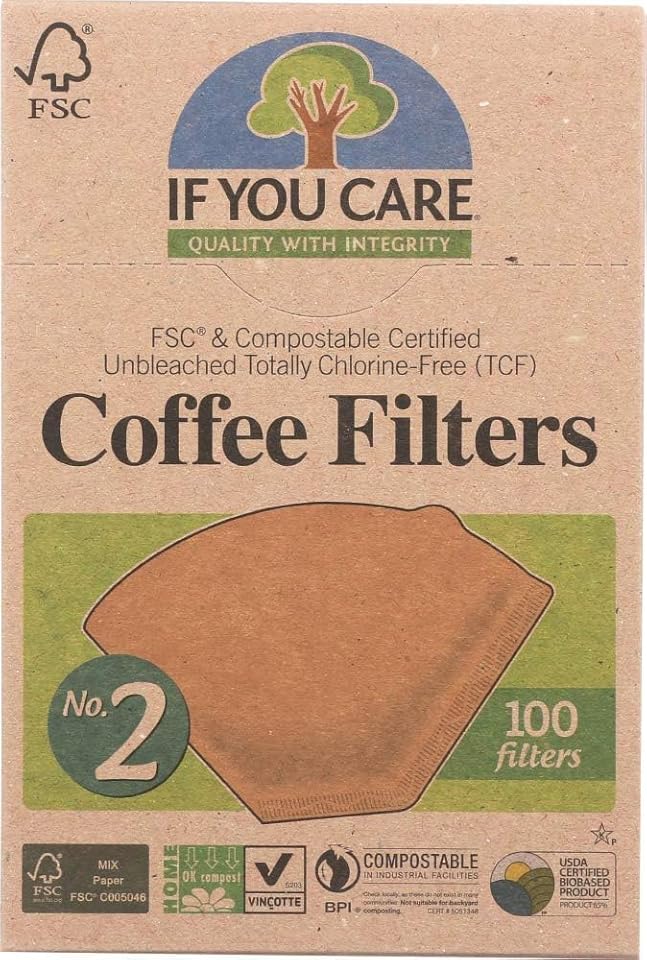
If You Care No.2 Coffee Filters
If You Care No.2 filters suit compatible cone brewers and a discard-after-brewing routine. The paper is unbleached, with published sourcing and compostability information plus a manufacturer statement about PFAS non-use.
No.2 cone · Unbleached paper · 100 filters · One pack

Reusable CHEMEX option, regular cleaning needed
Able KONE Reusable Stainless Steel Coffee Filter
The full-size Able KONE replaces paper in compatible CHEMEX brewers. The silver model combines a stainless steel cone with a polymer support ring, with regular cleaning replacing ongoing paper purchases.
Full-size KONE · Silver stainless steel · One filter
Washable cloth pair, allow drying time
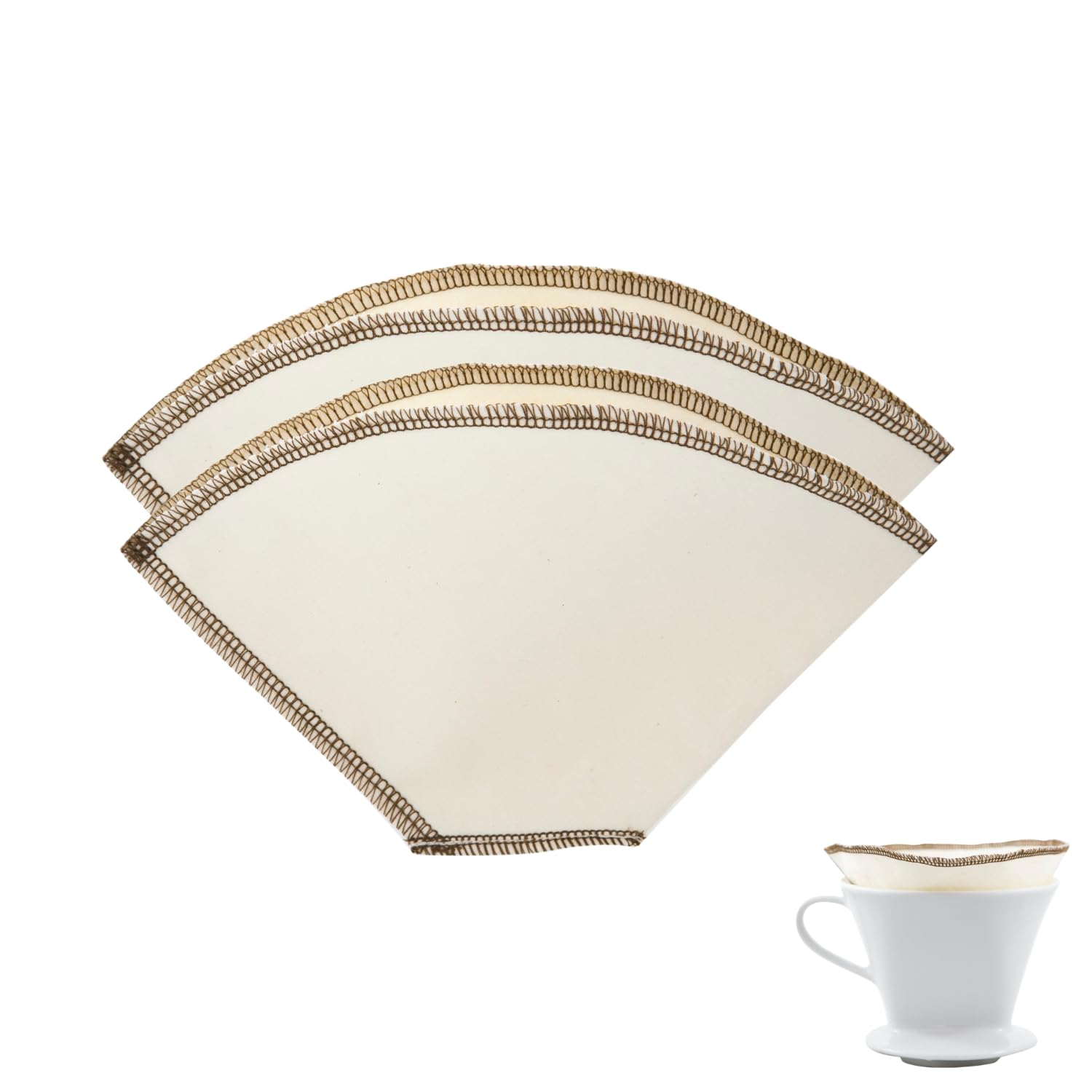
CoffeeSock Cone #2 Reusable Filters
CoffeeSock Cone #2 provides two reusable cotton filters for compatible cone brewers. It suits a routine with prompt rinsing and full drying, with more care required than disposable paper.
Cone #2 · Organic cotton · Two filters

CHEMEX paper fit, recurring filter supply
CHEMEX Bonded Pre-Folded Circle Filters
CHEMEX FC-100 filters provide the brand’s white pre-folded circle format for compatible brewers. This Amazon selection is two 100-filter boxes, offering straightforward cleanup with an ongoing paper supply to manage.
FC-100 · White circles · Two boxes of 100 · 200 filters total
What Actually Matters in a Coffee Filter
Choose the filter as part of a brewing setup. The useful questions are what it fits, how it handles oils and particles, what happens during brewing, and what you need to do afterward. The supporting guides provide more detail on each decision.
Match the Filter Family Before the Material
A flat-bottom basket, a standard cone, a V60 cone, and a CHEMEX paper have different shapes and support requirements. Read the size number within its product family, then match it to the brewer’s specified filter. That gives you a clear starting point before comparing paper, metal, or cloth.
A No. 2 cone and a CHEMEX filter serve different brewer shapes. If your brewer takes No. 2 and you want to toss the grounds in one step, start with the If You Care papers. If you choose the CoffeeSock cloth pair, allow time and space for a rinsed filter to dry. For a CHEMEX, compare the matching bonded papers and the reusable Able KONE on cleanup and ongoing supply.
Check the brewer model and the manufacturer’s compatibility list before ordering. Our coffee accessory compatibility guide covers shape, dimensions, filter seating, and exact-model requirements. A material upgrade is useful only when the filter seats correctly and leaves the brewer’s intended drainage path clear.
Separate Oils From Fine Sediment
Coffee oils and small solid particles are different parts of the brew. A filter may allow more oil through while still excluding much of the visible grit. Compare the specific filter construction and the cup texture it is intended to produce.
Choose around the texture you enjoy, then compare the specific products. The paper, metal, and cloth comparison explains oils, sediment, body, and upkeep. Read the manufacturer’s filtration and flavor descriptions alongside the design and care details.
Investigate Flow Beyond Paper Thickness
Drainage depends on the filter, its seating, and the coffee bed. Fines can collect and restrict flow, while the air path and paper support also affect the brew. Investigate those variables in a consistent order when drawdown changes.
CHEMEX’s filter guidance identifies grind and spout-side placement as relevant to its setup. Our slow-draining coffee filter guide helps you examine those variables in order. Keep the recipe consistent while changing one meaningful variable at a time.
Read Bleaching Claims Precisely
White and brown papers reflect different processing choices. Manufacturers may identify oxygen bleaching, elemental chlorine-free processing, or totally chlorine-free paper. Read the full statement and its qualifications for the particular product, alongside the preparation and disposal instructions.
For example, Hario documents natural and oxygen-bleached V60 papers, while If You Care describes its No. 2 filters as totally chlorine-free. Our bleached versus unbleached filter guide explains those processes, the relevant label details, and preparation considerations.
Check PFAS Information Separately
Read paper-processing and PFAS information as separate disclosures. If PFAS information matters to your purchase, look for a current manufacturer statement covering the filter you are considering. A manufacturing declaration describes what the company uses; a product-specific analytical report describes the sample and substances tested.
For example, If You Care states that its products are manufactured without PFAS. This company-wide statement adds detail to its paper-processing information. The PFAS section in our paper-filter comparison explains how to read manufacturer declarations, analytical reports, and U.S. food-packaging guidance.
Inspect the Whole Reusable Filter
Check the filtering body together with rims, seams, coatings, support rings, and any handle or frame. For a metal filter, identify both the cone and its supporting components. For cloth, look at the fabric and thread as well as the shape of the finished filter.
Look for an exact material description and care instructions for those components. The individual profiles below identify the selected versions. Our coffee maker materials guide places the filter within the wider water-and-coffee path, including the basket, lid, and vessel it sits inside.
Choose a Cleaning Routine You Will Keep
Paper usually leaves you with a used filter to discard and a brewer to clean. Reusable metal and cloth move more of the work onto the filter itself. Coffee residue needs to be removed, and the filter’s seams or small openings need care that matches the product.
Cloth also needs an appropriate storage routine between brews. Follow the cloth filter cleaning and storage guide for maker-specific differences. For washable brewer parts and removable metal assemblies, the coffee maker cleaning guide explains why washing coffee residue and descaling mineral deposits are separate jobs.
Compare Pack Counts and Recurring Costs
Check whether the listing is one box, several boxes, or a set of reusable filters. The selected CHEMEX listing contains two boxes of 100 papers. Use the total filter count when comparing its price with a single box or a smaller pack.
For paper, divide the purchase price by the filter count. For a reusable filter, consider the purchase, cleaning supplies, water, and eventual replacement. Your brewing frequency helps you compare those ongoing costs with the paper filters you would otherwise buy.
Treat Disposal Claims as Product-Specific
Read the compostability guidance for the exact paper and the conditions it covers. Check whether your local collection service accepts it, or follow the product’s stated home-composting guidance where applicable. Include that disposal routine when comparing filter formats.
Keep unused papers dry and protected, and inspect reusable filters for damaged seams, distorted edges, or persistent residue. Choose a format that fits both your brewing routine and the way you will care for or dispose of it.
How We Evaluate Coffee Filters
Our recommendations in this guide are research-based. Manufacturer product details, exact retail formats, material statements, compatibility lists, and care instructions form the evidence base for this comparison.
We assess each product’s documented design and its fit for the intended role, including brewer compatibility, preparation, and everyday upkeep.
Manufacturer material, filtration, preparation, and care claims remain attributed to their sources. Product documentation, compatibility lists, and care guidance provide context for evaluating those claims. Differences in construction or instructions are explained where they affect the buying decision.
Materials
The documented paper, metal, cloth, coatings, rims, and supporting components, including how their construction relates to coffee contact and cleaning. Clear descriptions of the assembled filter help explain how its materials support the intended use.
Design & Function
Filter geometry, support, intended brewer family, and how the parts work together. We consider how the construction serves its specified brewing setup and the practical role it offers within that setup.
Use & Interaction
Preparation, fitting, grounds removal, cleaning, drying or other prescribed storage, and the recurring attention required. A reusable design can offer flexibility while asking more of the daily routine.
Durability & Longevity
Suitability for the intended use cycle, storage demands, documented care, wear points, and support information. Paper is assessed for single-brew handling and storage; reusable metal and cloth are assessed for continued service with appropriate care.
Transparency & Trust
Clarity of material descriptions, variants, pack contents, compatible brewers, preparation, and care. Documentation that helps a buyer choose the correct version and maintain it appropriately earns credit.
A Closer Look at Each Pick
Simple paper cleanup, match the cone size
If You Care No.2 Coffee Filters
No.2 cone · Unbleached paper · 100 filters · One pack
Choose If You Care No.2 when the size matches your brewer and quick paper cleanup is the priority. The pack offers a straightforward supply of unbleached filters, supported by clear processing, sourcing and manufacturing disclosures.
Price and availability last updated: 2026-11-25 at 13:51.
Materials
If You Care identifies unbleached, totally chlorine-free paper. Its certification breakdown lists coffee filters under FSC and several compostability schemes. These disclosures help buyers examine the paper’s processing, sourcing and disposal options, including the conditions attached to each compostability claim.
Design & Function
The cone has a patented wave seam. The maker’s size guidance directs you to the size indicated on the box. The selected 100-count pack fits brewers that specify a No. 2 cone.
Use & Interaction
Remove the used filter with its grounds, then clean the brewer as directed. Paper keeps that routine short and makes replenishing the filter supply the main recurring task. This format suits someone who values straightforward grounds removal after each brew.
Durability & Longevity
The maker identifies a patented wave seam intended to support the paper during brewing. This is the construction detail relevant to its single-brew role; the pack does not need to be reusable to serve that role well. Keep unused sheets dry and protected from spills, and lift a filled filter carefully after brewing.
Transparency & Trust
The company states that its products are manufactured without PFAS. This company-wide manufacturing statement sits alongside its paper-processing information and certification breakdown, giving buyers several specific disclosures to consult when comparing filter brands.
- Clearly identified No.2 cone size
- Quick disposal of grounds and filter
- Published sourcing and compostability details
- Manufacturer PFAS non-use statement
- Requires a compatible No.2 cone brewer
- Ongoing paper purchases
- Single-use paper format
- Check the relevant composting conditions
Reusable CHEMEX option, regular cleaning needed
Able KONE Reusable Stainless Steel Coffee Filter
Full-size KONE · Silver stainless steel · One filter
Choose the full-size KONE when your CHEMEX is compatible and a reusable insert suits your routine. Expect to remove the grounds, rinse after brewing, and clean it periodically, checking both the cone and support ring for damage.
Price and availability last updated: 2026-11-25 at 11:54.
Materials
Able specifies a precision-welded, photo-chemically etched stainless steel cone with an injection-molded polymer support ring. The steel performs the filtering and the ring supports the insert in the brewer. Identifying both components gives buyers a clearer picture of the assembled filter and the parts they will handle during cleaning.
Design & Function
The full-size KONE fits 6, 8 and 10-cup CHEMEX brewers and the Ratio Glass Carafe. Its single-layer etched cone and support ring form one reusable insert. Match this full-size version to the stated brewer; KONE Mini is the separate model designed for Hario V60.
Use & Interaction
Able recommends rinsing and an occasional scrub. Empty the grounds and include the filter in the cleanup after each brew. When switching from paper, start with a familiar recipe so you can tell what changes as you adjust the grind and pour.
Durability & Longevity
The cone and support ring are the main parts to inspect during cleaning. Keep their shape and condition in view, and handle the insert gently when placing or removing it. Continued use and routine care are central to the value of this reusable design.
Transparency & Trust
Able identifies the steel cone, polymer support ring, dimensions and intended CHEMEX sizes, but does not name the ring’s exact polymer. Its full-size product page also includes a stray Hario V60 support-ring description alongside the CHEMEX fit information. Use the stated 6, 8 and 10-cup CHEMEX compatibility for this full-size filter; KONE Mini is the separate V60 product. These incomplete material and mixed-model details are worth resolving when ordering for another brewer.
- Reusable alternative to paper
- Defined 6, 8 and 10-cup CHEMEX fit
- Single-layer filtering cone
- Support ring for placement and removal
- Requires cleaning after brewing
- Includes a polymer support ring
- Exact brewer fit still matters
- Cone and ring both need condition checks
Washable cloth pair, allow drying time
CoffeeSock Cone #2 Reusable Filters
Cone #2 · Organic cotton · Two filters
Choose CoffeeSock Cone #2 when you want reusable cloth and have space for consistent rinsing and drying. The two-filter pack makes rotation practical, with periodic deeper cleaning forming part of the ongoing routine.
Price and availability last updated: 2026-11-25 at 13:51.
Materials
CoffeeSock identifies the fabric as unbleached, 100% organic cotton and also describes its cotton thread. Both disclosures relate to the assembled textile filter. The fabric and sewn construction make routine rinsing, drying and seam inspection useful parts of ownership.
Design & Function
The maker’s Cone #2 page lists Melitta #2 compatibility and dimensions of 4.25 inches wide by 5 inches high. CoffeeSock sells separate shapes for CHEMEX and V60 brewers. Two filters are supplied for rotation.
Use & Interaction
The Brew and Care guide calls for prompt rinsing and full air-drying. Allow time for those steps after each brew, along with the maker’s initial preparation and periodic cleaning. This is the most involved daily care routine among these four choices, so consider the available drying space.
Durability & Longevity
CoffeeSock’s washable cotton and stitched construction can be maintained through its documented rinse, dry and periodic deeper-cleaning routine. The manufacturer’s FAQ offers a refund or replacement for workmanship or satisfaction issues within the first nine months, with mishandling excluded. Rotate the two filters so each can dry fully, and inspect the fabric and seams during care rather than using a fixed date alone to judge condition.
Transparency & Trust
CoffeeSock’s care pages disagree about detergent: Sock Care permits mild detergent, while Brew and Care says to avoid it. Keep the supplied product instructions and ask CoffeeSock to clarify detergent use before adding it to the routine. Resolving that difference matters alongside the maker’s otherwise detailed fit, material and care information.
- Two filters allow rotation
- Cotton fabric and thread identified
- Specific Cone #2 fit information
- Reusable alternative to disposable paper
- Prompt rinsing after each brew
- Needs space to dry fully
- Periodic deeper care required
- Manufacturer detergent guidance conflicts
CHEMEX paper fit, recurring filter supply
CHEMEX Bonded Pre-Folded Circle Filters
FC-100 · White circles · Two boxes of 100 · 200 filters total
Choose FC-100 circles when your CHEMEX uses this paper format and simple cleanup matters most. The two-box selection provides a convenient reserve for regular brewing, with dry storage keeping the spare supply ready to use.
Price and availability last updated: 2026-11-25 at 13:51.
Materials
CHEMEX identifies virgin pine pulp and describes oxygen cleansing for its white paper. FC-100 combines that paper with the pre-folded circle format. The model code and processing information help buyers identify the selected filter when comparing CHEMEX options.
Design & Function
The pre-folded circle format opens into the cone needed for the brewer. Its rounded top sits more flush with the carafe than the projecting corners of the square version. These circles fit 6-, 8- and 10-cup CHEMEX brewers. The three-cup brewer and Funnex take a different shape.
Use & Interaction
CHEMEX instructs you to place the three-layer side toward the pouring spout. Use that orientation when seating the paper, then follow your usual brewing recipe. After brewing, remove the filter and grounds together and clean the carafe according to its own instructions.
Durability & Longevity
CHEMEX describes a heavyweight bonded paper and directs users to place the three-layer side against the spout for support. Those construction and placement details explain its intended single-brew handling. Keep both boxes dry and protected, use a fresh paper for each brew, and allow room to lift the loaded filter without catching its edge.
Transparency & Trust
The maker’s filter guide identifies FC-100 alongside the square and half-moon formats. Match that code, the circle shape and the selected two boxes of 100 filters each when ordering. These details make the intended paper and pack size clear.
- Defined FC-100 model and format
- Pre-folded for straightforward placement
- Quick paper-and-grounds cleanup
- Two boxes supply 200 filters total
- Not for three-cup CHEMEX or Funnex
- Ongoing paper purchases
- Two boxes need storage space
- Correct spout-side placement matters
Tips for Better Coffee Filter Use
A compatible filter works best as part of a repeatable brewing and cleaning routine. Use the maker’s directions as the starting point, and keep a few practical checks consistent as you compare options.
Check Fit Before Starting the Brew
Seat the filter in the intended brewer and confirm the rim, seams, and bottom are supported as directed. Choose the size and shape specified for the equipment. The compatibility guide covers the details to check before combining a filter, brewer, and serving vessel.
Use the Manufacturer’s Preparation Steps
Rinsing and initial preparation vary with the product. Hario recommends rinsing its V60 papers before brewing, while cloth filters have their own first-use and between-brew care. Follow the relevant directions for placement, water, and preparation time.
Keep the Recipe Repeatable
Weigh the coffee and input water, and note the grind and pour routine. Our coffee-to-water ratio guide helps with consistent dosing. When comparing compatible filters, keep those conditions similar and judge the coffee at a comparable drinking temperature. Keep a note of the combination you enjoy so you can repeat it.
Remove Grounds and Clean the Filter
Remove used grounds through the method the maker recommends, handling reusable mesh, seams, and rims gently. Discard paper after its intended use, then clean the brewer surfaces that contacted coffee. Give the filter, basket, and server their respective care steps before the next brew.
Store Each Filter in the Right Condition
Keep unused paper protected from moisture and nearby odors. For cloth, follow its maker’s cleaning and storage routine. The cloth care guide explains the dry-storage and cold wet-storage instructions used for different products, including which routine applies to CoffeeSock.
Investigate Changes Before Buying Another Filter
If a familiar brew suddenly drains slowly, check the grind, dose, seating, residue, and pouring pattern. A new bag of coffee can also behave differently. The flow-rate guide provides a focused sequence for identifying what changed and adjusting the brew.
Coffee Filter FAQs
Which of these coffee filters should I choose?
Choose by the brewer first. If You Care and CoffeeSock provide different approaches to a compatible No. 2 setup. The full-size KONE and selected CHEMEX papers serve their specified CHEMEX-sized brewing arrangements. Then choose between disposable paper and the recurring care of a reusable filter.
Are paper, metal, and cloth filters interchangeable?
Choose alternatives that are expressly designed for the same equipment. Match the shape, dimensions, and support requirements using the maker’s fit information and the accessory compatibility guide. That lets you compare materials within a setup that fits correctly.
Does No. 2 mean the same thing for every brewer?
Read the number together with the filter family. Standard No. 2 cones, V60 02 papers, and CHEMEX papers have their own shapes and fit requirements. Match the brewer’s specified family and size when selecting a replacement.
Will a metal filter make the coffee stronger?
It may change the texture and the amount of oil or fine particles that reach the cup, but strength also depends on the coffee dose, water, and extraction. The materials guide separates those differences from the amount of coffee used.
Is visible sediment the same as coffee oil?
Sediment consists of small solid particles; coffee oils are a different component of the brew. A filter can allow more oils through while still limiting visible grit. Comparing the specific filter design helps explain the combination of texture and clarity it is intended to produce.
How should I choose between white and brown paper?
Start with compatible papers, then compare the maker’s processing description, preparation instructions, pack size, and disposal guidance. Our bleached versus unbleached guide explains the relevant labels and how to make a practical comparison at home.
Do chlorine-free coffee filters also mean PFAS-free?
Chlorine-free describes paper processing. Check a separate manufacturer statement for PFAS information. If You Care publishes a company-wide statement that its products are manufactured without PFAS; that attribution identifies the basis of the claim.
Should I rinse every paper filter?
Follow the paper and brewer instructions for rinsing, including any specified water amount or preparation time. Some manufacturers recommend a rinse before brewing. Use the directions supplied for the exact filter you choose.
Why does my coffee filter drain slowly?
Fines, filter seating, the air path, residue, dose, and pouring can all affect drainage. The slow-drainage guide helps you inspect those variables and distinguish filter and coffee-bed issues from changes in the brewer’s water delivery.
Can I reuse a disposable paper filter?
Use disposable papers as the maker intends. Repeated use introduces residue and handling demands that are different from a filter designed for cleaning and reuse. If reuse is the priority, choose a compatible reusable product and follow its care instructions.
Can a metal coffee filter go in the dishwasher?
Use the cleaning method approved for the exact version. Consider coatings and support components as well as the metal body. For the selected KONE, Able’s product guidance describes rinsing and an occasional scrub.
How should I store a cloth coffee filter?
Use the maker’s routine. CoffeeSock calls for prompt rinsing and full air-drying, while some other cloth products use cold wet storage. The cloth filter care guide explains those instructions, deeper cleaning, and signs that replacement may be needed.
Are the CHEMEX papers here one box or two?
The selected B00IPPZFB6 listing is a two-pack of 100-count circle filters, for 200 papers total. Check the selected variation and quantity at checkout. Similar product photographs can appear on offers with different pack counts.
How should I compare reusable and disposable filter costs?
Compare the reusable filter’s purchase and care costs with the number and price of paper filters you normally use. Include cleaning supplies, water, and eventual replacement. Your brewing frequency and the time you expect to keep using the product make the comparison more useful.
What should I compare after checking that a filter fits my brewer?
Look at what touches the coffee, what happens to the grounds after brewing and how the filter must be cleaned. Match that routine to the way you brew.
Important: This article provides general information, not individualized medical, safety, installation, legal, or other professional advice. Product specifications, instructions, and safety information can change; verify current information with the manufacturer and consult an appropriately qualified professional when needed. See our Terms and Conditions for additional information.